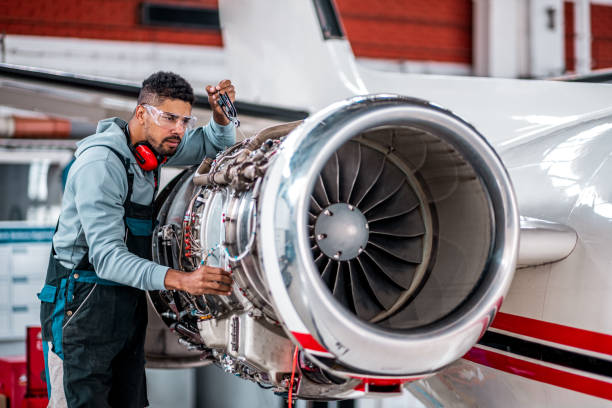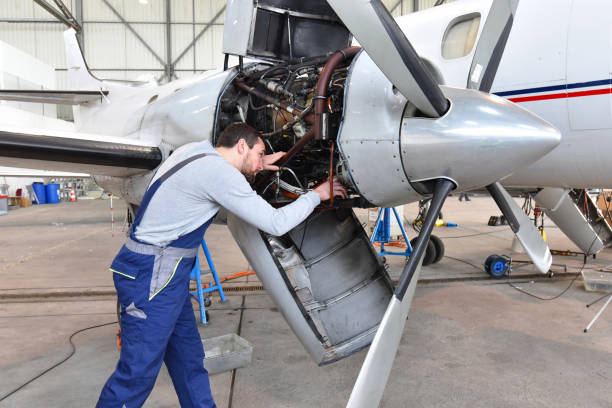
Aerospace Engineer
Junior Aerospace Engineer (Entry to Mid-Level)
Explore Career
An Industrial Engineer focuses on optimizing complex systems, processes, and organizations to improve efficiency, productivity, quality, and safety. They apply engineering principles, mathematics, and management techniques to design, analyze, and improve manufacturing and service operations. Industrial Engineers work across diverse industries to streamline workflows, reduce costs, and enhance overall organizational performance.
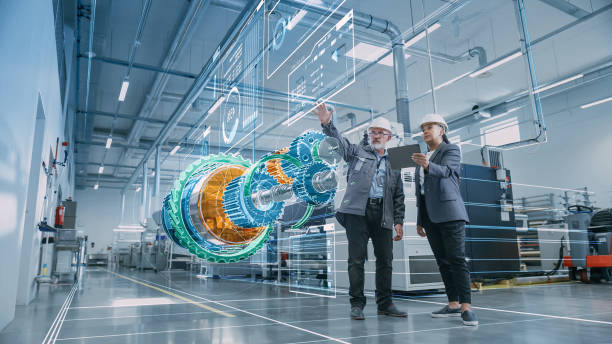
Industrial Engineers analyze production processes, supply chains, and organizational workflows to identify inefficiencies and implement improvements. They use data analytics, simulation, and modelling tools to optimize resource allocation, workflow design, and quality control. Industrial Engineers collaborate with cross-functional teams to develop cost-effective solutions that enhance productivity and customer satisfaction. Their work spans manufacturing, healthcare, logistics, consulting, and service industries, focusing on integrating people, technology, materials, and information to achieve operational excellence.
| Route | Steps |
|---|---|
| Route 1: Bachelor’s in Industrial Engineering | 1. Complete a Bachelor’s degree in Industrial Engineering or related field. 2. Pursue internships or cooperative education programs. 3. Gain practical experience in manufacturing, logistics, or service industries. 4. Seek employment in industrial engineering roles or pursue advanced studies. |
| Route 2: Mechanical / Production Engineering + Industrial Engineering Specialization | 1. Obtain a degree in Mechanical or Production Engineering. 2. Specialize in industrial engineering concepts through electives or postgraduate studies. 3. Gain experience in process optimization and systems analysis. 4. Transition into industrial engineering roles within organizations. |
| Route 3: Operations Research / Management Science | 1. Earn a degree in Operations Research, Management Science, or related field. 2. Focus on quantitative methods and decision sciences. 3. Apply skills in analytics and optimization to industrial problems. 4. Pursue roles in consulting, supply chain, or process engineering. |
| Route 4: Business / Management + Engineering Background | 1. Complete a degree in Business or Management with engineering foundation. 2. Develop expertise in process improvement and operational efficiency. 3. Gain experience through internships or projects. 4. Work in roles combining engineering and management practices. |
| Institute | Course / Program | Official Link |
|---|---|---|
| Indian Institute of Technology (IIT) Kharagpur | Industrial Engineering and Management | https://www.iitkgp.ac.in/ |
| Indian Institute of Technology (IIT) Bombay | Industrial Engineering and Operations Research | https://www.iitb.ac.in/ |
| National Institute of Industrial Engineering (NITIE), Mumbai | Industrial Engineering and Operations Management | https://www.nitie.ac.in/ |
| Indian Institute of Technology (IIT) Delhi | Industrial Engineering and Operations Research | https://www.iitd.ac.in/ |
| Birla Institute of Technology and Science (BITS), Pilani | Manufacturing and Industrial Engineering | https://www.bits-pilani.ac.in/ |
| Anna University, Chennai | Industrial Engineering | https://www.annauniv.edu/ |
| Vellore Institute of Technology (VIT) | Industrial Engineering and Management | https://vit.ac.in/ |
| PSG College of Technology, Coimbatore | Industrial Engineering | https://www.psgtech.edu/ |
| Delhi Technological University (DTU) | Industrial Engineering and Management | https://dtu.ac.in/ |
| Manipal Institute of Technology | Industrial Engineering | https://manipal.edu/mit.html |
International
| Institution | Course | Country | Official Link |
|---|---|---|---|
| Massachusetts Institute of Technology (MIT) | Industrial Engineering and Operations Research | USA | https://mit.edu/ |
| Georgia Institute of Technology | Industrial Engineering | USA | https://gatech.edu/ |
| Stanford University | Management Science and Engineering | USA | https://stanford.edu/ |
| University of Michigan | Industrial and Operations Engineering | USA | https://umich.edu/ |
| University of California, Berkeley | Industrial Engineering and Operations Research | USA | https://berkeley.edu/ |
| Technical University of Munich (TUM) | Industrial Engineering | Germany | https://www.tum.de/ |
| National University of Singapore (NUS) | Industrial Systems Engineering and Management | Singapore | https://www.nus.edu.sg/ |
| University of Cambridge | Engineering and Management | UK | https://cam.ac.uk/ |
| University of Toronto | Industrial Engineering | Canada | https://www.utoronto.ca/ |
| Delft University of Technology | Industrial Design Engineering | Netherlands | https://www.tudelft.nl/ |
India
International
Undergraduate Student → Graduate Student (MSc/PhD) → Junior Industrial Engineer / Analyst → Industrial Engineer → Senior Industrial Engineer / Project Manager → Operations Manager / Consultant → Director / Head of Operations / Process Excellence
| India | International |
|---|---|
| Tata Motors | General Electric (GE) |
| Larsen & Toubro (L&T) | Toyota Motor Corporation |
| Mahindra & Mahindra | Amazon |
| Maruti Suzuki | Boeing |
| Reliance Industries | IBM |
| Infosys (Operations Consulting) | Siemens |
| Wipro (Process Improvement) | Procter & Gamble |
| Bharat Heavy Electricals Limited (BHEL) | DHL Supply Chain |
| Godrej & Boyce | FedEx |
| HCL Technologies | Honeywell |
| Pros | Cons |
|---|---|
| High demand across diverse industries and sectors | Can involve high-pressure environments with tight deadlines |
| Opportunities for continuous learning and professional growth | May require working in manufacturing or industrial settings with shift work |
| Ability to impact organizational efficiency and profitability | Implementation of change can face resistance from employees |
| Combines technical, analytical, and managerial skills | Requires balancing multiple projects and priorities simultaneously |
| Opportunities for leadership and consulting roles | Extensive data analysis can be repetitive |
| Work involves both field visits and office-based tasks | Sometimes requires travel to different sites or client locations |
| Career Level | India (₹ per annum) | International (US$ per annum) |
|---|---|---|
| Entry-Level Industrial Engineer | 3,00,000 - 6,00,000 | $50,000 - $70,000 |
| Mid-Level Industrial Engineer | 6,00,000 - 12,00,000 | $70,000 - $100,000 |
| Senior Industrial Engineer / Project Manager | 12,00,000 - 25,00,000 | $100,000 - $140,000 |
| Director / Head of Operations | 25,00,000 - 50,00,000+ | $140,000 - $200,000+ |
A career as an Industrial Engineer offers vast opportunities to improve organizational efficiency, productivity, and quality across a wide range of industries. By combining technical expertise with management skills, Industrial Engineers drive innovation and operational excellence. For those passionate about systems optimization, problem-solving, and continuous improvement, industrial engineering provides a dynamic and rewarding career path with strong global demand.


Industrial Engineers analyze and improve manufacturing and service processes to enhance efficiency, reduce costs, and improve quality. They apply...
0.0LPA

Operations Research Analysts use mathematical modeling, statistical analysis, and optimization techniques to solve complex organizational...
0.0LPA

Supply Chain Analysts optimize the flow of materials, information, and finances across the supply chain. They analyze inventory levels,...
0.0LPA
Take the next step and explore more about Industrial Engineer.
Explore similar career paths that might interest you