Interactive Media Designer

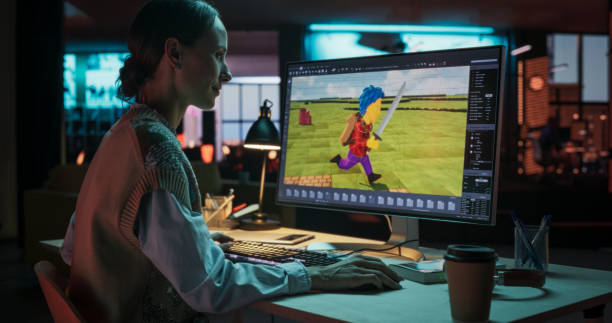
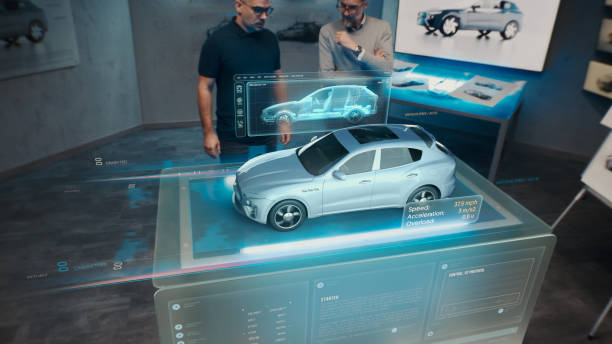
An Interactive Media Designer is a creative professional who designs and develops engaging digital experiences, such as websites, mobile apps, video games, virtual reality (VR) environments, and interactive installations, by combining skills in graphic design, user experience (UX), and multimedia technology. They focus on creating intuitive, visually appealing, and functional interfaces that enhance user interaction. This career falls under the Digital Media and Technology career cluster, emphasizing innovation, creativity, and the integration of design with interactive technologies in a rapidly evolving digital landscape.

Share :
Career tree mind map (horizontal) — Interactive Media Designer
Colored branches, hub circles, and underlined topics — same style as counselor course classic (types 18–19 in admin).
Loading mind map…

Interactive Media Designers craft immersive digital content that responds to user input, blending aesthetics with functionality to create seamless experiences across platforms like web, mobile, and emerging tech such as augmented reality (AR). Their work involves conceptualizing ideas, designing interfaces, and collaborating with developers, marketers, and clients to ensure the end product meets user needs and business goals. They often work in design studios, tech companies, gaming industries, or as freelancers, contributing to projects ranging from educational tools to entertainment applications. These designers are pivotal in shaping how users interact with digital environments, driving engagement and accessibility in an increasingly connected world.

  • Concept Development and Planning:
    • Brainstorm and conceptualize interactive media projects, defining user goals, storyboards, and wireframes to outline user journeys.
    • Research target audiences to ensure designs align with user preferences, behaviors, and accessibility needs.
  • User Interface (UI) Design:
    • Create visually appealing and intuitive interfaces for websites, apps, or games, focusing on layout, typography, and color schemes.
    • Design interactive elements like buttons, menus, and animations to enhance user engagement and navigation.
  • User Experience (UX) Optimization:
    • Conduct usability testing and gather user feedback to refine designs for better functionality and satisfaction.
    • Ensure designs are responsive and adaptable across devices, such as desktops, tablets, and smartphones.
  • Multimedia Integration:
    • Incorporate multimedia elements like video, audio, 3D graphics, or animations to create dynamic, interactive content.
    • Collaborate with developers to integrate designs into functional code using tools like HTML, CSS, or game engines.
  • Prototyping and Testing:
    • Build interactive prototypes using software like Figma or Adobe XD to demonstrate design concepts to stakeholders.
    • Test prototypes for bugs, usability issues, and performance to ensure a polished final product.
  • Collaboration with Teams:
    • Work with developers, content creators, and project managers to align designs with technical requirements and project timelines.
    • Communicate with clients or marketing teams to ensure designs meet branding and business objectives.
  • Trend Awareness and Innovation:
    • Stay updated on design trends, emerging technologies like VR/AR, and industry standards to create cutting-edge experiences.
    • Experiment with new tools or techniques to push creative boundaries in interactive media.
  • Accessibility and Inclusivity:
    • Design with accessibility in mind, adhering to guidelines like WCAG to ensure content is usable by people with disabilities.
    • Consider cultural and linguistic diversity to make designs inclusive for global audiences.
  • Project Management and Documentation:
    • Manage multiple design projects, meeting deadlines and maintaining quality through organized workflows.
    • Document design processes, style guides, and user flows for consistency and future reference.

Route Steps
Route 1 (Design and Multimedia Path)

1. Bachelor’s degree in Graphic Design, Multimedia, or Visual Communication (3-4 years)

2. Master’s in Interaction Design or Digital Media (optional, 1-2 years)

3. Certificate or Short Course in UI/UX Design or Interactive Media (3-6 months)

4. Practical experience through internships or freelance projects (1-2 years)

Route 2 (Technology and Computer Science Path)

1. Bachelor’s degree in Computer Science, Information Technology, or Game Design (3-4 years)

2. Certificate in Interactive Media Design or Web Development (3-6 months)

3. Build design skills through personal projects or online courses (1-2 years)

4. Gain experience via internships or collaborations with design teams (1-2 years)

Route 3 (Fine Arts and Creativity Path)

1. Bachelor’s degree in Fine Arts, Animation, or related field (3-4 years)

2. Short course in Digital Design or Interactive Media Tools (3-6 months)

3. Learn UI/UX and interactive design through self-study or workshops (1-2 years)

4. Build portfolio through freelance or studio work (1-2 years)

Route 4 (Self-Taught/Digital Media Path)

1. Basic education (10+2 or equivalent) with a passion for design and tech

2. Self-study via online courses in UI/UX, Graphic Design, and Interactive Media (6-12 months)

3. Create personal projects or contribute to open-source designs (1-2 years)

4. Gain experience through freelance gigs or online platforms like Upwork (1-2 years)

Route 5 (International Path)

1. Bachelor’s degree in relevant field (Design, Multimedia, or Computer Science) (3-4 years)

2. Master’s or Certification in Interaction Design or Digital Media from an international university (1-2 years)

3. Short course in Emerging Tech (VR/AR) for Interactive Media (3-6 months)

4. Work or internships with global design firms or tech companies (1-2 years)

  • Diverse Entry Points: Allows entry from design, technology, or fine arts backgrounds, reflecting the interdisciplinary nature of the role.
  • Creativity and Tech Blend: Combines artistic skills with technical proficiency to create functional, engaging digital experiences.
  • Flexible Training Duration: Ranges from short online courses (6-12 months) to advanced degrees (5-6 years).
  • User-Centric Focus: Prioritizes designing for user needs, requiring empathy and iterative testing for optimal outcomes.
  • Global Demand: Offers opportunities with international tech firms, gaming companies, and digital agencies.
  • Collaborative Role: Involves working with cross-functional teams to merge design with development and marketing goals.
  • Innovation-Driven: Necessitates staying ahead of design trends and emerging technologies like VR and AR.
  • Rapidly Evolving Field: Driven by advancements in digital platforms, interactive tools, and user expectations.
  • Impactful Creations: Directly enhances how users engage with technology, from entertainment to education.
  • Continuous Skill Upgradation: Demands learning new software, design standards, and user interaction paradigms regularly.

  • Internships with design studios or tech companies like Adobe or Google for hands-on interactive media projects.
  • Freelance projects on platforms like Upwork or Fiverr to build a diverse portfolio of real-world designs.
  • Collaboration with developers on app or game projects to understand design-to-code workflows.
  • Participation in design hackathons or competitions to create innovative interactive solutions under pressure.
  • Exposure to UX research through roles in companies focusing on user testing and feedback loops.
  • Internships with gaming firms to design interactive elements for video games or esports platforms.
  • Involvement in open-source design projects to contribute to community-driven interactive tools.
  • Attendance at design conferences like SIGGRAPH or UX Design Summit for networking and industry insights.
  • Building personal interactive media projects, such as websites or AR experiences, to showcase creativity.
  • Engagement with client feedback on live projects to refine designs based on real user needs.

  • Bachelor’s or Master’s in Graphic Design with a focus on Interactive Media
  • Bachelor’s or Master’s in Multimedia Design or Digital Arts
  • Master’s in Interaction Design or Human-Computer Interaction (HCI)
  • Certificate in UI/UX Design for Interactive Platforms
  • Certification in Web and Mobile App Design
  • Short Course in Virtual Reality (VR) and Augmented Reality (AR) Design
  • Training in Motion Graphics and Animation for Interactive Content
  • Online Courses in Responsive Design and Cross-Platform Development
  • Certification in User Research and Usability Testing
  • Continuing Education in Emerging Interactive Technologies

Institute Course/Program Official Link
National Institute of Design (NID), Ahmedabad Interaction Design and Digital Media https://www.nid.edu/
Indian Institute of Technology (IIT), Bombay Design and Human-Computer Interaction https://www.iitb.ac.in/
Srishti Manipal Institute of Art, Design and Technology, Bangalore Interactive Media and Design https://srishtimanipalinstitute.in/
Pearl Academy, Delhi Interaction Design and Multimedia https://pearlacademy.com/
Symbiosis Institute of Design, Pune Communication Design and Interactive Media https://www.sid.edu.in/
Manipal Academy of Higher Education Digital Media and Interaction Design https://manipal.edu/
Arena Animation, Multiple Locations Multimedia and Interactive Design https://www.arena-multimedia.com/
Vellore Institute of Technology (VIT) Multimedia and Animation Design https://vit.ac.in/
Amity University, Noida Multimedia and Interaction Design https://www.amity.edu/
IGNOU (Indira Gandhi National Open University) Certificate in Multimedia Design http://www.ignou.ac.in/

Institution Course Country Official Link
Rhode Island School of Design (RISD) Digital Media and Interaction Design USA https://www.risd.edu/
Massachusetts Institute of Technology (MIT) Media Arts and Interaction Design USA https://www.mit.edu/
University of Southern California (USC) Interactive Media and Game Design USA https://www.usc.edu/
University College London (UCL) Human-Computer Interaction and Design UK https://www.ucl.ac.uk/
Aalto University Interaction Design and New Media Finland https://www.aalto.fi/en
Royal College of Art Digital Direction and Interaction Design UK https://www.rca.ac.uk/
Nanyang Technological University (NTU) Interactive Media and Digital Arts Singapore https://www.ntu.edu.sg/
University of Toronto Digital Media and Interaction Design Canada https://www.utoronto.ca/
Queensland University of Technology (QUT) Interactive and Visual Design Australia https://www.qut.edu.au/
Parsons School of Design (The New School) Design and Technology (Interactive Media) USA https://www.newschool.edu/parsons/

India:

  • National Institute of Design Entrance Exam (NID DAT) for design programs at NID.
  • Undergraduate Common Entrance Examination for Design (UCEED) for design courses at IITs.
  • Institute-specific entrance exams or portfolio reviews for programs in multimedia or interaction design.
  • No entrance tests required for many short-term or online certifications in UI/UX or interactive media (direct or merit-based admission).

International:

  • Graduate Record Examination (GRE) for Master’s programs in design or digital media in the USA and Canada (if applicable).
  • International English Language Testing System (IELTS) with a minimum score of 6.5-7.0.
  • Test of English as a Foreign Language (TOEFL) with a minimum score of 90-100 for US/UK programs.
  • Portfolio submission or specific university entrance assessments for design and interactive media programs.
  • SAT or ACT for undergraduate admissions in the USA (if pursuing related degrees).

Interactive Media Designer → Senior Interactive Media Designer → Lead Interaction Designer → Creative Director for Interactive Media → Interactive Media Strategy Consultant

  • Design studios for creating interactive content for clients across industries.
  • Tech companies for designing user interfaces for apps, software, or websites.
  • Gaming industries for crafting interactive elements in video games or esports platforms.
  • Advertising agencies for developing interactive digital campaigns and marketing tools.
  • E-learning companies for designing interactive educational content and platforms.
  • Media and entertainment firms for creating immersive digital experiences in film or TV.
  • Freelance or independent contracting for custom interactive media projects.
  • VR/AR startups for pioneering interactive experiences in emerging technologies.
  • Government or non-profit organizations for designing public-facing digital tools or exhibits.
  • International digital agencies for global interactive media projects and innovations.

India International
Tata Elxsi Adobe, USA
Infosys (Experience Design Team) Google, USA
Wipro Digital Microsoft, USA
HCL Technologies (UX Division) Apple, USA
Zensar Technologies Electronic Arts (EA), USA
Toonz Media Group Ubisoft, France
Dentsu Webchutney Activision Blizzard, USA
Ogilvy India (Digital Wing) Epic Games, USA
SapientRazorfish India Meta (Facebook), USA
FCB Ulka (Digital Team) Square Enix, Japan

Pros Cons
High demand for interactive design skills in a digital-first world Fast-paced industry requires constant learning of new tools and trends
Creative freedom to design innovative, user-focused digital experiences Tight deadlines and client demands can lead to stress and overtime
Opportunity to work on diverse projects across industries High competition in the field, requiring a standout portfolio to secure roles
Potential for remote or freelance work with flexible arrangements Balancing creativity with technical constraints can be challenging
Impactful role in shaping how users interact with technology daily Need to adapt designs for multiple platforms, increasing workload complexity

  • Graphic Design Proficiency: Expertise in visual design principles, including layout, typography, and color theory, for creating appealing interfaces.
  • UI/UX Design Knowledge: Ability to design intuitive user interfaces and optimize user experiences through research and iterative testing.
  • Multimedia Skills: Competence in integrating video, audio, animation, or 3D elements into interactive projects for dynamic content.
  • Technical Proficiency: Familiarity with design tools like Adobe XD, Figma, or Sketch, and basic coding (HTML, CSS) for prototyping.
  • User Research Acumen: Skill in conducting usability tests, surveys, and feedback analysis to refine designs based on user needs.
  • Problem-Solving Ability: Capacity to address design challenges, such as accessibility issues or cross-platform compatibility, creatively.
  • Collaboration and Communication: Aptitude for working with developers, marketers, and clients to align designs with project goals.
  • Trend Awareness: Staying updated on design trends, emerging tech like VR/AR, and industry standards for innovative solutions.
  • Project Management: Ability to handle multiple projects, meet deadlines, and maintain organized workflows for timely delivery.
  • Adaptability to Technology: Flexibility to learn new software, platforms, or interactive paradigms as digital tools evolve.

(Figures are approximate and based on the latest available data and projections for 2026, subject to change. Indian figures reflect urban market trends and the growing digital design sector in major cities. International figures are based on US/UK markets with adjustments for demand, innovation, and industry growth in interactive media.)

Career Level India (₹ per annum) International (US$ per annum)
Senior Interactive Media Designer 8,00,000 - 15,00,000 $60,000 - $90,000
Lead Interaction Designer 15,00,000 - 25,00,000 $90,000 - $120,000
Creative Director for Interactive Media 25,00,000 - 40,00,000 $120,000 - $160,000
Interactive Media Strategy Consultant 30,00,000 - 50,00,000 $140,000 - $200,000
Chief Experience Officer (CXO) 50,00,000 - 80,00,000 $180,000 - $250,000

  • Design and prototyping tools like Figma, Adobe XD, or Sketch for creating interactive interfaces.
  • Graphic design software such as Adobe Photoshop and Illustrator for visual elements and assets.
  • Animation and motion graphics tools like Adobe After Effects for dynamic interactive content.
  • 3D modeling software like Blender or Maya for VR/AR or game design elements.
  • Web development tools like HTML, CSS, and JavaScript for basic coding and integration.
  • Game engines like Unity or Unreal Engine for designing interactive gaming experiences.
  • User testing platforms like UsabilityHub or UserTesting for gathering feedback on designs.
  • Collaboration tools like Slack or Trello for team coordination and project management.
  • Cloud storage solutions like Google Drive or Dropbox for sharing design files and assets.
  • Analytics tools like Google Analytics for tracking user interaction data on live projects.

  • Interaction Design Foundation (IxDF) India Chapter
  • UX Design Institute India (Emerging Community)
  • International Game Developers Association (IGDA) India
  • Design Research Society (DRS) India
  • Association for Computing Machinery (ACM) SIGCHI (Special Interest Group on Human-Computer Interaction)
  • User Experience Professionals Association (UXPA) International
  • International Design Organization (IDO)
  • World Design Organization (WDO)
  • Digital Media Association (DMA) Global
  • Human Factors and Ergonomics Society (HFES)

  • Don Norman (USA): A pioneer in user-centered design, Norman has shaped interaction design since the 1980s. Based in California, his book "The Design of Everyday Things" is foundational. His theories guide usability.
     
  • Srishti Sethi (India/USA): A designer at MIT Media Lab, Sethi has innovated interactive tools since the 2010s. Based in Massachusetts, her work on educational media inspires. Her creativity enhances learning.
     
  • Jared Spool (USA): A UX design expert, Spool has influenced interactive media since the 1990s. Based in the USA, his research on usability shapes digital experiences. His insights drive design standards.
     
  • Anab Jain (India/UK): Co-founder of Superflux, Jain has explored interactive futures since the 2000s. Based in London, her speculative designs impact media. Her vision redefines interaction.
     
  • Bill Buxton (Canada): A Microsoft researcher, Buxton has advanced interaction design since the 1980s. Based in the USA, his work on touch interfaces transforms tech. His innovations shape devices.
     
  • Divya Manian (India/USA): A designer and advocate for web standards, Manian has led since the 2000s. Based in the USA, her interactive web projects influence design. Her leadership promotes accessibility.
     
  • Leah Buley (USA): A UX strategist, Buley has shaped interactive design since the 2000s. Based in the USA, her book "The User Experience Team of One" guides designers. Her methods empower teams.
     
  • John Maeda (USA): A design-tech leader at Automattic, Maeda has innovated since the 1990s. Based in the USA, his work on computational design impacts media. His ideas bridge art and tech.
     
  • Irene Au (USA): Former design director at Google, Au has led interactive design since the 2000s. Based in California, her focus on user experience shapes products. Her strategies enhance interfaces.
     
  • KhoiVinh (USA): A designer at Adobe, Vinh has influenced digital media since the 2000s. Based in New York, his work on responsive design sets trends. His creativity redefines interaction.
     

  • Build a strong foundation in graphic design or multimedia to create visually compelling digital content.
  • Gain hands-on experience through internships or freelance projects to develop a diverse portfolio.
  • Master UI/UX tools like Figma or Adobe XD to design intuitive, user-friendly interfaces.
  • Pursue certifications in emerging technologies like VR/AR to stay ahead of industry trends.
  • Stay updated on design principles and digital innovations through blogs, webinars, and conferences.
  • Network with developers and other designers for collaborative opportunities and skill exchange.
  • Focus on user research to understand audience needs and create impactful, accessible designs.
  • Learn basic coding (HTML, CSS) to better communicate with developers during project integration.
  • Consider specializing in a niche like gaming or e-learning for targeted career growth.
  • Balance creativity with technical skills to deliver both aesthetic and functional interactive experiences.

A career as an Interactive Media Designer offers a captivating opportunity to blend creativity and technology, designing digital experiences that shape how users engage with the world through apps, games, and immersive platforms. These professionals are at the forefront of digital innovation, crafting intuitive and visually stunning interactions that enhance user satisfaction and accessibility. With opportunities spanning tech giants, design studios, and freelance ventures, this field is perfect for those driven by a passion for design, user experience, and cutting-edge tools. For individuals eager to influence the future of digital interaction, this career presents a dynamic and rewarding path with the potential to make a profound impact on technology and society.

Knowledge & Skills You Will Learn
1
Graphic Design Proficiency: Expertise in visual design principles, including layout, typography, and color theory, for creating appealing interfaces.
2
UI/UX Design Knowledge: Ability to design intuitive user interfaces and optimize user experiences through research and iterative testing.
3
Multimedia Skills: Competence in integrating video, audio, animation, or 3D elements into interactive projects for dynamic content.
4
Technical Proficiency: Familiarity with design tools like Adobe XD, Figma, or Sketch, and basic coding (HTML, CSS) for prototyping.
5
User Research Acumen: Skill in conducting usability tests, surveys, and feedback analysis to refine designs based on user needs.
6
Problem-Solving Ability: Capacity to address design challenges, such as accessibility issues or cross-platform compatibility, creatively.
7
Project Management: Ability to handle multiple projects, meet deadlines, and maintain organized workflows for timely delivery.
8
Adaptability to Technology: Flexibility to learn new software, platforms, or interactive paradigms as digital tools evolve.
Senior Interactive Media Designer

Senior Interactive Media Designer

An experienced designer who leads complex projects, creating advanced interactive experiences for apps, games, or websites while mentoring newer...

0.0LPA

Lead Interaction Designer

Lead Interaction Designer

Oversees a team of designers, focusing on user-centered design strategies and ensuring cohesive, innovative interactive solutions across digital...

0.0LPA

Creative Director for Interactive Media

Creative Director for Interactive Media

Directs the overall creative vision for interactive projects, aligning design, storytelling, and technology to deliver impactful digital campaigns...

0.0LPA

Interested in this career?

Take the next step and explore more about Interactive Media Designer.