
Accessory Designer
Senior Accessory Designer
Explore Career
A Lighting & Acoustics Designer is a specialized professional who focuses on creating optimal lighting and sound environments for architectural spaces, performances, and events to enhance functionality, aesthetics, and user experience. They work for architectural firms, design consultancies, theater productions, event companies, or as freelancers, collaborating with architects, engineers, interior designers, and clients. Lighting & Acoustics Designers play a crucial role in shaping how spaces are perceived and experienced by integrating technical and creative solutions in a sector focused on sensory design, sustainability, and technological innovation.
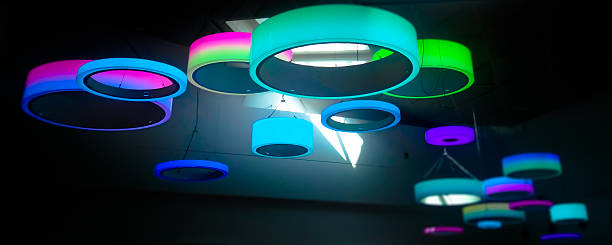
Lighting & Acoustics Designers are technical and artistic experts responsible for designing lighting schemes and acoustic treatments that improve the ambiance, safety, and usability of spaces or performances. Their role involves working in offices or studios, conducting site visits, and using specialized software for simulations, often balancing aesthetic vision with technical precision. They combine knowledge of physics, design, and human perception to address challenges like glare control, sound clarity, and energy efficiency. As key contributors to sensory design, they help create immersive and functional environments in an industry increasingly focused on user well-being, digital tools, and sustainable practices.
| Route | Steps |
| Route 1 | 1. 10+2 in any stream (preferably with Physics or Design subjects) 2. Bachelor’s degree in Architecture, Interior Design, or Electrical Engineering (3-5 years) 3. Internship or field training in lighting/acoustics (3-6 months) 4. Practice as Junior Lighting & Acoustics Designer |
| Route 2 | 1. 10+2 in any stream 2. Bachelor’s degree in Architecture, Design, or Engineering (3-5 years) 3. Master’s degree in Lighting Design, Acoustics, or Environmental Design (1-2 years) 4. Work as Lighting & Acoustics Designer |
| Route 3 | 1. 10+2 in any stream 2. Bachelor’s degree in Architecture or Engineering (3-5 years) 3. Master’s degree in Lighting Design or Acoustics (1-2 years) 4. Ph.D. in Environmental Acoustics or Lighting Technology (3-5 years) 5. Practice as Senior Designer or Academic |
| Route 4 | 1. 10+2 in any stream 2. Advanced international training or certification in Lighting & Acoustics Design (1-2 years) 3. Master’s or further studies as per country requirements 4. Practice abroad or in India |
| Institute | Course/Program | Official Link |
| National Institute of Design (NID), Ahmedabad | B.Des/M.Des in Industrial Design | https://www.nid.edu/ |
| School of Planning and Architecture (SPA), New Delhi | B.Arch/M.Arch in Architecture | https://www.spa.ac.in/ |
| CEPT University, Ahmedabad | M.Arch in Architectural Design | https://www.cept.ac.in/ |
| Indian Institute of Technology (IIT), Bombay | B.Des/M.Des in Industrial Design | https://www.iitb.ac.in/ |
| Sir JJ College of Architecture, Mumbai | B.Arch/M.Arch in Architecture | https://www.sirjjarchitecture.org/ |
| Srishti Manipal Institute of Art, Design and Technology, Bangalore | B.Des/M.Des in Spatial Design | https://www.srishti.ac.in/ |
| MIT Institute of Design, Pune | B.Des/M.Des in Interior Space Design | https://www.mitid.edu.in/ |
| Pearl Academy, Delhi/Mumbai | BA/MA in Interior and Spatial Design | https://www.pearlacademy.com/ |
| Amity School of Design, Noida | B.Des/M.Des in Interior Design | https://www.amity.edu/ |
| Indian Institute of Technology (IIT), Roorkee | B.Arch/M.Arch in Architecture | https://www.iitr.ac.in/ |
| Institution | Course | Country | Official Link |
| Royal College of Art (RCA) | MA in Interior Design (Lighting Focus) | UK | https://www.rca.ac.uk/ |
| Parsons School of Design, The New School | MFA in Lighting Design | USA | https://www.newschool.edu/parsons/ |
| University College London (UCL), Bartlett | MSc in Light and Lighting | UK | https://www.ucl.ac.uk/bartlett/ |
| Technical University of Denmark (DTU) | MSc in Architectural Engineering (Acoustics) | Denmark | https://www.dtu.dk/ |
| University of Sydney | Master of Architectural Science (Illumination Design) | Australia | https://www.sydney.edu.au/ |
| Politecnico di Milano | MSc in Architecture (Lighting Focus) | Italy | https://www.polimi.it/ |
| Aalto University | MA in Interior Architecture (Lighting and Acoustics) | Finland | https://www.aalto.fi/ |
| University of Sheffield | MA in Architectural Design (Acoustics Focus) | UK | https://www.sheffield.ac.uk/ |
| National University of Singapore (NUS) | MSc in Building Performance (Lighting and Acoustics) | Singapore | https://www.nus.edu.sg/ |
| University of Toronto | Master of Architecture (Environmental Design) | Canada | https://www.utoronto.ca/ |
India:
International:
Junior Lighting & Acoustics Designer → Senior Lighting & Acoustics Designer → Lighting & Acoustics Lead → Sensory Design Specialist → Design Director → Sensory Design Consultant → Academician/Professor → Independent Lighting & Acoustics Expert
| India | International |
| Morphogenesis, New Delhi | Arup, UK |
| Studio Lotus, New Delhi | Buro Happold, UK |
| Sanjay Puri Architects, Mumbai | AECOM, USA |
| Design Plus Architects, New Delhi | Gensler, USA |
| ZZ Architects, Mumbai | Foster + Partners, UK |
| HCP Design, Planning and Management Pvt. Ltd., Ahmedabad | Zaha Hadid Architects, UK |
| Talati and Partners, Mumbai | Mott MacDonald, UK |
| Quirk Studio, Mumbai | Lighting Design Collective, Spain |
| Edifice Consultants Pvt. Ltd., Mumbai | Speirs + Major, UK |
| Space Matrix, Mumbai | Acoustic Dimensions, USA |
| Pros | Cons |
| Opportunity to shape how people experience spaces through light and sound | High pressure to balance aesthetic vision with technical and budgetary constraints |
| High demand for sensory designers due to growth in architecture and entertainment sectors | Requires continuous learning to keep up with evolving technologies and standards |
| Rewarding impact on society through creating comfortable and immersive environments | Projects can be technically complex, often requiring precise calculations and testing |
| Diverse career paths across architecture, theater, events, and urban design | Risk of creative burnout due to repetitive client demands or tight schedules |
| Strong potential for growth with increasing emphasis on human-centric and sustainable design | Competitive field with fluctuating income, especially in freelance or early career stages |
| Career Level | India (₹ per annum) | International (USD per annum) |
| Junior Lighting & Acoustics Designer (Early Career) | 2,50,000 - 5,00,000 | 25,000 - 40,000 |
| Senior Lighting & Acoustics Designer (Mid-Career) | 5,00,000 - 8,00,000 | 40,000 - 60,000 |
| Lighting & Acoustics Lead | 8,00,000 - 12,00,000 | 60,000 - 80,000 |
| Sensory Design Specialist/Consultant | 12,00,000 - 18,00,000 | 80,000 - 100,000 |
| Academician/Professor/Independent Expert | 18,00,000+ | 100,000+ |
| Note: Salaries may vary based on location, employer, experience, and specialization. |
A career as a Lighting & Acoustics Designer offers a unique opportunity to contribute to the way people experience environments by creating balanced, immersive, and functional spaces through light and sound. From designing theatrical performances to shaping architectural interiors, Lighting & Acoustics Designers play a pivotal role in modern sensory design. This field combines creativity, technical expertise, and a commitment to user well-being, offering diverse paths in architecture, entertainment, and urban design. For those passionate about shaping sensory interactions, adapting to global design challenges, and addressing critical user needs in an era of rapid technological and cultural change, a career as a Lighting & Acoustics Designer provides an intellectually stimulating and professionally rewarding journey with the potential to make significant contributions to society by enhancing the functionality and beauty of built environments and industry standards worldwide.
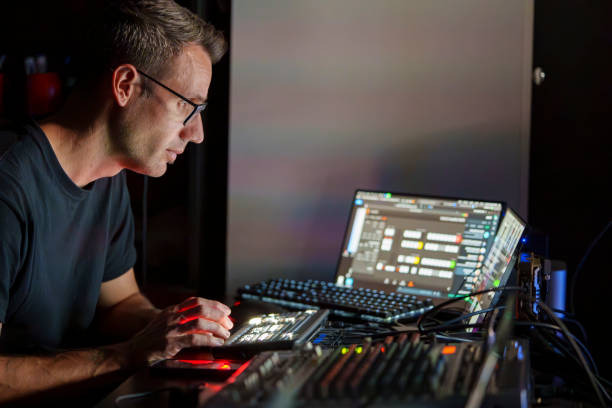
Experienced professionals manage complex lighting and acoustics projects with high accuracy, using advanced methodologies. They offer technical...
0.0LPA

Specialists oversee specific sensory design projects with exceptional competence. They integrate deep technical knowledge with expertise in...
0.0LPA
Senior professionals specialize in leading lighting and acoustics strategies, ensuring technical alignment. They provide leadership by...
0.0LPA
Take the next step and explore more about Lighting & Acoustics Designer.
Explore similar career paths that might interest you