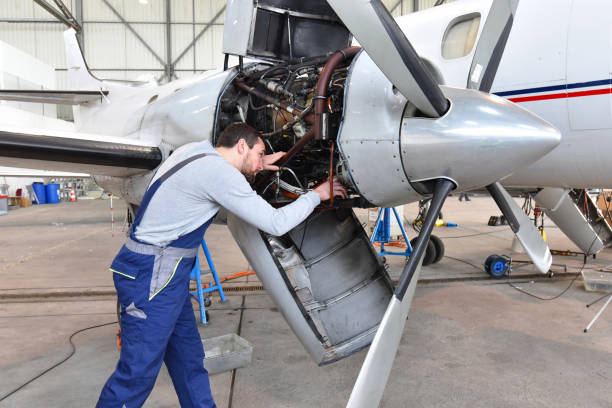
Aerospace Engineer
Junior Aerospace Engineer (Entry to Mid-Level)
Explore Career
A Materials-Science Engineer studies, develops, and tests materials used to create a wide range of products, from computer chips and aircraft wings to medical devices and sports equipment. They apply principles of physics, chemistry, and engineering to understand the properties and behaviours of metals, ceramics, polymers, composites, and nanomaterials. Their work enables innovation in manufacturing, product development, and sustainability across diverse industries.

Materials-Science Engineers investigate the structure, composition, and performance of materials to develop new materials and improve existing ones. They conduct experiments to test strength, durability, corrosion resistance, and other properties, often at microscopic or atomic levels. Using advanced analytical tools and simulation software, they design materials tailored for specific applications, such as lightweight alloys for aerospace or biocompatible polymers for medical implants. Materials engineers collaborate with product designers, manufacturing teams, and researchers to ensure materials meet technical, economic, and environmental requirements. Their work supports advancements in electronics, energy, healthcare, automotive, and construction industries.
| Route | Steps |
|---|---|
| Route 1: Bachelor’s in Materials Science and Engineering | 1. Complete a Bachelor’s degree in Materials Science, Metallurgical Engineering, or related field. 2. Pursue internships or research projects in materials labs. 3. Gain practical experience in industry or academia. 4. Seek employment in materials development or pursue advanced studies. |
| Route 2: Mechanical / Chemical Engineering + Materials Specialization | 1. Obtain a degree in Mechanical or Chemical Engineering. 2. Specialize in materials science through electives or postgraduate studies. 3. Participate in materials testing and development projects. 4. Transition into materials engineering roles. |
| Route 3: Physics / Chemistry + Materials Science | 1. Earn a degree in Physics or Chemistry with focus on materials science. 2. Engage in research on material properties and applications. 3. Collaborate with engineering teams for material integration. 4. Pursue careers in R&D or specialized materials fields. |
| Route 4: Nanotechnology / Polymer Science + Materials Engineering | 1. Complete studies in Nanotechnology, Polymer Science, or related fields. 2. Focus on advanced materials and fabrication techniques. 3. Gain hands-on experience in labs or industry. 4. Work in cutting-edge materials development and applications. |
| Institute | Course / Program | Official Link |
|---|---|---|
| Indian Institute of Technology (IIT) Madras | Materials Science and Engineering | https://www.iitm.ac.in/ |
| Indian Institute of Technology (IIT) Kanpur | Materials Science | https://www.iitk.ac.in/ |
| Indian Institute of Technology (IIT) Bombay | Materials Science and Engineering | https://www.iitb.ac.in/ |
| National Institute of Technology (NIT) Trichy | Metallurgical and Materials Engineering | https://www.nitt.edu/ |
| Birla Institute of Technology and Science (BITS), Pilani | Materials Science | https://www.bits-pilani.ac.in/ |
| Indian Institute of Science (IISc), Bangalore | Materials Engineering | https://iisc.ac.in/ |
| Jawaharlal Nehru Centre for Advanced Scientific Research (JNCASR) | Materials Science | https://www.jncasr.ac.in/ |
| Anna University, Chennai | Metallurgical and Materials Engineering | https://www.annauniv.edu/ |
| Manipal Institute of Technology | Materials Science and Engineering | https://manipal.edu/mit.html |
| National Institute of Metallurgy (NIM), Jamshedpur | Metallurgy and Materials Science | https://nimindia.in/ |
International
| Institution | Course | Country | Official Link |
|---|---|---|---|
| Massachusetts Institute of Technology (MIT) | Materials Science and Engineering | USA | https://mit.edu/ |
| Stanford University | Materials Science and Engineering | USA | https://stanford.edu/ |
| University of California, Berkeley | Materials Science and Engineering | USA | https://berkeley.edu/ |
| University of Cambridge | Materials Science and Metallurgy | UK | https://cam.ac.uk/ |
| ETH Zurich | Materials Science | Switzerland | https://ethz.ch/ |
| University of Oxford | Materials Science | UK | https://www.ox.ac.uk/ |
| National University of Singapore (NUS) | Materials Science and Engineering | Singapore | https://www.nus.edu.sg/ |
| University of Toronto | Materials Science and Engineering | Canada | https://www.utoronto.ca/ |
| Technical University of Munich (TUM) | Materials Science | Germany | https://www.tum.de/ |
| Delft University of Technology | Materials Science and Engineering | Netherlands | https://www.tudelft.nl/ |
India
International
Undergraduate Student → Graduate Student (MSc/PhD) → Junior Materials Engineer / Research Assistant → Materials Engineer → Senior Materials Scientist / Project Lead → Principal Scientist / R&D Manager → Director of Materials Engineering / Chief Technology Officer
| India | International |
|---|---|
| Indian Space Research Organisation (ISRO) | NASA |
| Defence Research and Development Organisation (DRDO) | Boeing |
| Tata Steel | General Electric (GE) |
| Bharat Heavy Electricals Limited (BHEL) | Intel Corporation |
| Reliance Industries | Samsung Electronics |
| Indian Oil Corporation | Siemens |
| Hindustan Aeronautics Limited (HAL) | 3M |
| National Aluminium Company (NALCO) | Dow Chemical |
| Indian Institute of Science (IISc) | BASF |
| Larsen & Toubro (L&T) | Corning Incorporated |
| Pros | Cons |
|---|---|
| Involvement in cutting-edge technology and innovation | Work can require extensive lab hours and precision |
| Opportunities across diverse and high-tech industries | Research and development roles may have long project timelines |
| Contribution to sustainability and environmental solutions | Experimental failures can be frequent and frustrating |
| High demand for skilled materials engineers globally | Continuous learning required to keep up with advances |
| Interdisciplinary work combining physics, chemistry, and engineering | Some roles may require hazardous material handling |
| Potential for patents, publications, and academic recognition | May involve repetitive testing and data analysis |
| Career Level | India (₹ per annum) | International (US$ per annum) |
|---|---|---|
| Entry-Level Materials Engineer | 3,50,000 - 7,00,000 | $55,000 - $75,000 |
| Mid-Level Materials Engineer | 7,00,000 - 15,00,000 | $75,000 - $110,000 |
| Senior Materials Scientist / Project Lead | 15,00,000 - 30,00,000 | $110,000 - $160,000 |
| Director of Materials Engineering / CTO | 30,00,000 - 50,00,000+ | $160,000 - $220,000+ |
A career as a Materials-Science Engineer offers the opportunity to drive innovation in the development and application of materials that underpin modern technology and industry. By combining scientific knowledge with engineering skills, materials engineers enable advancements across aerospace, healthcare, electronics, energy, and more. For those fascinated by the fundamental building blocks of products and eager to contribute to sustainable and cutting-edge solutions, materials science engineering provides a challenging, dynamic, and rewarding career path with broad global demand.


Materials Engineers develop, test, and improve materials used in manufacturing and product development. They analyze material properties and...
0.0LPA

Failure Analysis Engineers investigate material failures in products or structures to determine root causes. Using advanced analytical techniques,...
0.0LPA

Process Engineers focus on designing and optimizing manufacturing processes related to material fabrication, such as casting, forging, extrusion,...
0.0LPA
Take the next step and explore more about Materials-Science Engineer.
Explore similar career paths that might interest you