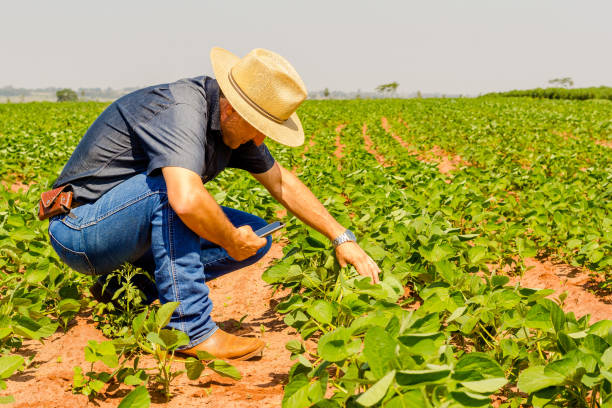
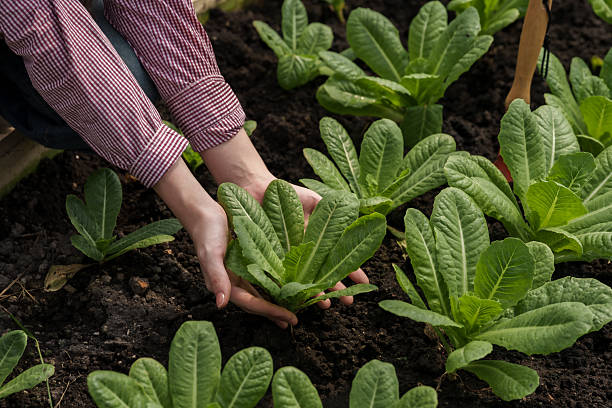
a) Farming and Cultivation Responsibilities:
- Plan and execute organic crop production by selecting suitable crops, seeds, and planting methods that align with organic principles.
- Implement natural pest and weed control methods, such as crop rotation, companion planting, and bio-pesticides, to maintain crop health.
- Prepare and apply organic fertilizers like compost, vermicompost, and manure to enhance soil fertility without chemical inputs.
- Monitor soil health, water usage, and crop growth to ensure sustainable yields and adherence to organic farming standards.
- Harvest, store, and package organic produce while maintaining quality and preventing contamination from non-organic sources.
b) Certification and Compliance Responsibilities:
- Ensure compliance with organic certification standards set by bodies like the National Programme for Organic Production (NPOP) or international agencies.
- Maintain detailed records of farming practices, inputs used, and crop cycles for audits and certification processes.
- Conduct regular soil and water tests to verify the absence of chemical residues and ensure organic integrity.
- Educate farmers or farm workers on organic farming techniques and the importance of avoiding synthetic inputs.
- Assist in obtaining and renewing organic certifications by preparing documentation and coordinating with certifying agencies.
c) Administrative and Support Responsibilities:
- Assist in inventory management by tracking organic seeds, natural inputs, and tools required for farming operations.
- Collaborate with organic product buyers, cooperatives, or markets to ensure timely delivery of produce and meet demand.
- Support documentation for farm reports, certification audits, or compliance with environmental and agricultural regulations.
- Participate in training or skill development programs to stay updated on organic farming innovations, policies, or market trends.
- Promote organic farming practices through community outreach, workshops, or social media to encourage adoption among local farmers.
| Level | Eligibility |
| Entry-Level (Certificate) | Minimum 10th or 12th standard pass with interest in agriculture; basic knowledge of farming is beneficial. |
| Diploma/Advanced Training | 12th standard pass (any stream, preferably science) or relevant certification in agriculture or organic farming. |
| Advanced Roles (Further Training) | Certificate or diploma in Organic Agriculture; relevant work experience preferred for competitive roles. |
| Route | Focus Area | Duration | Outcome |
| Certificate Programs | Basics of Organic Farming & Sustainability | 3-6 months | Entry-level roles in organic farms or cooperatives. |
| Diploma Programs | Organic Agriculture & Certification | 6 months-1 year | Broader scope for positions in organic certification or commercial farms. |
| Short-Term Training (Optional) | Organic Pest Control, Soil Management | 1-3 months | Specialized skills for areas like bio-fertilizers or crop rotation. |
| Online Courses | Sustainable Agriculture, Organic Standards | 1-3 months | Flexible learning for trends like organic export or certification processes. |
- No National Entrance Tests: Most certificate and diploma programs for organic agriculture do not require national-level entrance exams, focusing on direct or merit-based admissions
- Institute-Specific Criteria: Reputed training centers may assess candidates based on interest or basic agricultural knowledge through interviews or tests.
- Direct Admissions: Many private and government vocational centers, including ITIs, offer admissions with minimal eligibility requirements.
- Certificate in Organic Farming from recognized institutes like the National Centre of Organic Farming (NCOF) or state agricultural universities.
- Short courses in Sustainable Agriculture or Organic Certification from platforms like Coursera, Udemy, or Alison.
- Certifications in Bio-Fertilizer Production or Organic Pest Management from industry-specific training providers for niche roles.
- Technical Skills: Proficiency in organic farming techniques, soil management, and natural pest control methods for sustainable crop production.
- Environmental Knowledge: Understanding of ecological balance, biodiversity, and climate-adaptive farming to maintain organic integrity.
- Compliance Skills: Ability to adhere to organic certification standards and maintain documentation for audits and traceability.
- Physical Stamina: Capability to perform labor-intensive tasks like planting, composting, and harvesting in varying weather conditions.
- Analytical Skills: Competence in monitoring soil health, crop growth, and identifying issues to improve farm productivity organically.
- Soft Skills: Attention to detail for certification compliance, communication for farmer training, and adaptability to seasonal or market demands.
a) Organic Farming Settings:
- Organic Farms: Cultivate crops or manage livestock using organic methods in rural or peri-urban agricultural settings.
- Farmer Cooperatives: Work with groups of farmers to implement organic practices and facilitate collective certification or marketing.
b) Sector-Specific Settings:
- Organic Product Companies: Assist in sourcing, processing, or packaging organic produce for brands focusing on health foods.
- Certification Agencies: Support audits, inspections, or training to ensure farms meet organic standards for national or export markets.
- NGOs and Government Projects: Work on sustainable agriculture initiatives, farmer training, or rural development programs.
- Freelance/Entrepreneurship: Independent work offering consulting services, organic input supply, or small-scale organic farming ventures.
| Level | Small-Scale/Cooperative Sector (INR Annual) | Commercial/Export Sector (INR Annual) |
| Entry-Level | ₹1,20,000 - ₹2,00,000 | ₹1,80,000 - ₹3,00,000 |
| Mid-Level | ₹2,10,000 - ₹3,50,000 | ₹3,10,000 - ₹4,50,000 |
| Senior-Level | ₹3,60,000 - ₹5,00,000 | ₹4,60,000 - ₹6,50,000+ (Consulting potential) |
Note: Salaries vary based on location (urban vs. rural), experience, employer type (small farm vs. large commercial entity), and additional income from freelance or consulting roles. Roles in export-focused units or with certification bodies often offer higher pay. Data is approximate and subject to change based on economic conditions and industry trends in 2025.
- General Roles: Growing demand due to India’s increasing focus on organic farming, consumer preference for chemical-free produce, and export potential.
- Specialized Roles: Rising need for technicians with expertise in organic certification, bio-input production, and sustainable farm management.
- Emerging Areas: Opportunities in organic food processing, urban farming, and consultancy for organic transitions among conventional farmers.
| Institute | Program Focus | Location | Sector Affiliation |
| National Centre of Organic Farming (NCOF) | Organic Farming & Certification Training | Ghaziabad, Uttar Pradesh | Government |
| National Skill Development Corporation (NSDC) Partners | Organic Agriculture Skills under Skill India | Nationwide | Government-Private |
| Indian Agricultural Research Institute (IARI) | Sustainable & Organic Farming Courses | New Delhi | Government |
| Industrial Training Institutes (ITI) | Vocational Courses in Agriculture & Organic Farming | Multiple Locations | Government |
| Tamil Nadu Agricultural University | Organic Farming & Sustainable Agriculture | Coimbatore, Tamil Nadu | Government |
| IGNOU (Indira Gandhi National Open University) | Certificate in Organic Farming | Multiple Centers | Government |
| State Agricultural Universities | Organic Agriculture Training | Multiple States | Government |
| Coursera/Udemy/Alison | Online Sustainable Agriculture Courses | Online | Private |
| Dr. Y.S. Parmar University of Horticulture & Forestry | Organic Farming Programs | Solan, Himachal Pradesh | Government |
| Aptech Learning (Select Centers) | Vocational Skills in Agriculture | Multiple Locations | Private |
Note: Admission requirements vary; government institutes like NCOF or ITI often have lower fees but may require eligibility checks, while private or online platforms may have higher fees with flexible admission processes. Check specific institute websites or NSDC portals for course details, eligibility, and application processes.
a) Professional Growth Path:
- Farming Sector: Progress to roles like Organic Farm Manager, Trainer, or Input Supplier with experience and training.
- Certification Sector: Move into positions like Organic Auditor or Certification Coordinator with specialized knowledge.
- Entrepreneurship: Start personal organic farms, bio-input production units, or consulting services for organic farming transitions.
b) Further Education Path:
- All Sectors: Pursue advanced certifications or degrees in Organic Agriculture, Sustainable Farming, or Agronomy for higher roles.
| Pros | Cons |
| High demand in India’s growing organic sector with stable opportunities | Physically demanding due to outdoor work and labor-intensive tasks |
| Accessible entry with short-term training and minimal educational barriers | Lower initial yields or income during transition to organic methods |
| Contribution to environmental sustainability and healthier food systems | Exposure to weather variability and natural pest challenges |
| Potential for career growth in certification or export-focused roles | Need for strict adherence to certification standards and documentation |
| Opportunities in rural and urban settings, supporting local economies | Limited access to organic markets or inputs in some regions |
- Technology: Use of precision agriculture, organic-specific apps for farm monitoring, and e-commerce for direct organic sales.
- Public Policy Focus: Government initiatives like the Paramparagat Krishi Vikas Yojana (PKVY), Skill India, and NPOP promoting organic farming.
- Industry Growth: Rise of organic food markets, export demand for Indian organic produce, and urban consumer awareness driving employment.
- Skill Development: Emphasis on bio-input production, climate-resilient organic practices, and farmer training for wider adoption.
- Education: Choose a relevant program (Certificate/Diploma) based on career goals from recognized institutes or online platforms, considering cost and accessibility.
- Certifications: Obtain credentials like Organic Farming or Sustainable Agriculture certificates to enhance credibility and marketability.
- Practical Experience: Gain hands-on experience through internships, working on organic farms, or assisting in certification processes.
- Networking: Connect with organic farmers, cooperatives, or certification bodies via local markets, events, or social media for opportunities.
- Job Applications: Apply to roles in organic farms, cooperatives, or certification agencies through job portals like Naukri.com, Indeed, or direct outreach.
- Stay Updated: Follow advancements via industry news (e.g., Organic Farming India, APEDA updates), webinars, and platforms like Skill India for trends and skill requirements.
| Sector | Category | Employers |
| Organic Farming Cooperatives | Production & Marketing | Navdanya, Organic India Farmers, State-Level Organic Cooperatives |
| Organic Food Companies | Processing & Retail | Organic India, 24 Mantra Organic, Conscious Food, Patanjali Organic |
| Certification Bodies | Standards & Audits | APEDA, Ecocert India, Control Union, OneCert Asia |
| Government & NGO Sector | Training & Development | National Centre of Organic Farming (NCOF), Krishi Vigyan Kendras (KVKs), NGOs like Navdanya |
| Export & Specialty Sector | International Trade | Suminter India Organics, Phalada Agro, Organic Tattva |
- Skill Gaps: Limited access to advanced training in rural areas, requiring candidates to relocate to agricultural hubs for education or jobs.
- Transition Period: Challenges during the initial years of converting conventional farms to organic due to lower yields and certification costs.
- Market Access: Inconsistent access to organic markets or premium pricing in some regions, affecting income stability.
- Climate Variability: Dependence on natural conditions and water availability, posing risks to organic crop production without chemical buffers.
A career as an Organic Agriculture Technician in India offers a rewarding opportunity to work in a sustainable and impactful industry that supports environmental conservation, healthier food systems, and rural livelihoods. Supported by government initiatives like the Paramparagat Krishi Vikas Yojana and Skill India, along with growing consumer demand for organic products and export opportunities, this vocational path is ideal for individuals with a passion for agriculture, eco-friendly practices, and a commitment to sustainability. With accessible training, practical experience, and alignment with emerging trends like bio-inputs and climate-resilient farming, individuals can build meaningful careers while paving the way for advancement into managerial, certification, or entrepreneurial roles within India’s expanding organic agriculture landscape.