
Ag-FinTech Product Manager
Junior Ag-FinTech Product Manager
Explore Career
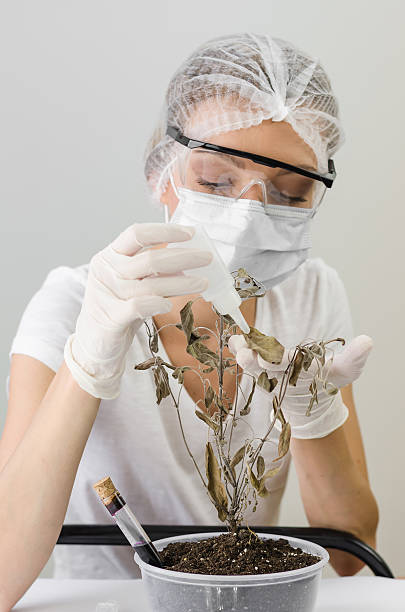
A Phytopathologist is a professional who studies plant diseases caused by pathogens such as fungi, bacteria, viruses, and nematodes, and develops strategies to manage and prevent them to ensure agricultural productivity and environmental health. They work in agricultural research institutions, universities, government agencies, and private industries, collaborating with farmers, agronomists, and plant breeders. Phytopathologists play a crucial role in food security and sustainable agriculture by protecting crops from diseases in a sector focused on innovation, ecological balance, and global challenges like climate change.

Phytopathologists are scientific experts responsible for identifying, diagnosing, and managing plant diseases to minimize crop losses and improve agricultural yields. Their role involves conducting field and laboratory research, developing disease-resistant plant varieties, and advising on integrated pest management, often working in research labs, greenhouses, or agricultural fields. They combine knowledge of plant biology, microbiology, and genetics to address challenges like emerging pathogens and pesticide resistance. As key contributors to plant health, they help shape sustainable agricultural practices in an industry increasingly focused on environmental safety, precision farming, and global food demands.
| Route | Steps |
| Route 1 | 1. 10+2 with Physics, Chemistry, Biology (PCB) 2. Bachelor’s degree in Agriculture or Botany (3-4 years) 3. Internship or research training (3-6 months) 4. Practice as Junior Phytopathologist |
| Route 2 | 1. 10+2 with PCB 2. Bachelor’s degree in Agriculture, Botany, or Plant Science (3-4 years) 3. Master’s degree in Plant Pathology or Phytopathology (2 years) 4. Work as Phytopathologist |
| Route 3 | 1. 10+2 with PCB 2. Bachelor’s degree in Agriculture or Plant Science (3-4 years) 3. Master’s degree in Plant Pathology (2 years) 4. Ph.D. in Phytopathology or Plant Disease Management (3-5 years) 5. Practice as Senior Researcher or Academic |
| Route 4 | 1. 10+2 with PCB 2. Advanced international training or certification in Plant Pathology (1-2 years) 3. Master’s or Ph.D. as per country requirements 4. Practice abroad or in India |
| Institute | Course/Program | Official Link |
| Indian Agricultural Research Institute (IARI), New Delhi | M.Sc./Ph.D. in Plant Pathology | https://www.iari.res.in/ |
| Tamil Nadu Agricultural University (TNAU), Coimbatore | B.Sc./M.Sc. in Agriculture (Plant Pathology) | https://www.tnau.ac.in/ |
| University of Agricultural Sciences (UAS), Bangalore | B.Sc./M.Sc. in Agriculture (Plant Pathology) | https://www.uasbangalore.edu.in/ |
| Punjab Agricultural University (PAU), Ludhiana | B.Sc./M.Sc. in Agriculture (Plant Pathology) | https://www.pau.edu/ |
| Anand Agricultural University (AAU), Gujarat | B.Sc./M.Sc. in Agriculture (Plant Pathology) | https://www.aau.in/ |
| Kerala Agricultural University (KAU), Thrissur | B.Sc./M.Sc. in Agriculture (Plant Pathology) | https://www.kau.in/ |
| Banaras Hindu University (BHU), Varanasi | B.Sc./M.Sc. in Agriculture (Plant Pathology) | https://www.bhu.ac.in/ |
| Bidhan Chandra Krishi Viswavidyalaya (BCKV), West Bengal | B.Sc./M.Sc. in Agriculture (Plant Pathology) | https://www.bckv.edu.in/ |
| Dr. Y.S. Parmar University of Horticulture and Forestry, Solan | M.Sc./Ph.D. in Plant Pathology | https://www.yspuniversity.ac.in/ |
| Amity University, Noida | B.Sc./M.Sc. in Agriculture | https://www.amity.edu/ |
| Institution | Course | Country | Official Link |
| Cornell University | Plant Pathology and Plant-Microbe Biology Programs | USA | https://www.cornell.edu/ |
| University of California, Davis | Plant Pathology Programs | USA | https://www.ucdavis.edu/ |
| Wageningen University & Research | Plant Sciences and Pathology Programs | Netherlands | https://www.wur.nl/ |
| University of Wisconsin-Madison | Plant Pathology Programs | USA | https://www.wisc.edu/ |
| University of Queensland | Plant Pathology and Agricultural Science Programs | Australia | https://www.uq.edu.au/ |
| University of Guelph | Plant Science and Pathology Programs | Canada | https://www.uoguelph.ca/ |
| Swedish University of Agricultural Sciences (SLU) | Plant Protection and Pathology Programs | Sweden | https://www.slu.se/ |
| University of Reading | Plant Pathology and Crop Protection Programs | UK | https://www.reading.ac.uk/ |
| ETH Zurich | Plant Sciences and Pathology Programs | Switzerland | https://www.ethz.ch/ |
| University of Copenhagen | Plant and Environmental Sciences Programs | Denmark | https://www.ku.dk/ |
India:
International:
Trainee → Junior Phytopathologist → Senior Phytopathologist → Plant Disease Specialist → Research Scientist → Crop Protection Manager → Academician/Professor → Agricultural Consultant
| India | International |
| Indian Council of Agricultural Research (ICAR) | International Plant Protection Convention (IPPC) |
| Indian Agricultural Research Institute (IARI) | Food and Agriculture Organization (FAO), UN |
| National Bureau of Plant Genetic Resources (NBPGR) | World Health Organization (WHO) - Plant Health |
| State Agricultural Universities | Syngenta, Switzerland |
| Bayer CropScience India | Bayer CropScience, Global |
| DuPont Pioneer India | Corteva Agriscience, USA |
| Syngenta India | BASF Agricultural Solutions, Germany |
| Mahyco (Maharashtra Hybrid Seeds Co.) | Monsanto (now Bayer), USA |
| Rallis India Ltd. | Dow AgroSciences, USA |
| National Seeds Corporation (NSC) | Nunhems (BASF), Netherlands |
| Pros | Cons |
| Opportunity to contribute to food security and sustainable agriculture through disease control | Physically demanding fieldwork with exposure to pathogens and chemicals |
| High demand for experts due to increasing threats from emerging plant diseases | Limited funding for research in some regions or countries |
| Rewarding impact on crop yields and farmer livelihoods through effective solutions | Risk of disease outbreaks despite preventive measures |
| Diverse career paths across research, academia, and consulting | Limited public recognition compared to other agricultural fields |
| Strong potential for growth with increasing focus on biotechnology and climate adaptation | Dependency on fluctuating agricultural policies and environmental conditions |
| Career Level | India (₹ per annum) | International (USD per annum) |
| Trainee/Junior Phytopathologist (Early Career) | 3,00,000 - 5,00,000 | 30,000 - 45,000 |
| Senior Phytopathologist (Mid-Career) | 5,00,000 - 8,00,000 | 45,000 - 70,000 |
| Plant Disease Specialist | 8,00,000 - 12,00,000 | 70,000 - 90,000 |
| Research Scientist/Crop Protection Manager | 12,00,000 - 16,00,000 | 90,000 - 120,000 |
| Academician/Professor/Agricultural Consultant | 16,00,000+ | 120,000+ |
| Note: Salaries may vary based on location, employer, experience, and specialization. |
A career as a Phytopathologist offers a unique opportunity to contribute to sustainable agriculture and food security by studying and managing plant diseases that threaten global crop production and environmental health. From diagnosing pathogens to developing resistant varieties, Phytopathologists play a pivotal role in modern agriculture and ecological balance. This field combines scientific expertise, practical application, and a commitment to sustainability, offering diverse paths in research, academia, and consulting. For those passionate about shaping agricultural trends, adapting to global disease challenges, and addressing critical sustainability needs in an era of evolving environmental demands, a career as a Phytopathologist provides an intellectually stimulating and professionally rewarding journey with the potential to make significant contributions to society by enhancing the quality of crop protection and industry standards worldwide.

Entry-level individuals undergo basic training in plant disease identification under supervision. They acquire practical skills through lab and...
0.0LPA

Phytopathologist : Early-career professionals handle basic disease diagnostics with increasing autonomy. They hone skills in pathogen...
0.0LPA
Phytopathologist : Experienced professionals manage complex disease research with high accuracy, using advanced methodologies. They offer...
0.0LPA
Take the next step and explore more about Phytopathologist.
Explore similar career paths that might interest you