Aerospace Engineer
Junior Aerospace Engineer (Entry to Mid-Level)
Explore Career
A Polymer Engineer applies principles of chemistry, materials science, and engineering to design, develop, and optimise polymer materials and manufacturing processes. They work with synthetic and natural polymers, composites, and advanced materials to create products for automotive, aerospace, medical, packaging, electronics, and consumer goods applications. Polymer engineers combine theoretical knowledge of macromolecular chemistry and material properties with practical engineering skills to solve complex problems involving polymer synthesis, processing, characterisation, and performance optimisation.
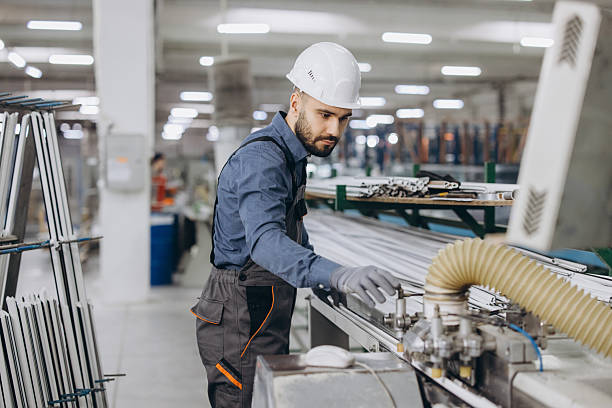
Polymer engineers design and develop polymer materials and products ranging from everyday plastic items to sophisticated biomedical implants, high-performance composites, and smart materials. Their work involves analysing polymer structure-property relationships, designing synthesis routes, optimising processing conditions, and ensuring product performance and sustainability. They collaborate with chemists, mechanical engineers, and manufacturing teams to integrate polymer materials into various applications. Polymer engineers also conduct research, testing, and quality assurance to ensure polymer products meet performance specifications, regulatory requirements, and environmental standards.
| Route | Steps |
| Route 1 | 1. 10+2 with Physics, Chemistry, Mathematics (PCM) stream. 2. B.Tech/B.E. (4 yrs) in Polymer Engineering, Chemical Engineering, or Materials Science. 3. Industrial training in polymer manufacturing companies or research laboratories. 4. Optional M.Tech (2 yrs) for specialisation and career advancement. |
| Route 2 | 1. 10+2 with Physics, Chemistry, Mathematics (PCM) stream. 2. B.Sc. (3 yrs) in Chemistry, Applied Chemistry, or Materials Science. 3. M.Sc. (2 yrs) in Polymer Science, Materials Chemistry, or Applied Chemistry. 4. Industry internships and research projects in polymer technology. 5. Optional PhD (3-5 yrs) for research and development roles. |
| Route 3 | 1. 10+2 with Physics, Chemistry, Mathematics (PCM) stream. 2. B.Tech (4 yrs) in Chemical Engineering or Materials Engineering. 3. M.Tech (2 yrs) specialising in Polymer Engineering or Materials Science. 4. Professional development and hands-on training in polymer processing. 5. Industry experience and specialised certifications. |
| Route 4 | 1. 10+2 with Physics, Chemistry, Mathematics (PCM) stream. 2. Bachelor's degree (3-4 yrs) in Engineering, Chemistry, or Materials Science. 3. Master's (2 yrs) in Polymer Science, Materials Engineering, or Chemical Engineering. 4. PhD (3-5 yrs) in Polymer Engineering or Macromolecular Science. 5. Postdoctoral research and advanced industrial training. 6. Research publications and patent development experience. |
| Institute | Course / Program | Official Link |
| Indian Institute of Technology (IIT) Delhi | Chemical Engineering with Polymer Specialisation | https://www.iitd.ac.in/ |
| Indian Institute of Technology (IIT) Bombay | Materials Science and Engineering | https://www.iitb.ac.in/ |
| Indian Institute of Technology (IIT) Kanpur | Materials Science and Engineering | https://www.iitk.ac.in/ |
| Indian Institute of Technology (IIT) Madras | Chemical Engineering and Materials Science | https://www.iitm.ac.in/ |
| Indian Institute of Science (IISc), Bangalore | Materials Engineering and Polymer Science | https://iisc.ac.in/ |
| Anna University, Chennai | Polymer Technology | https://www.annauniv.edu/ |
| University of Pune | Polymer Science and Engineering | https://www.unipune.ac.in/ |
| Cochin University of Science and Technology | Polymer Science and Rubber Technology | https://www.cusat.ac.in/ |
| National Institute of Technology (NIT) Warangal | Chemical Engineering | https://www.nitw.ac.in/ |
| National Institute of Technology (NIT) Rourkela | Chemical Engineering | https://www.nitrkl.ac.in/ |
| Birla Institute of Technology and Science (BITS) Pilani | Chemical Engineering | https://www.bits-pilani.ac.in/ |
| Harcourt Butler Technical University | Plastic Technology | https://www.hbtu.ac.in/ |
| Jadavpur University, Kolkata | Chemical Engineering | https://www.jaduniv.edu.in/ |
| Delhi Technological University (DTU) | Chemical Engineering | https://www.dtu.ac.in/ |
| Institute of Chemical Technology (ICT), Mumbai | Polymer Engineering | https://www.ictmumbai.edu.in/ |
| Institution | Course | Country | Official Link |
| Massachusetts Institute of Technology (MIT) | Materials Science and Engineering | USA | https://mit.edu/ |
| Stanford University | Materials Science and Engineering | USA | https://stanford.edu/ |
| University of Akron | Polymer Engineering | USA | https://uakron.edu/ |
| Case Western Reserve University | Macromolecular Science and Engineering | USA | https://case.edu/ |
| Northwestern University | Materials Science and Engineering | USA | https://www.northwestern.edu/ |
| University of California, Berkeley | Materials Science and Engineering | USA | https://berkeley.edu/ |
| Georgia Institute of Technology | Materials Science and Engineering | USA | https://gatech.edu/ |
| Carnegie Mellon University | Materials Science and Engineering | USA | https://cmu.edu/ |
| University of Michigan | Materials Science and Engineering | USA | https://umich.edu/ |
| Pennsylvania State University | Materials Science and Engineering | USA | https://psu.edu/ |
| ETH Zurich | Materials Science | Switzerland | https://ethz.ch/ |
| Technical University of Denmark (DTU) | Chemical and Biochemical Engineering | Denmark | https://www.dtu.dk/ |
| RWTH Aachen University | Materials Engineering | Germany | https://www.rwth-aachen.de/ |
| University of Cambridge | Materials Science and Metallurgy | UK | https://www.cam.ac.uk/ |
| Imperial College London | Materials Science and Engineering | UK | https://www.imperial.ac.uk/ |
| University of Toronto | Chemical Engineering and Applied Chemistry | Canada | https://utoronto.ca/ |
| Australian National University | Engineering | Australia | https://anu.edu.au/ |
| École Polytechnique Fédérale de Lausanne (EPFL) | Materials Science and Engineering | Switzerland | https://epfl.ch/ |
| National University of Singapore | Materials Science and Engineering | Singapore | https://nus.edu.sg/ |
| Nanyang Technological University | Materials Science and Engineering | Singapore | https://ntu.edu.sg/ |
India
International
Graduate Trainee / Research Assistant → Polymer Engineer → Senior Polymer Engineer → Principal Engineer / Technical Specialist → Research and Development Manager → Director of Engineering / Chief Technology Officer → Consultant / Entrepreneur
| India | International |
| Reliance Industries Limited | BASF |
| Tata Chemicals | DuPont |
| Indian Petrochemicals Corporation Limited (IPCL) | Dow Chemical |
| Supreme Industries | ExxonMobil Chemical |
| Jain Irrigation Systems | SABIC |
| Nilkamal Limited | LyondellBasell |
| Astral Poly Technik | 3M |
| Finolex Industries | Arkema |
| Sintex Industries | Eastman Chemical |
| Grasim Industries | Celanese Corporation |
| Pros | Cons |
| Work on innovative materials with diverse applications | Complex chemistry requiring continuous learning |
| High demand across multiple industries | Long development cycles for new materials |
| Opportunity to contribute to sustainability solutions | Regulatory compliance can be challenging |
| Competitive salaries and career advancement opportunities | Laboratory work may involve hazardous chemicals |
| Interdisciplinary work combining science and engineering | Market volatility affecting raw material costs |
| Potential for patent development and innovation | Limited positions in some geographical regions |
| Career Level | India (₹ per annum) | International (US$ per annum) |
| Graduate Engineer / Research Assistant | 3,50,000 - 6,00,000 | $55,000 - $70,000 |
| Polymer Engineer / Scientist | 6,00,000 - 12,00,000 | $70,000 - $95,000 |
| Senior Polymer Engineer | 12,00,000 - 20,00,000 | $95,000 - $130,000 |
| Principal Engineer / Technical Specialist | 20,00,000 - 35,00,000 | $120,000 - $160,000 |
| R&D Manager / Director | 30,00,000 - 60,00,000+ | $150,000 - $220,000+ |
A career as a Polymer Engineer offers the opportunity to work at the forefront of materials science, developing innovative polymer materials that enable advances in technology, healthcare, sustainability, and quality of life. With applications spanning virtually every industry, polymer engineers play a crucial role in creating materials that meet evolving societal needs whilst addressing environmental challenges. This field combines fundamental chemistry with practical engineering, offering diverse career paths in research, development, manufacturing, and commercialisation. For those fascinated by the molecular world and its macroscopic manifestations, polymer engineering provides a challenging and rewarding career with excellent growth prospects in an increasingly materials-driven world.
Take the next step and explore more about Polymer Engineer.
Explore similar career paths that might interest you