Aerospace Engineer
Junior Aerospace Engineer (Entry to Mid-Level)
Explore Career
A Sports Engineer is a professional who applies engineering principles to design, develop, and test equipment, facilities, and technologies that enhance athletic performance, safety, and sports experiences. They work in industries related to sports equipment manufacturing, research institutions, or athletic organizations, collaborating with athletes, coaches, and product designers. Sports Engineers play a crucial role in advancing sports innovation, injury prevention, and performance optimization in a field driven by technology, biomechanics, and data analytics.
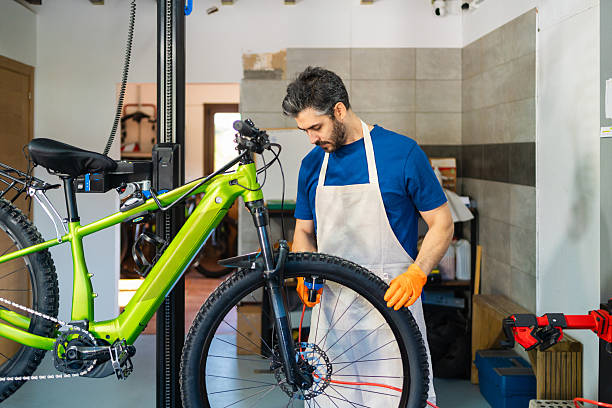
Sports Engineers are innovative and analytical professionals who operate in laboratories, manufacturing units, or sports facilities, using tools such as computer-aided design (CAD) software, simulation models, and testing equipment. Their role involves creating cutting-edge sports gear, improving facility designs, and solving challenges like balancing performance with safety standards, often facing issues such as tight project deadlines or complex material requirements. They combine expertise in mechanical engineering, materials science, and biomechanics to revolutionize sports. As key contributors to the sports and technology industries, they help shape the future of athletic performance, accessibility, and sustainability in a sector increasingly driven by wearable tech, AI, and global competition demands.
| Route | Steps |
| Route 1 | 1. 10+2 in Science stream (Physics, Chemistry, Mathematics) 2. Bachelor’s degree in Mechanical, Biomedical, or Sports Engineering (4 years) 3. Internship in sports equipment firms or research labs 4. Practice as Junior Sports Engineer |
| Route 2 | 1. 10+2 in Science stream (PCM) 2. Bachelor’s degree in Engineering (Mechanical, Materials, or related field) (4 years) 3. Master’s degree in Sports Engineering or Biomechanics (2 years) 4. Gain practical experience through projects or internships 5. Work as Sports Engineer or Specialist |
| Route 3 | 1. 10+2 in Science stream (PCM) 2. Diploma in Mechanical or Industrial Engineering (3 years) 3. Certificate in Sports Technology or Design (6 months-1 year) 4. Internship in sports manufacturing or testing facilities 5. Practice as Sports Engineering Technician or Assistant |
| Route 4 | 1. 10+2 in Science stream (PCM) 2. Bachelor’s degree in Engineering (Mechanical or related field) (4 years) 3. Ph.D. in Sports Engineering or Biomechanics (3-5 years) 4. Post-doctoral research or academic leadership role 5. Practice as Senior Sports Engineer or Research Lead |
| Institute | Course/Program | Official Link |
| Indian Institute of Technology (IIT), Delhi | B.Tech/M.Tech in Mechanical Engineering | https://www.iitd.ac.in/ |
| Indian Institute of Technology (IIT), Bombay | B.Tech/M.Tech in Mechanical/Biomedical Engineering | https://www.iitb.ac.in/ |
| National Institute of Technology (NIT), Surathkal | B.Tech/M.Tech in Mechanical Engineering | https://www.nitk.ac.in/ |
| Birla Institute of Technology and Science (BITS), Pilani | B.E./M.E. in Mechanical Engineering | https://www.bits-pilani.ac.in/ |
| Vellore Institute of Technology (VIT), Vellore | B.Tech/M.Tech in Mechanical/Biomedical Engineering | https://www.vit.ac.in/ |
| Manipal Institute of Technology, Manipal | B.Tech/M.Tech in Mechanical Engineering | https://www.manipal.edu/ |
| Anna University, Chennai | B.E./M.E. in Mechanical/Biomedical Engineering | https://www.annauniv.edu/ |
| SRM Institute of Science and Technology, Chennai | B.Tech/M.Tech in Mechanical Engineering | https://www.srmist.edu.in/ |
| Amity School of Engineering and Technology, Noida | B.Tech/M.Tech in Mechanical Engineering | https://www.amity.edu/ |
| Jadavpur University, Kolkata | B.E./M.E. in Mechanical Engineering | https://www.jaduniv.edu.in/ |
| Institution | Course | Country | Official Link |
| Loughborough University, Sports Technology Institute | BSc/MSc in Sports Technology | UK | https://www.lboro.ac.uk/ |
| Massachusetts Institute of Technology (MIT), Department of Mechanical Engineering | BS/MS in Mechanical Engineering with Sports Focus | USA | https://www.mit.edu/ |
| University of Sheffield, Department of Mechanical Engineering | BEng/MEng in Sports Engineering | UK | https://www.sheffield.ac.uk/ |
| Delft University of Technology, Faculty of Mechanical, Maritime and Materials Engineering | MSc in Sports Engineering | Netherlands | https://www.tudelft.nl/ |
| University of Queensland, School of Human Movement and Nutrition Sciences | BS/MS in Sports Technology | Australia | https://www.uq.edu.au/ |
| ETH Zurich, Department of Mechanical and Process Engineering | MS in Robotics and Sports Tech | Switzerland | https://www.ethz.ch/ |
| Stanford University, Department of Bioengineering | BS/MS in Biomechanics and Sports Engineering | USA | https://www.stanford.edu/ |
| University of Tokyo, Department of Mechanical Engineering | MS in Sports Engineering | Japan | https://www.u-tokyo.ac.jp/ |
| University of Southern California, Viterbi School of Engineering | MS in Mechanical Engineering with Sports Focus | USA | https://viterbi.usc.edu/ |
| Imperial College London, Department of Mechanical Engineering | BEng/MEng in Mechanical Engineering with Sports Applications | UK | https://www.imperial.ac.uk/ |
India:
International:
Junior Sports Engineer → Sports Engineer → Senior Sports Engineer → Sports Engineering Specialist → Sports Engineering Project Manager → Director of Sports Technology → Regional Sports Engineering Lead → Chief Sports Technology Officer → Sports Engineering Consultant → Sports Engineering Professor
| India | International |
| Nivia Sports, Jalandhar | Nike, USA |
| Decathlon India, Multiple Locations | Adidas, Germany |
| Yonex Sunrise India, Multiple Locations | Puma, Germany |
| BCCI (Board of Control for Cricket in India) R&D, Mumbai | Under Armour, USA |
| Sports Authority of India (SAI), Multiple Locations | ASICS, Japan |
| Cosco India, Delhi | Wilson Sporting Goods, USA |
| Shiv Naresh Sports, Delhi | Mizuno, Japan |
| Sanspareils Greenlands (SG), Meerut | New Balance, USA |
| Khelo India Initiative, Multiple Locations | TaylorMade Golf, USA |
| Tata Steel Sports Division, Jamshedpur | Salomon, France |
| Pros | Cons |
| Opportunity to innovate and directly impact sports performance and safety | Often involves long hours and tight project deadlines for product launches |
| High personal satisfaction in creating solutions athletes rely on | Can face high pressure to balance performance, cost, and safety in designs |
| Rewarding role in the growing sports technology industry | May require continuous learning to keep up with rapidly evolving tech |
| Diverse career paths across equipment, facilities, and wearable tech | Risk of project setbacks due to testing failures or regulatory hurdles |
| Strong potential for growth with increasing demand for sports innovation | Uncertainty in outcomes due to athlete variability or market acceptance |
| Career Level | India (₹ per annum) | International (USD per annum) |
| Junior Sports Engineer (Early Career) | 3,00,000 - 6,00,000 | 40,000 - 60,000 |
| Sports Engineer (Mid-Career) | 6,00,000 - 12,00,000 | 60,000 - 80,000 |
| Senior Sports Engineer | 12,00,000 - 20,00,000 | 80,000 - 100,000 |
| Sports Engineering Specialist/Manager | 20,00,000 - 30,00,000 | 100,000 - 130,000 |
| Chief Sports Technology Officer/Expert | 30,00,000+ | 130,000+ |
| Note: Salaries may vary based on location, employer, experience, and specialization. |
A career as a Sports Engineer offers a profound opportunity to transform athletics, driving progress through technical innovation and performance expertise, fostering excellence with every design. Sports Engineers are the architects of athletic advancement, using their skills to empower athletes, address safety challenges, and promote innovation across diverse sports settings. This profession blends engineering precision with sports passion, providing pathways in equipment design, facility engineering, wearable tech, and beyond. For those passionate about sports and technology, driven by a desire to solve performance challenges, and eager to embrace the evolving landscape of digital tools and sustainable design, becoming a Sports Engineer is a deeply rewarding journey. It empowers individuals to shape athletic outcomes, address critical industry needs, and advance human progress through the transformative power of sports engineering.
Entry-level individuals who assist in basic design tasks, prototype testing, or data collection under supervision. They gain hands-on experience...
0.0LPA
Mid-level professionals who independently lead design projects, optimize equipment, and ensure compliance with safety standards. They implement...
0.0LPA

Experts who focus on managing large-scale sports tech projects, providing leadership in product launches or facility designs. They handle...
0.0LPA
Take the next step and explore more about Sports Engineer.
Explore similar career paths that might interest you