Accessory Designer
Senior Accessory Designer
Explore Career
A UI/UX Designer is a professional who creates intuitive, visually appealing, and user-friendly interfaces for digital products, focusing on both the user interface (UI) for aesthetics and functionality, and user experience (UX) for seamless interaction. In India, the demand for UI/UX designers is surging due to the rapid growth of digital products, mobile apps, and e-commerce, coupled with initiatives like Digital India that promote online services and accessibility. With roots in design, psychology, and technology, and driven by modern trends such as minimalistic design, voice user interfaces (VUIs), and AI-driven personalization, this career is pivotal in shaping how users interact with digital platforms. Professionals in this field are essential in IT companies, startups, digital agencies, gaming industries, and freelance markets, contributing to enhanced user satisfaction, engagement, and business growth. This career drives progress through trends like inclusive design, micro-interactions, and immersive AR/VR experiences.
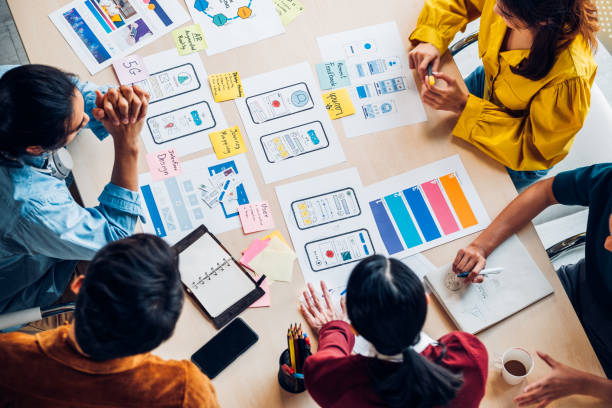
UI/UX Designers work in dynamic environments such as technology firms, design studios, corporate product teams, e-commerce companies, or as independent consultants, often collaborating with developers, product managers, and marketers across global and local markets. Their roles include researching user needs, designing wireframes, and creating interactive prototypes while addressing challenges like diverse user expectations, rapid tech changes, and the need for continuous feedback integration in India’s fast-evolving digital landscape. They face issues such as balancing creativity with usability, ensuring accessibility for all users, and managing tight project timelines amidst complex client and organizational demands. By leveraging expertise in design tools, user psychology, and interaction principles, they craft digital experiences that are both functional and delightful. As key contributors to India’s digital economy and global user-centric design ecosystem, they propel progress through trends like design systems, no-code prototyping, and sustainable design practices.
| Route | Steps |
| Route 1: Bachelor’s Degree - Direct Entry | 1. Complete 10+2 in any stream with minimum 50-60% marks (Arts/Design preferred). 2. Pursue B.Des in Interaction Design, Visual Communication, or related field (4 years) via entrance exams like NID DAT or UCEED. 3. Gain practical skills through internships or design projects during the course. 4. Join entry-level roles in design firms or tech companies post-graduation. |
| Route 2: Diploma to Degree Pathway | 1. Complete 10th or 10+2 and enroll in a Diploma in Graphic Design or UI/UX Design (1-3 years). 2. Gain lateral entry into B.Des programs if desired through relevant exams. 3. Build skills via hands-on design projects and internships. 4. Transition to professional roles after diploma or degree completion. |
| Route 3: Master’s Specialization (M.Des/M.S.) | 1. Complete B.Des or related Bachelor’s in Design/Computer Science. 2. Pursue M.Des in Interaction Design or HCI (Human-Computer Interaction) (2 years) via CEED or GATE. 3. Focus on advanced UX research and design skills. 4. Join mid-level or specialized roles in industry or academia. |
| Route 4: International Education Path | 1. Complete 10+2 in any stream and clear entrance exams or language proficiency tests like IELTS/TOEFL. 2. Pursue B.Des/M.Des in UI/UX Design or HCI from international universities (e.g., USA, UK). 3. Gain global exposure through internships and industry projects. 4. Work internationally or return to India for high-demand roles. |
| Route 5: Short-Term Courses and Certifications | 1. Complete 10+2 or basic education with interest in design. 2. Enroll in short-term courses or certifications in UI/UX Design, Figma, or Interaction Design (3-6 months). 3. Build a portfolio through personal or freelance projects. 4. Transition to formal roles or degrees for career growth. |
| Institute | Course/Program | Official Link |
| National Institute of Design (NID), Ahmedabad | B.Des/M.Des in Interaction Design | https://www.nid.edu/ |
| Indian Institute of Technology (IIT), Bombay | M.Des in Interaction Design (via IDC) | https://www.iitb.ac.in/ |
| Indian Institute of Technology (IIT), Delhi | M.Des in Design (UI/UX Focus) | https://www.iitd.ac.in/ |
| Srishti Manipal Institute of Art, Design & Technology, Bangalore | B.Des in Human-Centered Design | https://srishtimanipalinstitute.in/ |
| Symbiosis Institute of Design (SID), Pune | B.Des in Communication Design (UI/UX Electives) | https://www.sid.edu.in/ |
| Pearl Academy, Delhi/Mumbai | B.Des in Interaction Design | https://pearlacademy.com/ |
| MIT Institute of Design, Pune | B.Des/M.Des in User Experience Design | https://www.mitid.edu.in/ |
| Unitedworld Institute of Design (UID), Ahmedabad | B.Des in Visual Communication (UI/UX Focus) | https://uid.edu.in/ |
| World University of Design (WUD), Sonipat | B.Des in UI & UX Design | https://worlduniversityofdesign.ac.in/ |
| Lovely Professional University (LPU), Punjab | B.Des in Multimedia (UI/UX Specialization) | https://www.lpu.in/ |
| Institution | Course | Country | Official Link |
| Parsons School of Design, New York | BFA/MFA in Design & Technology (UI/UX Focus) | USA | https://www.newschool.edu/parsons/ |
| Rhode Island School of Design (RISD), Providence | BFA/MFA in Digital + Media (UI/UX Focus) | USA | https://www.risd.edu/ |
| Royal College of Art (RCA), London | MA in Information Experience Design | UK | https://www.rca.ac.uk/ |
| Carnegie Mellon University (CMU), Pittsburgh | M.S. in Human-Computer Interaction (HCI) | USA | https://www.cmu.edu/ |
| University of the Arts London (UAL), London | MA in Interaction Design Communication | UK | https://www.arts.ac.uk/ |
| Aalto University, Helsinki | MA in New Media (UI/UX Focus) | Finland | https://www.aalto.fi/ |
| Politecnico di Milano, Milan | M.Sc. in Interaction Design | Italy | https://www.polimi.it/ |
| University of Sydney, Sydney | Master of Interaction Design & Electronic Arts | Australia | https://www.sydney.edu.au/ |
| Delft University of Technology (TU Delft), Delft | M.Sc. in Design for Interaction | Netherlands | https://www.tudelft.nl/ |
| Stanford University, Stanford | M.S. in Design (HCI and UI/UX Focus) | USA | https://www.stanford.edu/ |
India:
International (for Relevant Studies or Exposure):
Junior UI/UX Designer → UI/UX Designer → Senior UI/UX Designer → Lead UI/UX Designer → UI/UX Design Manager → Director of Design → Independent Design Consultant
| India (Firms/Organizations) | International Collaborations |
| Tata Consultancy Services (TCS), Mumbai | Global Digital Experience Networks |
| Infosys, Bangalore | International UX Design Solutions |
| Wipro, Bangalore | Global IT and Design Services |
| HCL Technologies, Noida | Worldwide User Experience Networks |
| Zomato, Gurgaon | Global Food-Tech Design Networks |
| Flipkart, Bangalore | International E-commerce UX Networks |
| Paytm, Noida | Global Fintech Design Collaborations |
| Amazon India, Hyderabad | Global Cloud and UX Design Networks |
| Microsoft India, Hyderabad | Global Software and Design Networks |
| Google India, Bangalore | International Design Innovation Hubs |
| Pros | Cons |
| High demand globally with growing digital product needs and lucrative opportunities | Constant need to adapt to new design trends, tools, and user expectations |
| Flexibility to work remotely or freelance on diverse design projects | Long hours and tight deadlines during product launches or redesign phases |
| Opportunities to work on creative, user-centric, and impactful digital experiences | High competition in the field, especially for entry-level and freelance roles |
| Significant impact by improving how users interact with technology daily | Risk of burnout due to iterative feedback loops and client revisions |
| Relatively quick entry through short-term courses, certifications, and self-learning | Pressure to balance aesthetics, functionality, and accessibility in designs |
| Career Level (Private/Public Sector Example) | India (₹ per annum) | International (USD per annum, Tentative) |
| Junior UI/UX Designer (Entry) | 2,50,000 - 4,50,000 | $30,000 - $45,000 |
| UI/UX Designer (Early-Mid) | 4,50,000 - 8,00,000 | $45,000 - $70,000 |
| Senior UI/UX Designer (Mid-Level) | 8,00,000 - 12,00,000 | $70,000 - $100,000 |
| Lead UI/UX Designer/Manager (Senior) | 12,00,000 - 20,00,000 | $100,000 - $130,000 |
| Director of Design (Top) | 20,00,000 - 30,00,000+ | $130,000 - $180,000+ |
| Note: Salaries are indicative and vary based on location (metro vs. non-metro for India; country/region for international roles), sector, and experience. |
A career in UI/UX Design offers a transformative opportunity to shape digital interactions, solve user challenges, and drive engaging experiences, opening doors to impactful contributions in a rapidly evolving technological world. These professionals are the architects of user delight, using their creative and analytical expertise to craft solutions that connect businesses and users across diverse contexts. This profession blends a passion for design with strategic problem-solving, providing diverse pathways in UI design, UX research, interaction design, product design, and beyond. For those passionate about creativity, driven by a desire to enhance user journeys, and eager to navigate the ever-changing landscape of digital interfaces, becoming a UI/UX Designer is a deeply rewarding journey. It empowers individuals to shape the digital future by building interfaces and experiences that transform how we interact, engage, and thrive through impactful, accessible, and cutting-edge design solutions.


Entry-level professionals who create basic designs and assist in user research under supervision. They build foundational skills. Their role aids...
0.0LPA

Mid-level experts who lead design projects, mentor juniors, and refine user experiences. They balance creativity with strategy. Their expertise...
0.0LPA

Senior professionals who manage design teams, strategize user experiences, and ensure scalability of solutions. They handle strategic planning....
0.0LPA
Take the next step and explore more about UI and UX designer.
Explore similar career paths that might interest you