Accessory Designer
Senior Accessory Designer
Explore Career
A VFX (Visual Effects) Designer is a skilled professional who creates digital effects and simulations to enhance visual storytelling in films, television, video games, and other media. They work in industries such as entertainment, gaming, advertising, and animation, collaborating with directors, animators, and production teams. VFX Designers play a crucial role in modern media by bringing imaginative concepts to life through cutting-edge technology in an era where visual immersion is central to audience engagement and creative expression.
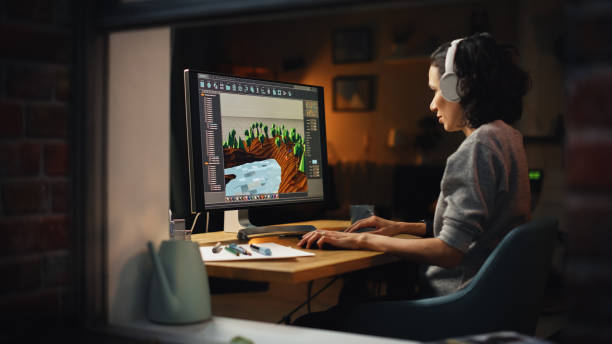
VFX Designers are creative and technical experts responsible for designing and integrating digital effects like explosions, character enhancements, or fantastical environments into live-action or animated content. Their role includes 3D modeling, compositing, and rendering, addressing challenges ranging from seamless integration to realistic simulations. They combine artistic vision with software proficiency, working across various settings to elevate visual narratives. As key contributors to media production, VFX Designers drive storytelling impact and audience captivation in a landscape increasingly reliant on digital effects.
| Route | Steps |
| Route 1 | 1. 10+2 in any stream (preferably with Arts or Computer Science) |
| 2. Bachelor’s degree in Animation, Multimedia, or Graphic Design (3-4 years) | |
| 3. Internship or practical training (3-6 months) | |
| 4. Practice as Junior VFX Artist or Compositor | |
| Route 2 | 1. 10+2 in any stream |
| 2. Diploma or Certificate in VFX or Animation (6 months-2 years) | |
| 3. Build hands-on experience through projects | |
| 4. Work as Freelance or Junior VFX Designer | |
| Route 3 | 1. 10+2 in any stream |
| 2. Bachelor’s degree in Animation or Film Production (3-4 years) | |
| 3. Master’s degree in Visual Effects or Digital Media (2 years) | |
| 4. Work as Senior VFX Designer or VFX Supervisor | |
| Route 4 | 1. 10+2 in any stream |
| 2. Advanced international training or certification in VFX (1-2 years) | |
| 3. Master’s or specialized courses as per country requirements | |
| 4. Practice abroad or in India |
| Institute | Course/Program | Official Link |
| National Institute of Design (NID), Ahmedabad | B.Des/M.Des in Animation Film Design | https://www.nid.edu/ |
| Whistling Woods International, Mumbai | BA/MA in Animation and VFX | https://www.whistlingwoods.net/ |
| Arena Animation, Multiple Locations | Diploma in Animation and VFX | https://www.arena-multimedia.com/ |
| MAAC (Maya Academy of Advanced Cinematics), Multiple Locations | Advanced Diploma in VFX | https://www.maacindia.com/ |
| Frameboxx Animation & Visual Effects, Mumbai | Diploma in VFX and Animation | https://frameboxx.in/ |
| Zee Institute of Creative Art (ZICA), Mumbai | Certificate in Visual Effects | https://www.zica.org/ |
| FX School, Mumbai | Diploma in Visual Effects | https://www.fxschool.in/ |
| Toonz Academy, Trivandrum | Advanced Diploma in Animation and VFX | https://toonzacademy.com/ |
| Picasso Animation College, Delhi | B.Sc. in Animation and VFX | https://www.picasso.co.in/ |
| Reliance Education, Multiple Locations | Certificate in VFX and Compositing | https://www.relianceedu.com/ |
| Institution | Course | Country | Official Link |
| Vancouver Film School (VFS) | Diploma in Visual Effects | Canada | https://vfs.edu/ |
| Gnomon School of Visual Effects | Certificate in Digital Production | USA | https://www.gnomon.edu/ |
| Savannah College of Art and Design (SCAD) | BFA/MFA in Visual Effects | USA | https://www.scad.edu/ |
| Bournemouth University | BA/MA in Visual Effects | UK | https://www.bournemouth.ac.uk/ |
| University of Southern California (USC) | BA/MA in Cinematic Arts (VFX Focus) | USA | https://www.usc.edu/ |
| Nanyang Technological University (NTU) | BFA in Digital Animation | Singapore | https://www.ntu.edu.sg/ |
| RMIT University | Bachelor of Design (Animation and VFX) | Australia | https://www.rmit.edu.au/ |
| Sheridan College | Advanced Diploma in Visual Effects | Canada | https://www.sheridancollege.ca/ |
| Arts University Bournemouth | BA in Visual Effects Design and Production | UK | https://aub.ac.uk/ |
| Ringling College of Art and Design | BFA in Computer Animation (VFX Focus) | USA | https://www.ringling.edu/ |
India:
International:
Junior VFX Artist → VFX Designer → Senior VFX Designer → VFX Supervisor → VFX Lead → Art Director → Creative Director → VFX Consultant
| India | International |
| Prime Focus | Industrial Light & Magic (ILM), USA |
| Red Chillies Entertainment | Weta Digital, New Zealand |
| DNEG India | Framestore, UK |
| Yash Raj Films (YRF) | MPC (Moving Picture Company), UK |
| Eros International | Digital Domain, USA |
| PhantomFX | Sony Pictures Imageworks, USA |
| Technicolor India | Rhythm & Hues, USA |
| Tata Elxsi | Double Negative (DNEG), UK |
| Reliance MediaWorks | Pixomondo, Germany |
| NY VFXWAALA | The Mill, UK |
| Pros | Cons |
| Opportunity to work on impactful visual storytelling projects | High-pressure environment due to tight production deadlines |
| High demand for VFX designers in entertainment industries | Long hours, often requiring overtime during project crunch times |
| Rewarding impact through creating immersive experiences | Risk of mental fatigue from continuous technical and creative tasks |
| Diverse career paths across film, gaming, and advertising | Limited job security in freelance or project-based roles |
| Strong potential for growth with advancements in VFX tools | Dependency on client feedback and frequent revisions |
| Career Level | India (₹ per annum) | International (USD per annum) |
| Junior VFX Artist (Early Career) | 2,50,000 - 4,50,000 | 30,000 - 45,000 |
| VFX Designer (Mid-Career) | 4,50,000 - 7,50,000 | 45,000 - 65,000 |
| Senior VFX Designer/VFX Supervisor | 7,50,000 - 12,00,000 | 65,000 - 85,000 |
| VFX Lead/Art Director | 12,00,000 - 18,00,000 | 85,000 - 110,000 |
| Creative Director/VFX Consultant | 18,00,000+ | 110,000+ |
Note: Salaries vary based on location, experience, employer, and specialization. International figures are approximate and depend on the country and sector.
A career as a VFX Designer offers a unique opportunity to contribute to visual storytelling, cinematic immersion, and creative innovation by crafting digital effects for diverse media. From enhancing blockbuster films to designing game environments, VFX Designers play a pivotal role in modern entertainment and technology landscapes. This field combines artistic expertise, technical skills, and a commitment to solving complex visual challenges, offering diverse paths in film, gaming, advertising, and beyond. For those passionate about digital effects, adapting to evolving tools, and addressing creative needs in an era of rapid media evolution, a career as a VFX Designer provides an intellectually stimulating and professionally rewarding journey with the potential to make significant contributions to society by advancing the art and application of visual effects worldwide.

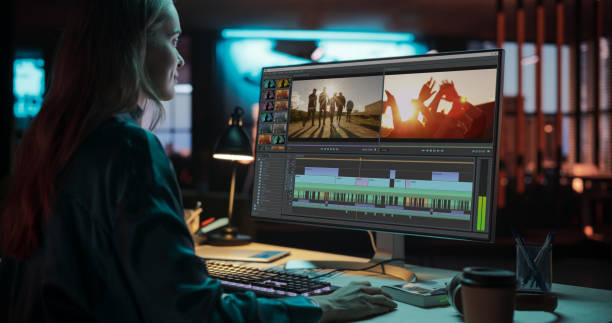
Early-career professionals assist in basic effects creation and compositing with increasing autonomy. They hone skills in software while ensuring...
0.0LPA
Specialists oversee complex VFX projects with exceptional competence. They integrate deep technical knowledge with expertise in specific effects...
0.0LPA
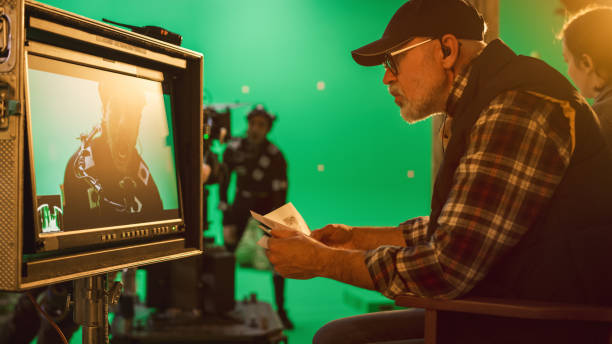
Senior professionals design tailored VFX strategies for production goals. They provide leadership by establishing frameworks for high-stakes...
0.0LPA
Take the next step and explore more about VFX Designer.
Explore similar career paths that might interest you