
Ag-FinTech Product Manager
Junior Ag-FinTech Product Manager
Explore Career
A Viticulturist is a professional who specializes in viticulture, the science and practice of grape cultivation for wine production, table grapes, or other grape-based products. They work in vineyards, wineries, research institutions, and agricultural agencies, collaborating with winemakers, farmers, and industry stakeholders. Viticulturists play a crucial role in the wine and grape industry by optimizing grape quality and yield, contributing to sustainable agriculture and economic growth in a sector focused on quality, tradition, and environmental stewardship.
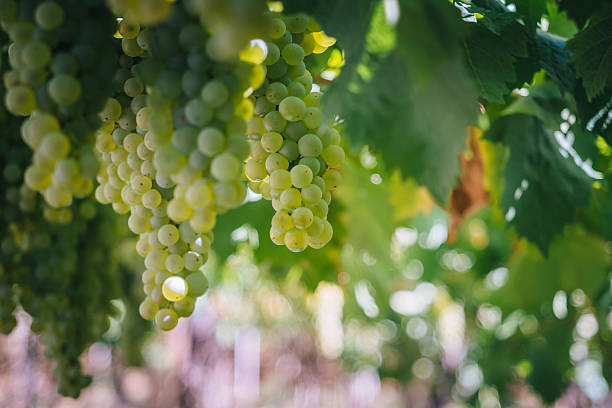
Viticulturists are agricultural and technical experts responsible for managing grapevine cultivation, from planting and pruning to pest control and harvest, ensuring the production of high-quality grapes for various uses. Their role involves fieldwork, research, and advisory services, often working in vineyards, laboratories, or wineries. They combine knowledge of horticulture, soil science, and climate adaptation to address challenges like grape diseases, weather variability, and market demands. As key contributors to the grape and wine industry, they help shape sustainable practices in a field increasingly focused on precision agriculture, organic production, and global trade.
| Route | Steps |
| Route 1 | 1. 10+2 with Physics, Chemistry, Biology (PCB) or Agriculture 2. Bachelor’s degree in Agriculture, Horticulture, or Viticulture (3-4 years) 3. Internship or field training (3-6 months) 4. Practice as Junior Viticulturist |
| Route 2 | 1. 10+2 with PCB or Agriculture 2. Bachelor’s degree in Agriculture, Horticulture, or Viticulture (3-4 years) 3. Master’s degree in Viticulture, Horticulture, or Oenology (2 years) 4. Work as Viticulturist |
| Route 3 | 1. 10+2 with PCB or Agriculture 2. Bachelor’s degree in Agriculture or Horticulture (3-4 years) 3. Master’s degree in Viticulture or Horticulture (2 years) 4. Ph.D. in Viticulture or Grape Science (3-5 years) 5. Practice as Senior Researcher or Academic |
| Route 4 | 1. 10+2 with PCB or Agriculture 2. Advanced international training or certification in Viticulture (1-2 years) 3. Master’s or Ph.D. as per country requirements 4. Practice abroad or in India |
| Institute | Course/Program | Official Link |
| Indian Agricultural Research Institute (IARI), New Delhi | M.Sc./Ph.D. in Horticulture (Viticulture Focus) | https://www.iari.res.in/ |
| Tamil Nadu Agricultural University (TNAU), Coimbatore | B.Sc./M.Sc. in Horticulture (Viticulture) | https://www.tnau.ac.in/ |
| University of Agricultural Sciences (UAS), Bangalore | B.Sc./M.Sc. in Horticulture (Viticulture) | https://www.uasbangalore.edu.in/ |
| Punjab Agricultural University (PAU), Ludhiana | B.Sc./M.Sc. in Horticulture (Viticulture) | https://www.pau.edu/ |
| Anand Agricultural University (AAU), Gujarat | B.Sc./M.Sc. in Horticulture (Viticulture) | https://www.aau.in/ |
| Kerala Agricultural University (KAU), Thrissur | B.Sc./M.Sc. in Horticulture (Viticulture) | https://www.kau.in/ |
| Dr. Y.S. Parmar University of Horticulture and Forestry, Solan | B.Sc./M.Sc. in Horticulture (Viticulture) | https://www.yspuniversity.ac.in/ |
| Banaras Hindu University (BHU), Varanasi | B.Sc./M.Sc. in Agriculture/Horticulture | https://www.bhu.ac.in/ |
| Bidhan Chandra Krishi Viswavidyalaya (BCKV), West Bengal | B.Sc./M.Sc. in Horticulture (Viticulture) | https://www.bckv.edu.in/ |
| Amity University, Noida | B.Sc./M.Sc. in Agriculture/Horticulture | https://www.amity.edu/ |
| Institution | Course | Country | Official Link |
| University of California, Davis | Viticulture and Enology Programs | USA | https://www.ucdavis.edu/ |
| Cornell University | Viticulture and Horticulture Programs | USA | https://www.cornell.edu/ |
| University of Adelaide | Viticulture and Oenology Programs | Australia | https://www.adelaide.edu.au/ |
| Lincoln University | Viticulture and Oenology Programs | New Zealand | https://www.lincoln.ac.nz/ |
| University of Bordeaux | Viticulture and Wine Science Programs | France | https://www.u-bordeaux.com/ |
| University of Stellenbosch | Viticulture and Oenology Programs | South Africa | https://www.sun.ac.za/ |
| Wageningen University & Research | Horticulture and Viticulture Programs | Netherlands | https://www.wur.nl/ |
| University of Florence | Viticulture and Agricultural Science Programs | Italy | https://www.unifi.it/ |
| Geisenheim University | Viticulture and Beverage Technology Programs | Germany | https://www.hs-geisenheim.de/ |
| University of British Columbia | Viticulture and Wine Science Programs | Canada | https://www.ubc.ca/ |
India:
International:
Trainee → Junior Viticulturist → Senior Viticulturist → Vineyard Manager → Grape Research Specialist → Winery Consultant → Academician/Professor → Viticulture Consultant
| India | International |
| Indian Council of Agricultural Research (ICAR) | E. & J. Gallo Winery, USA |
| Sula Vineyards, Nashik | Constellation Brands, USA |
| Grover Zampa Vineyards, Bangalore | Treasury Wine Estates, Australia |
| Chandon India (Moët Hennessy), Nashik | Pernod Ricard Winemakers, France |
| York Winery, Nashik | Jackson Family Wines, USA |
| Fratelli Wines, Maharashtra | Concha y Toro, Chile |
| Good Earth Winery, Nashik | Torres Wines, Spain |
| National Research Centre for Grapes (NRCG), Pune | Antinori, Italy |
| State Agricultural Universities | Mondavi Winery, USA |
| Heritage Grape Winery, Nashik | Penfolds, Australia |
| Pros | Cons |
| Opportunity to contribute to the wine industry and sustainable agriculture through grape cultivation | Physically demanding fieldwork with exposure to varying weather conditions |
| High demand for experts in wine-producing regions due to cultural and economic significance | Limited funding for research or vineyard support in some regions |
| Rewarding impact on wine quality and grower livelihoods through innovative practices | Risk of crop losses due to diseases or adverse weather despite best efforts |
| Diverse career paths across vineyards, research, and consulting | Limited public recognition compared to other agricultural fields |
| Strong potential for growth with increasing focus on organic wines and sustainable viticulture | Dependency on fluctuating wine market trends and global trade policies |
| Career Level | India (₹ per annum) | International (USD per annum) |
| Trainee/Junior Viticulturist (Early Career) | 3,00,000 - 5,00,000 | 30,000 - 45,000 |
| Senior Viticulturist (Mid-Career) | 5,00,000 - 8,00,000 | 45,000 - 70,000 |
| Vineyard Manager | 8,00,000 - 12,00,000 | 70,000 - 90,000 |
| Grape Research Specialist/Winery Consultant | 12,00,000 - 16,00,000 | 90,000 - 120,000 |
| Academician/Professor/Viticulture Consultant | 16,00,000+ | 120,000+ |
| Note: Salaries may vary based on location, employer, experience, and specialization. |
career as a Viticulturist offers a unique opportunity to contribute to the wine and grape industry by managing cultivation processes that enhances grape quality and support sustainable agriculture. From vineyard management to collaborating with winemakers, Viticulturists play a pivotal role in shaping wine culture and environmental stewardship. This field combines scientific expertise, practical application, and a commitment to sustainability, offering diverse paths in vineyards, research, and consulting. For those passionate about shaping viticulture trends, adapting to global wine challenges, and addressing critical sustainability needs in an era of evolving agricultural demands, a career as a Viticulturist provides an intellectually stimulating and professionally rewarding journey with the potential to make significant contributions to society by enhancing the quality of grape production and industry standards worldwide.

Entry-level individuals undergo basic training in vineyard management and grape cultivation under supervision. They acquire practical skills...
0.0LPA

Early-career professionals handle basic vineyard operations with increasing autonomy. They hone skills in pest control and harvest timing while...
0.0LPA
Experienced professionals manage complex vineyard projects with high accuracy, using advanced methodologies. They offer technical expertise in...
0.0LPA
Take the next step and explore more about Viticulturist.
Explore similar career paths that might interest you