
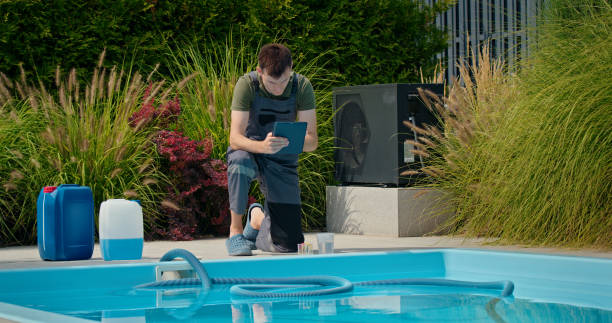
a) Technical and Operational Responsibilities:
- Collect water samples from various sources (e.g., rivers, reservoirs, treatment plants, or household supplies) and conduct tests to assess quality parameters like pH, turbidity, microbial content, and chemical contaminants.
- Operate and maintain water testing equipment, such as spectrophotometers, turbidity meters, and portable testing kits, to ensure accurate results.
- Monitor and maintain sanitation systems, including sewage treatment plants, drainage networks, and public sanitation facilities, to prevent contamination and ensure compliance with standards.
- Assist in the operation of water treatment processes, such as filtration, chlorination, or reverse osmosis, to ensure safe water supply for domestic or industrial use.
- Perform basic repairs and troubleshooting on water treatment and sanitation equipment to minimize downtime and maintain system efficiency.
b) Administrative and Support Responsibilities:
- Maintain detailed records of water quality test results, maintenance schedules, and sanitation system inspections for reporting to supervisors or regulatory authorities.
- Collaborate with environmental officers, public health officials, and local authorities to implement water safety and sanitation programs in communities or industries.
- Educate communities or workers on safe water usage, hygiene practices, and the importance of sanitation to prevent waterborne diseases.
- Ensure compliance with environmental regulations, safety standards, and government policies related to water quality and sanitation (e.g., National Water Policy, WHO guidelines).
- Stay updated on advancements in water testing technologies, treatment methods, and sanitation practices to improve operational effectiveness.
| Level | Eligibility |
| Entry-Level (Certificate) | Minimum 8th or 10th standard pass; basic literacy and numeracy are beneficial, though no specific academic background is mandatory. |
| Diploma (Optional) | 10th or 12th standard pass, preferably with science or environmental studies for more comprehensive training. |
| Advanced Roles (Further Training) | Certificate or diploma in Water Quality Management/Environmental Technology; relevant work experience preferred for competitive roles. |
| Route | Focus Area | Duration | Outcome |
| Certificate Programs | Water Quality Testing, Sanitation Systems | 3-6 months | Entry-level roles in water testing or sanitation maintenance. |
| Diploma Programs | Water Resource Management or Environmental Technology | 1-2 years | Broader scope for positions in government projects, private firms, or supervisory roles. |
| ITI (Industrial Training Institute) Courses | Water Quality Technician, Sanitation Support | 6 months-1 year | Practical skills for immediate employment in water testing and system maintenance. |
| Short-Term Training (Optional) | Water Treatment Processes, Public Health Sanitation | 1-3 months | Specialized skills for specific areas like industrial water treatment or rural sanitation. |
- No National Entrance Tests: Most certificate, ITI, and diploma programs in water quality and sanitation do not require national-level entrance exams like NEET, focusing instead on direct or merit-based admissions
- ITI Entrance Exams: Some state-run ITIs may conduct basic entrance tests or interviews for admission to related courses.
- Institute-Specific Criteria: Reputed vocational centers may assess candidates based on 10th/12th marks or practical aptitude tests.
- Direct Admissions: Many private and government vocational training centers offer admissions based on educational qualifications and personal interviews.
- Technical Skills: Proficiency in water sampling, testing techniques, and operation of water treatment or sanitation equipment.
- Problem-Solving Skills: Ability to identify and address issues like water contamination, equipment malfunctions, or sanitation system failures.
- Physical Skills: Stamina to work in field conditions, collect samples from remote locations, and handle equipment for extended periods.
- Analytical Skills: Capability to interpret water test results, assess sanitation conditions, and recommend corrective actions based on data.
- Soft Skills: Communication and teamwork skills to coordinate with supervisors, coworkers, and community members on water and sanitation initiatives.
- Safety Awareness: Knowledge of safety protocols for handling chemicals, working with water systems, and preventing health risks in sanitation environments.
a) Field and Project Settings:
- Government Sector: Roles in municipal corporations, public health departments, or water supply boards (e.g., Jal Shakti initiatives), often with structured benefits.
- Private Sector: Positions with water treatment companies, industrial units, or sanitation service providers; may involve shift work or travel based on project needs.
b) Specialized and Community Settings:
- Government Sector: Work in environmental protection agencies or under national programs like the National Mission for Clean Ganga (NMCG) and Swachh Bharat Abhiyan.
- Private Sector: Roles in specialized water testing labs, corporate sustainability programs, or NGOs focused on rural water and sanitation access.
| Level | Government Sector (INR Annual) | Private Sector (INR Annual) |
| Entry-Level | ₹1,90,000 - ₹2,60,000 (Pay Scale: Level 1-2 under 7th CPC) | ₹2,10,000 - ₹3,00,000 |
| Mid-Level | ₹2,70,000 - ₹3,60,000 (Pay Scale: Level 3-4) | ₹3,20,000 - ₹4,20,000 |
| Senior-Level | ₹3,70,000 - ₹4,80,000 (Pay Scale: Level 5-6) | ₹4,50,000 - ₹5,80,000 |
Note: Salaries vary based on location (urban vs. rural), experience, specialization (e.g., industrial water treatment vs. public sanitation), and employer type. Government sector salaries often follow the 7th Central Pay Commission (CPC) scales and include benefits like Dearness Allowance (DA), House Rent Allowance (HRA), pensions, and job security. Private sector earnings can be higher, especially in urban areas or with specialized firms, and may include performance incentives. Data is approximate and subject to change based on economic conditions and policy updates in 2025.
- General Technician Roles: High demand due to India’s focus on clean water access, sanitation improvements (e.g., Swachh Bharat Abhiyan), and stricter environmental regulations.
- Specialized Technician Roles: Growing need for professionals skilled in industrial water treatment, rural sanitation systems, and water quality monitoring as urbanization and industrialization increase.
- Emerging Areas: Expansion of roles in smart water management systems, wastewater recycling, and community health programs addressing waterborne diseases.
| Institute | Program Focus | Location | Sector Affiliation |
| Industrial Training Institutes (ITIs) | Water Quality Technician, Sanitation Support | Nationwide | Government |
| National Skill Development Corporation (NSDC) Partners | Water and Sanitation Management under Skill India | Nationwide | Government-Private |
| Government Polytechnic Colleges | Diploma in Environmental Technology | Multiple Locations | Government |
| Central Pollution Control Board (CPCB) Training Programs | Water Quality Monitoring and Management | Multiple Locations | Government |
| MSME Development Institutes | Water Treatment and Sanitation | Multiple Locations | Government-Private |
| IGNOU (Indira Gandhi National Open University) | Certificate in Water Resource Management | Multiple Centers | Government |
| National Institute of Hydrology (NIH) | Short Courses in Water Quality | Roorkee, Uttarakhand | Government |
| TERI School of Advanced Studies | Water and Sanitation Management | New Delhi | Private |
| National Institute of Urban Affairs (NIUA) | Urban Water and Sanitation Training | New Delhi | Government-Private |
| Private Vocational Training Centers | Water Testing and Sanitation Systems | Multiple Locations | Private |
Note: Admission requirements vary; government institutes and ITIs often have lower fees but may require basic eligibility checks, while private institutes may have higher fees with more flexible admission processes. Check specific institute websites or NSDC portals for course details, eligibility, and application processes.
a) Technical and Supervisory Path:
- Government Sector: Progress to roles like Senior Water Quality Technician or Sanitation Supervisor in municipal corporations or water boards; promotions based on seniority and exams under state/central service rules.
- Private Sector: Move to specialized roles in industrial water management, wastewater treatment operations, or consulting with additional certifications and experience.
b) Further Education Path:
- Government and Private Sector: Pursue advanced studies (e.g., Diploma or Bachelor’s in Environmental Science or Water Resource Management) or certifications in advanced water treatment to transition into roles like environmental officer or water quality analyst.
| Pros | Cons |
| High demand due to increasing focus on clean water and sanitation | Physically demanding work involving field visits, exposure to contaminants, and outdoor conditions |
| Opportunities for specialization in areas like wastewater treatment | Health risks due to handling water samples or working in sanitation environments, requiring strict safety adherence |
| Practical, hands-on career with accessible entry through short-term training | Limited decision-making authority; often under supervision of managers or environmental officers |
| Stable employment in government roles with benefits like pensions | Private sector roles may involve irregular hours and project-based instability |
| Societal impact by contributing to public health and environmental protection | Continuous learning required to keep up with evolving water treatment technologies and regulations |
- Technology: Adoption of smart water management systems, IoT-enabled water quality sensors, and advanced wastewater treatment technologies for efficient resource use.
- Public Policy Focus: Government initiatives like Jal Jeevan Mission, National Mission for Clean Ganga (NMCG), and Swachh Bharat Abhiyan to ensure clean water access and improved sanitation.
- Sustainability: Emphasis on water recycling, rainwater harvesting, and zero-liquid discharge systems to address water scarcity and pollution.
- Skill Development: Programs under Skill India, NSDC, and partnerships with environmental organizations are standardizing training to meet modern water and sanitation demands.
- Education: Choose a relevant program (Certificate/Diploma/ITI) based on career goals from recognized Indian institutes or NSDC-affiliated centers, considering government (lower cost) or private (higher cost, easier access) options.
- Certifications: Obtain credentials through NSDC, CPCB, or industry-specific programs for specialized skills in water testing, treatment, or sanitation systems.
- Internships/Apprenticeships: Gain hands-on experience through apprenticeships at water treatment plants, municipal facilities, or environmental projects to build practical skills.
- Networking: Join associations like the Indian Water Works Association (IWWA) or participate in environmental workshops for opportunities and exposure.
- Government Job Applications: Apply for roles in municipal corporations, water supply boards, or public health departments through notifications or state-level recruitment boards.
- Private Sector Opportunities: Apply to water treatment firms, environmental consultancies, or industrial units through job portals like Naukri.com, Indeed, or direct outreach.
- Stay Updated: Follow advancements via resources from the Ministry of Jal Shakti, CPCB, and industry reports on trends like smart water systems and sustainable sanitation practices.
| Sector | Category | Employers |
| Government Sector | Project Settings | Municipal Corporations, Public Health Departments, Jal Jeevan Mission Projects |
| Public Sector Units | Central Pollution Control Board (CPCB), State Water Boards, National Mission for Clean Ganga (NMCG) | |
| Private Sector | Development Settings | Water treatment companies (Eureka Forbes, Ion Exchange), industrial units with in-house systems |
| Sustainability Settings | Environmental consultancies, NGOs focused on water and sanitation (e.g., WaterAid India, Sulabh International) |
- Skill Gaps: Limited access to training on advanced water testing and treatment technologies, especially in rural areas, hinders professional development.
- Work Conditions: Fieldwork may involve exposure to contaminated water, harsh environments, and long hours, impacting health and work-life balance.
- Regional Disparities: Opportunities and infrastructure are concentrated in urban areas, limiting access in rural or remote regions.
- Policy Implementation Issues: Inconsistent enforcement of water quality standards and lack of public awareness can complicate on-ground operations.
A career as a Water Quality & Sanitation Technician in India offers a vital opportunity to contribute to public health and environmental sustainability, with roles in both government and private sectors. Supported by national initiatives like Jal Jeevan Mission and Swachh Bharat Abhiyan, this vocational path is ideal for those passionate about ensuring clean water access and effective sanitation systems. With accessible training, certifications, practical experience, and adaptability to emerging trends like smart water management and wastewater recycling, individuals can build stable and meaningful careers while supporting India’s journey toward a healthier and more sustainable future.