Aerobiologist
Aerology Research Scholar (PhD)
Explore Career
An Astrobiologist is a scientist who studies the origin, evolution, distribution, and future of life in the universe. This interdisciplinary field combines biology, chemistry, astronomy, geology, and planetary science to explore the possibility of life beyond Earth and understand the conditions that support life. Astrobiologists investigate extreme environments on Earth as analogs for extraterrestrial habitats and analyze data from space missions searching for biosignatures.

Astrobiologists seek to answer fundamental questions about life’s existence beyond Earth by studying how life originates and survives in extreme conditions. They analyze meteorites, study planetary atmospheres, simulate extraterrestrial environments in laboratories, and participate in space missions. Their research helps in identifying habitable zones on other planets and moons, understanding the potential for life on Mars, Europa, Enceladus, and exoplanets. Astrobiologists collaborate with astronomers, chemists, geologists, and engineers to design experiments and instruments for space probes and telescopes, contributing to the search for extraterrestrial life and the understanding of life's universal principles.
| Route | Steps |
|---|---|
| Route 1: Bachelor’s in Biology / Astronomy / Geology + Advanced Degrees in Astrobiology | 1. Complete a Bachelor’s degree in Biology, Astronomy, Geology, or related fields. 2. Pursue a Master’s and/or PhD in Astrobiology or Planetary Science. 3. Engage in research internships or projects related to space science. 4. Seek postdoctoral positions or employment with research institutions and space agencies. |
| Route 2: Interdisciplinary Science Degrees | 1. Obtain a degree in interdisciplinary sciences such as Biochemistry, Microbiology, or Environmental Science. 2. Specialize in astrobiology through graduate studies. 3. Gain experience in laboratory and field research. 4. Collaborate with space missions or observatories. |
| Route 3: Engineering / Physics + Astrobiology Specialization | 1. Earn a degree in Physics, Aerospace Engineering, or Chemistry. 2. Pursue specialized training or graduate studies focusing on astrobiology instrumentation and space mission design. 3. Work with space agencies or research labs developing astrobiology tools and experiments. |
| Route 4: Research Experience + Academic Qualifications | 1. Gain research experience in microbiology, planetary geology, or space science. 2. Publish scientific papers and attend conferences. 3. Complete advanced degrees in astrobiology or related fields. 4. Secure positions in academia, government research, or private space companies. |
| Institute | Course / Program | Official Link |
|---|---|---|
| Indian Institute of Science (IISc), Bangalore | Research in Astrobiology and Space Sciences | https://iisc.ac.in/ |
| Tata Institute of Fundamental Research (TIFR) | Research in Space Sciences | https://www.tifr.res.in/ |
| National Centre for Biological Sciences (NCBS) | Research in Biological Sciences | https://www.ncbs.res.in/ |
| Jawaharlal Nehru University (JNU) | Research in Life Sciences | https://www.jnu.ac.in/ |
| Physical Research Laboratory (PRL) | Research in Space and Planetary Science | https://www.prl.res.in/ |
| Indian Institute of Technology (IIT) Bombay | Research in Space Sciences | https://www.iitb.ac.in/ |
| University of Hyderabad | Research in Earth and Space Sciences | https://www.uohyd.ac.in/ |
| National Institute of Oceanography (NIO) | Research in Marine Biology and Extremophiles | https://www.nio.org/ |
| Birbal Sahni Institute of Palaeosciences | Research in Paleobiology | https://www.bsip.res.in/ |
International
| Institution | Course | Country | Official Link |
|---|---|---|---|
| University of Arizona (Lunar and Planetary Laboratory) | PhD in Planetary Sciences and Astrobiology | USA | https://lpl.arizona.edu/ |
| NASA Astrobiology Institute (various partner universities) | Research Programs and Fellowships | USA | https://astrobiology.nasa.gov/ |
| University of California, San Diego (UCSD) | Astrobiology Graduate Program | USA | https://ucsd.edu/ |
| Massachusetts Institute of Technology (MIT) | Earth, Atmospheric and Planetary Sciences | USA | https://mit.edu/ |
| University of Edinburgh | MSc Astrobiology | UK | https://www.ed.ac.uk/ |
| University of Cambridge | PhD in Earth Sciences and Astrobiology | UK | https://cam.ac.uk/ |
| California Institute of Technology (Caltech) | Planetary Science and Astrobiology | USA | https://caltech.edu/ |
| University of Tokyo | Graduate Program in Astrobiology | Japan | https://www.u-tokyo.ac.jp/ |
| University of Colorado Boulder | Astrobiology and Planetary Science | USA | https://colorado.edu/ |
| University of Hawaii at Manoa | Astrobiology Program | USA | https://manoa.hawaii.edu/ |
India
International
Research Assistant → Graduate Student (MSc/PhD) → Postdoctoral Researcher → Astrobiologist Scientist → Principal Investigator / Project Leader → Space Agency Scientist / Consultant → Professor / Academic Researcher → Director of Astrobiology Research Center
| India | International |
|---|---|
| Indian Space Research Organisation (ISRO) | NASA |
| Indian Institute of Science (IISc) | European Space Agency (ESA) |
| Tata Institute of Fundamental Research (TIFR) | Jet Propulsion Laboratory (JPL) |
| National Centre for Biological Sciences (NCBS) | SETI Institute |
| Jawaharlal Nehru University (JNU) | Caltech |
| Physical Research Laboratory (PRL) | University of Arizona Lunar and Planetary Laboratory |
| Indian Institute of Technology (IIT) Bombay | Massachusetts Institute of Technology (MIT) |
| University of Hyderabad | University of Cambridge |
| National Institute of Oceanography (NIO) | University of California, San Diego (UCSD) |
| Birbal Sahni Institute of Palaeosciences | University of Colorado Boulder |
| Pros | Cons |
|---|---|
| Opportunity to work on fundamental questions about life and the universe | Highly competitive field with limited positions |
| Interdisciplinary and intellectually stimulating work | Requires advanced education (PhD) and long research hours |
| Collaboration with leading space agencies and scientists worldwide | Research funding can be uncertain and project-based |
| Potential to contribute to groundbreaking discoveries | Fieldwork in extreme environments can be physically demanding |
| Access to cutting-edge technology and space missions | Work often involves complex data analysis and long-term projects |
| Opportunities for teaching, outreach, and public engagement | May require relocation or frequent travel for collaborations |
| Career Level | India (₹ per annum) | International (US$ per annum) |
|---|---|---|
| Entry-Level Research Assistant | 4,00,000 - 8,00,000 | $50,000 - $70,000 |
| Postdoctoral Researcher | 8,00,000 - 15,00,000 | $70,000 - $100,000 |
| Assistant Professor / Scientist | 12,00,000 - 25,00,000 | $90,000 - $130,000 |
| Senior Research Scientist / Associate Professor | 20,00,000 - 40,00,000 | $120,000 - $180,000 |
| Principal Investigator / Professor | 35,00,000 - 60,00,000+ | $160,000 - $250,000+ |
A career as an Astrobiologist offers a unique opportunity to explore some of the most profound questions about life and the universe. Combining multiple scientific disciplines, astrobiologists contribute to humanity’s quest to discover life beyond Earth and understand the fundamental processes that sustain life. With growing interest and investment in space exploration, this field promises exciting research opportunities, international collaboration, and the potential for groundbreaking discoveries. It is a demanding but highly rewarding career for those passionate about science and the cosmos.
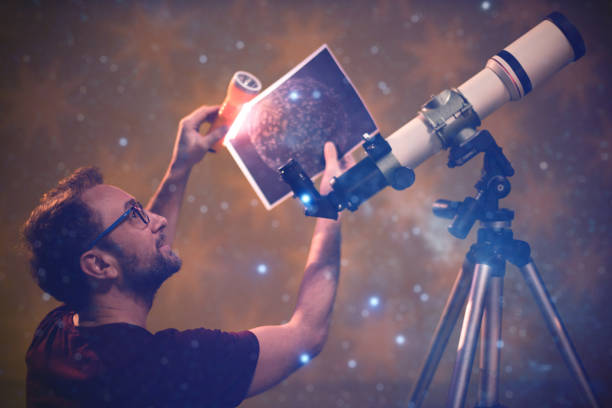
Astrobiologists conduct interdisciplinary research to understand life in the universe. They design experiments, analyze data from space missions,...
0.0LPA
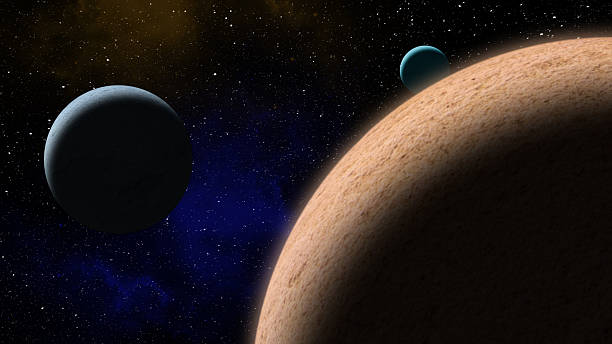
Planetary Scientists study planets, moons, and other celestial bodies’ physical and chemical properties. They analyze surface compositions,...
0.0LPA

These scientists focus on microorganisms that thrive in extreme environments, providing models for potential extraterrestrial life. Their research...
0.0LPA
Take the next step and explore more about Astrobiologist.
Explore similar career paths that might interest you