Acupuncturist
Certified Acupuncturist
Explore Career
An Audiologist is a healthcare professional who specializes in the diagnosis, treatment, and management of hearing, balance, and related disorders. They operate within medical, educational, and rehabilitative settings, collaborating with physicians, educators, and patients to improve auditory health and quality of life. Audiologists play a crucial role in modern healthcare in an era where aging populations, noise pollution, and technological advancements drive the need for specialized hearing care.
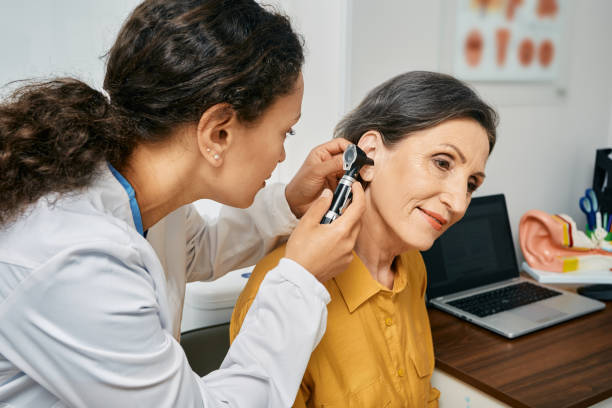
Audiologists are scientifically trained and patient-focused individuals tasked with assessing hearing and balance functions, identifying disorders, and providing interventions such as hearing aids, cochlear implants, or therapy. Their role includes conducting diagnostic tests, counselling patients on hearing loss prevention, and developing rehabilitation plans. They combine expertise in audiology, acoustics, and psychology, working in diverse settings such as hospitals, clinics, schools, and private practices. As key contributors to auditory health, Audiologists drive progress in a landscape increasingly focused on early detection, advanced hearing technology, and inclusive communication solutions.
| Route | Steps |
| Route 1 | 1. 10+2 in Science stream (Biology mandatory, Physics/Chemistry preferred) |
| 2. Bachelor’s in Audiology and Speech-Language Pathology (BASLP) (4 years) | |
| 3. Start as a Junior Audiologist in clinics or hospitals | |
| Route 2 | 1. 10+2 in Science stream (Biology mandatory, Physics/Chemistry preferred) |
| 2. Bachelor’s in Audiology and Speech-Language Pathology (BASLP) (4 years) | |
| 3. Master’s in Audiology or related field (2 years) | |
| 4. Work as an Audiologist in hospitals or private practice | |
| Route 3 | 1. 10+2 in Science stream (Biology mandatory, Physics/Chemistry preferred) |
| 2. Bachelor’s in Audiology and Speech-Language Pathology (BASLP) (4 years) | |
| 3. Master’s in Audiology or related field (2 years) | |
| 4. Ph.D. in Audiology or specialized area (3-5 years) | |
| 5. Pursue Roles as a Senior Audiologist or Research Specialist | |
| Route 4 | 1. 10+2 in Science stream (Biology mandatory, Physics/Chemistry preferred) |
| 2. Bachelor’s in Audiology and Speech-Language Pathology (BASLP) (4 years) | |
| 3. Master’s in Audiology or related field (2 years) | |
| 4. Ph.D. in Audiology or specialized area (3-5 years) | |
| 5. Postdoctoral Research (1-3 years) | |
| 6. Serve as a Lead Researcher, Professor, or Audiology Consultant |
| Institute | Course/Program | Official Link |
| All India Institute of Speech and Hearing (AIISH), Mysore | BASLP, M.Sc. in Audiology, Ph.D. | https://aiishmysore.in/ |
| Post Graduate Institute of Medical Education and Research (PGIMER), Chandigarh | BASLP, M.Sc. in Audiology | https://pgimer.edu.in/ |
| Sri Ramachandra Institute of Higher Education and Research, Chennai | BASLP, M.Sc. in Audiology | https://www.sriramachandra.edu.in/ |
| Manipal Academy of Higher Education (MAHE), Manipal | BASLP, M.Sc. in Audiology | https://www.manipal.edu/ |
| Guru Gobind Singh Indraprastha University (GGSIPU), Delhi | BASLP, M.Sc. in Audiology | http://www.ipu.ac.in/ |
| Bharati Vidyapeeth Deemed University, Pune | BASLP, M.Sc. in Audiology | https://www.bharatividyapeeth.edu/ |
| King George’s Medical University (KGMU), Lucknow | BASLP, M.Sc. in Audiology | https://www.kgmu.org/ |
| Dr. S.R. Chandrasekhar Institute of Speech and Hearing, Bangalore | BASLP, M.Sc. in Audiology | https://speechear.org/ |
| Topiwala National Medical College (TNMC), Mumbai | BASLP, M.Sc. in Audiology | https://tnmcnair.com/ |
| Christian Medical College (CMC), Vellore | BASLP, M.Sc. in Audiology | https://www.cmch-vellore.edu/ |
| Institution | Course | Country | Official Link |
| University of Manchester, Manchester | B.Sc., M.Sc. in Audiology | UK | https://www.manchester.ac.uk/ |
| University of Pittsburgh, Pittsburgh | Au.D. (Doctor of Audiology), Ph.D. | USA | https://www.pitt.edu/ |
| University College London (UCL), London | B.Sc., M.Sc. in Audiology | UK | https://www.ucl.ac.uk/ |
| Vanderbilt University, Nashville | Au.D., Ph.D. in Audiology | USA | https://www.vanderbilt.edu/ |
| University of Melbourne, Melbourne | Master of Clinical Audiology | Australia | https://www.unimelb.edu.au/ |
| University of Toronto, Toronto | M.H.Sc. in Audiology | Canada | https://www.utoronto.ca/ |
| University of Auckland, Auckland | Master of Audiology | New Zealand | https://www.auckland.ac.nz/ |
| National University of Singapore (NUS), Singapore | M.Sc. in Audiology (via related programs) | Singapore | https://www.nus.edu.sg/ |
| University of Copenhagen, Copenhagen | M.Sc. in Audiology | Denmark | https://www.ku.dk/english/ |
| University of Queensland, Brisbane | Master of Audiology Studies | Australia | https://www.uq.edu.au/ |
India:
International:
Aspiring Audiologist → Junior Audiologist → Audiologist → Senior Audiologist → Clinical Supervisor → Research Director → Audiology Consultant → Professor → Policy Advisor → Global Hearing Health Expert
| India | International |
| All India Institute of Speech and Hearing (AIISH) | Mayo Clinic, USA |
| Apollo Hospitals | Johns Hopkins Medicine, USA |
| Fortis Healthcare | World Health Organization (WHO), Global |
| Max Healthcare | National Health Service (NHS), UK |
| Christian Medical College (CMC) | Starkey Hearing Technologies, USA |
| Sankara Nethralaya | Cochlear Limited, Australia |
| Manipal Hospitals | Sonova (Phonak), Switzerland |
| National Institute for the Empowerment of Persons with Disabilities (NIEPID) | Oticon, Denmark |
| Rehabilitation Council of India (RCI) | GN Hearing (ReSound), Denmark |
| Indian Speech and Hearing Association (ISHA) | Centers for Disease Control and Prevention (CDC), USA |
| Pros | Cons |
| Opportunity to improve quality of life by addressing hearing and balance disorders | Emotionally challenging work due to patient frustration or communication barriers |
| Potential for societal impact through early detection and intervention for hearing loss | High responsibility to ensure accurate diagnoses and effective treatment plans |
| Rewarding impact through advancements in hearing technology and rehabilitation | Often requires long hours, including managing caseloads and administrative tasks |
| Diverse career paths across clinical, educational, research, and industrial settings | Limited awareness or funding for audiology services in some regions |
| Strong potential for growth with the rise of tele-audiology and wearable hearing devices | Risk of burnout due to repetitive testing or dealing with complex patient needs |
| Career Level | India (₹ per annum) | International (USD per annum) |
| Junior Audiologist (Early Career) | 3,00,000 - 6,00,000 | 40,000 - 60,000 |
| Audiologist (Mid-Career) | 6,00,000 - 12,00,000 | 60,000 - 90,000 |
| Senior Audiologist (Established) | 12,00,000 - 20,00,000 | 90,000 - 120,000 |
| Clinical Supervisor/Research Director | 20,00,000 - 35,00,000 | 120,000 - 160,000 |
| Professor/Global Hearing Health Expert | 35,00,000+ | 160,000+ |
Note: Salaries vary widely based on location, experience, sector (government vs. private), and specialization. International figures are approximate and depend on the country and funding. High-profile research or consultancy roles often yield significantly higher earnings based on impact and demand.
A career as an Audiologist offers a unique opportunity to contribute to health, communication, and quality of life by navigating complex auditory and balance challenges for diverse societal needs. From diagnosing hearing loss to providing life-changing interventions and advancing hearing technology, Audiologists play a pivotal role in healthcare and rehabilitative ecosystems. This field combines scientific expertise, clinical skill, and a commitment to solving critical challenges, offering diverse paths in hospitals, education, research, and beyond. For those passionate about improving auditory health, adapting to dynamic technological trends, and addressing global needs in an era of increasing hearing loss prevalence, a career as an Audiologist provides an intellectually stimulating and professionally rewarding journey with the potential to make significant contributions to society by advancing the science and application of audiological knowledge worldwide.

Early-career individuals train in clinics or academic settings to gain experience. They build skills in diagnostics while seeking opportunities....
0.0LPA

Professionals assist in hearing assessments under guidance with growing competence. They offer support in clinical work and learn from seniors....
0.0LPA

Specialists conduct independent assessments or support larger clinical teams with notable competence. They integrate science with patient needs...
0.0LPA
Take the next step and explore more about Audiologist.
Explore similar career paths that might interest you