Aerobiologist
Aerology Research Scholar (PhD)
Explore Career
A Citriculturist is a professional who specializes in the cultivation, management, and study of citrus fruits such as oranges, lemons, limes, and grapefruits. They operate within agricultural settings, research institutions, and agribusinesses, collaborating with farmers, scientists, and policymakers to enhance citrus production and sustainability. Citriculturists play a crucial role in modern agriculture in an era where food security, sustainable farming, and climate resilience are increasingly prioritized.
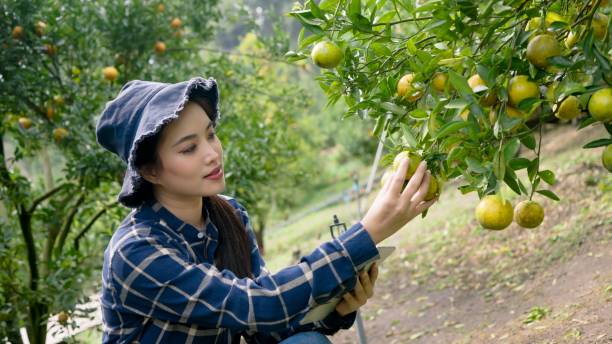
Citriculturists are scientifically trained and agriculturally focused individuals tasked with optimizing the growth, yield, and quality of citrus crops through advanced farming techniques and research. Their role includes managing orchards, combating pests and diseases, and developing new citrus varieties. They combine expertise in horticulture, soil science, and pest management, working in diverse settings such as farms, research centers, and agricultural consultancies. As key contributors to citrus agriculture, Citriculturists drive progress in a landscape increasingly focused on sustainable production, crop resilience, and global food supply.
| Route | Steps |
| Route 1 | 1. 10+2 in Science stream (Biology/Agriculture preferred) |
| 2. Bachelor’s in Horticulture, Agriculture, or related field (3-4 years) | |
| 3. Start as a Junior Citriculturist in orchards or agricultural firms | |
| Route 2 | 1. 10+2 in Science stream (Biology/Agriculture preferred) |
| 2. Bachelor’s in Horticulture, Agriculture, or related field (3-4 years) | |
| 3. Master’s in Horticulture with Citrus Specialization (2 years) | |
| 4. Work as a Citriculturist in research or commercial citrus production | |
| Route 3 | 1. 10+2 in Science stream (Biology/Agriculture preferred) |
| 2. Bachelor’s in Horticulture, Agriculture, or related field (3-4 years) | |
| 3. Master’s in Horticulture with Citrus Specialization (2 years) | |
| 4. Certification or Short Courses in Citrus Cultivation (6 months-1 year) | |
| 5. Pursue Roles as a Senior Citriculturist or Consultant | |
| Route 4 | 1. 10+2 in Science stream (Biology/Agriculture preferred) |
| 2. Bachelor’s in Horticulture, Agriculture, or related field (3-4 years) | |
| 3. Master’s in Horticulture with Citrus Specialization (2 years) | |
| 4. Ph.D. in Horticulture or Citrus Science (3-5 years) | |
| 5. Serve as a Lead Researcher, Professor, or Citrus Industry Expert |
| Institute | Course/Program | Official Link |
| Indian Agricultural Research Institute (IARI), New Delhi | B.Sc., M.Sc., Ph.D. in Horticulture | https://www.iari.res.in/ |
| Tamil Nadu Agricultural University (TNAU), Coimbatore | B.Sc., M.Sc. in Horticulture (Citrus Focus) | https://tnau.ac.in/ |
| Dr. Y.S. Parmar University of Horticulture and Forestry, Solan | B.Sc., M.Sc., Ph.D. in Horticulture | https://www.yspuniversity.ac.in/ |
| University of Agricultural Sciences (UAS), Bangalore | B.Sc., M.Sc. in Horticulture | https://www.uasbangalore.edu.in/ |
| Kerala Agricultural University (KAU), Thrissur | B.Sc., M.Sc. in Horticulture (Citrus Focus) | https://www.kau.in/ |
| Punjab Agricultural University (PAU), Ludhiana | B.Sc., M.Sc. in Horticulture | https://www.pau.edu/ |
| Anand Agricultural University (AAU), Gujarat | B.Sc., M.Sc. in Horticulture | https://www.aau.in/ |
| Mahatma Phule Krishi Vidyapeeth (MPKV), Rahuri | B.Sc., M.Sc. in Horticulture | https://mpkv.ac.in/ |
| Central Institute for Subtropical Horticulture (CISH), Lucknow | Research and Training in Citrus Cultivation | https://cish.icar.gov.in/ |
| Acharya N.G. Ranga Agricultural University (ANGRAU), Guntur | B.Sc., M.Sc. in Horticulture | https://angrau.ac.in/ |
| Institution | Course | Country | Official Link |
| University of California, Davis | B.Sc., M.Sc., Ph.D. in Horticulture (Citrus Focus) | USA | https://www.ucdavis.edu/ |
| University of Florida, Gainesville | B.Sc., M.Sc., Ph.D. in Citrus Science | USA | https://www.ufl.edu/ |
| Wageningen University & Research, Wageningen | M.Sc., Ph.D. in Horticulture and Agriculture | Netherlands | https://www.wur.nl/ |
| University of Adelaide, Adelaide | B.Sc., M.Sc. in Agricultural Science (Horticulture) | Australia | https://www.adelaide.edu.au/ |
| University of São Paulo (USP), São Paulo | M.Sc., Ph.D. in Horticulture (Citrus Focus) | Brazil | https://www5.usp.br/ |
| Hebrew University of Jerusalem, Rehovot | M.Sc., Ph.D. in Agriculture (Horticulture) | Israel | https://en.huji.ac.il/ |
| University of Valencia, Valencia | M.Sc. in Horticulture (Citrus Specialization) | Spain | https://www.uv.es/ |
| Stellenbosch University, Stellenbosch | B.Sc., M.Sc. in Horticulture | South Africa | https://www.sun.ac.za/ |
| University of Catania, Catania | M.Sc. in Agricultural Science (Citrus Focus) | Italy | https://www.unict.it/ |
| Murdoch University, Perth | B.Sc., M.Sc. in Agricultural Science | Australia | https://www.murdoch.edu.au/ |
India:
International:
Aspiring Citriculturist → Junior Citriculturist → Citriculturist → Senior Citriculturist → Citrus Research Scientist → Citrus Orchard Manager → Citrus Industry Consultant → Citrus Policy Advisor → Professor → Global Citrus Agriculture Expert
| India | International |
| Central Institute for Subtropical Horticulture (CISH), Lucknow | Citrus Research International (CRI), South Africa |
| Indian Council of Agricultural Research (ICAR) | University of Florida Citrus Research and Education Center, USA |
| National Research Centre for Citrus (NRCC), Nagpur | California Citrus Research Board, USA |
| Tamil Nadu Agricultural University (TNAU) | Embrapa (Brazilian Agricultural Research Corporation), Brazil |
| Kerala Agricultural University (KAU) | Citrus Australia, Australia |
| State Horticulture Departments (e.g., Andhra Pradesh, Maharashtra) | USDA Agricultural Research Service, USA |
| Jain Irrigation Systems Ltd. | Sunkist Growers, USA |
| Mother Dairy Fruit & Vegetable Pvt. Ltd. | Citrus Growers Association of Southern Africa |
| Tropicana Products (PepsiCo India) | European Citrus Growers Association, Europe |
| Local Citrus Farmer Cooperatives | International Society of Citriculture (ISC), Global |
| Pros | Cons |
| Opportunity to contribute to food security through citrus production | Physically demanding work due to fieldwork in varying weather conditions |
| Potential for societal impact by promoting sustainable farming practices | High responsibility to manage crop losses from pests, diseases, or climate |
| Rewarding impact through improving citrus quality and farmer livelihoods | Often requires long hours during planting or harvest seasons |
| Diverse career paths across farming, research, policy, and consultancy | Limited funding or resources for citrus research in some regions |
| Strong potential for growth with increasing demand for citrus globally | Risk of burnout due to seasonal pressures and environmental challenges |
| Career Level | India (₹ per annum) | International (USD per annum) |
| Junior Citriculturist (Early Career) | 2,50,000 - 5,00,000 | 30,000 - 50,000 |
| Citriculturist (Mid-Career) | 5,00,000 - 10,00,000 | 50,000 - 80,000 |
| Senior Citriculturist (Established) | 10,00,000 - 15,00,000 | 80,000 - 110,000 |
| Citrus Research Scientist/Orchard Manager | 15,00,000 - 25,00,000 | 110,000 - 150,000 |
| Professor/Global Citrus Agriculture Expert | 25,00,000+ | 150,000+ |
Note: Salaries vary widely based on location, experience, sector (government vs. private vs. research), and region. International figures are approximate and depend on the country and funding. High-profile consultancy or policy roles often yield significantly higher earnings based on impact and demand.
A career as a Citriculturist offers a unique opportunity to contribute to agriculture, food security, and sustainability by navigating complex cultivation challenges for diverse needs. From managing citrus orchards to conducting transformative research and advancing sustainable practices, Citriculturists play a pivotal role in agricultural and environmental ecosystems. This field combines scientific expertise, practical skill, and a commitment to solving critical challenges, offering diverse paths in farming, research, policy, and beyond. For those passionate about citrus agriculture, adapting to dynamic industry trends, and addressing global needs in an era of rising food demand, a career as a Citriculturist provides an intellectually stimulating and professionally rewarding journey with the potential to make significant contributions to society by advancing the science and application of citrus cultivation knowledge worldwide.


Specialists conduct independent orchard management or crop studies with notable competence. They integrate science with agricultural needs for...
0.0LPA

Senior professionals lead complex orchard projects or pest control with expertise. They provide versatility by adapting to diverse agricultural...
0.0LPA

Leaders oversee citrus variety development or disease research with deep knowledge. They provide scientific oversight by aligning with production...
0.0LPA
Take the next step and explore more about Citriculturist.
Explore similar career paths that might interest you