
Acupuncturist
Certified Acupuncturist
Explore Career
An Epidemiologist is a public health professional who studies the patterns, causes, and effects of diseases and health conditions in populations to prevent and control outbreaks and improve community well-being. They operate within government agencies, research institutions, hospitals, or international health organizations, collaborating with policymakers, physicians, and data scientists to address public health challenges. Epidemiologists play a crucial role in safeguarding global health in an era where infectious diseases, chronic conditions, and pandemics pose significant threats, and data-driven health strategies are central to societal protection.
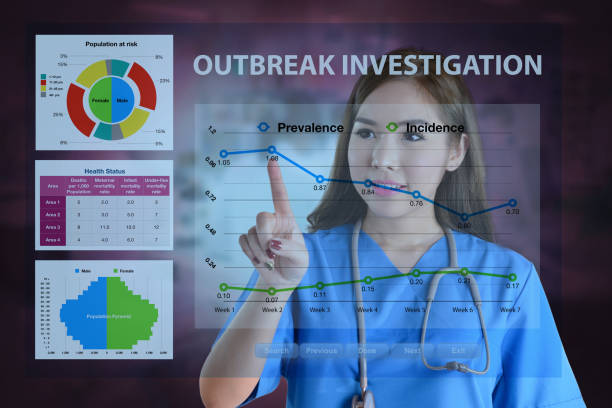
Epidemiologists are analytical and research-oriented professionals tasked with designing studies, collecting data, and analyzing trends to understand disease spread, identify risk factors, and develop interventions to mitigate health crises. Their role includes investigating outbreaks, advising on health policies, and addressing challenges ranging from infectious diseases to environmental health hazards. They combine skills in statistics, biology, and communication, working in field settings, laboratories, or offices to provide evidence-based solutions. As key contributors to public health, Epidemiologists drive disease prevention and health equity in a landscape increasingly focused on global health security, big data analytics, and rapid response mechanisms.
| Route | Steps |
| Route 1 | 1. 10+2 in Science stream with Physics, Chemistry, and Biology (PCB) |
| 2. Bachelor’s Degree in Public Health, Biology, or related field (3-4 years) | |
| 3. Master’s Degree in Epidemiology or Public Health (MPH) (2 years) | |
| 4. Start as a Junior Epidemiologist in health agencies or research | |
| Route 2 | 1. 10+2 in Science stream with Physics, Chemistry, and Biology (PCB) |
| 2. Bachelor’s Degree in Medicine (MBBS) or related health sciences (5 years) | |
| 3. Master’s Degree in Epidemiology or Community Medicine (2-3 years) | |
| 4. Work as a Clinical Epidemiologist in hospitals or research | |
| Route 3 | 1. 10+2 in Science stream with Physics, Chemistry, and Biology (PCB) |
| 2. Bachelor’s Degree in Statistics, Biology, or Public Health (3-4 years) | |
| 3. Master’s in Epidemiology (MPH) (2 years) | |
| 4. PhD in Epidemiology for research or academic roles (3-5 years) | |
| 5. Work as a Senior Epidemiologist or Researcher | |
| Route 4 | 1. 10+2 in Science stream with Physics, Chemistry, and Biology (PCB) |
| 2. International degree in Public Health or Epidemiology (4-6 years) | |
| 3. Additional certifications or training as per global requirements | |
| 4. Serve as Epidemiologist in multinational health organizations |
| Institute | Course/Program | Official Link |
| National Institute of Epidemiology (NIE), Chennai | MPH & PhD in Epidemiology | https://nie.gov.in/ |
| All India Institute of Hygiene and Public Health (AIIHPH), Kolkata | MPH & Diploma in Public Health | https://aiihph.gov.in/ |
| Tata Institute of Social Sciences (TISS), Mumbai | MPH in Social Epidemiology | https://www.tiss.edu/ |
| Public Health Foundation of India (PHFI), Multiple Locations | MPH & Certificate Courses | https://phfi.org/ |
| Jawaharlal Nehru University (JNU), New Delhi | MPH & Research in Public Health | https://www.jnu.ac.in/ |
| Christian Medical College (CMC), Vellore | MPH with Epidemiology Focus | https://www.cmch-vellore.edu/ |
| Manipal Academy of Higher Education, Manipal | MPH in Epidemiology | https://manipal.edu/ |
| Indian Institute of Public Health (IIPH), Multiple Locations | MPH & PhD in Public Health | https://iiph.org/ |
| University of Hyderabad, Hyderabad | MPH in Public Health | https://www.uohyd.ac.in/ |
| SRM Institute of Science and Technology, Chennai | MPH with Epidemiology Specialization | https://www.srmist.edu.in/ |
| Institution | Course | Country | Official Link |
| Johns Hopkins Bloomberg School of Public Health, Baltimore | MPH & PhD in Epidemiology | USA | https://www.jhsph.edu/ |
| Harvard T.H. Chan School of Public Health, Boston | MPH & Doctoral Programs in Epidemiology | USA | https://www.hsph.harvard.edu/ |
| London School of Hygiene & Tropical Medicine (LSHTM) | MSc & PhD in Epidemiology | UK | https://www.lshtm.ac.uk/ |
| University of Toronto, Dalla Lana School of Public Health | MPH & PhD in Epidemiology | Canada | https://www.dlsph.utoronto.ca/ |
| University of Melbourne, School of Population and Global Health | MPH & Research in Epidemiology | Australia | https://mspgh.unimelb.edu.au/ |
| Karolinska Institutet, Department of Global Public Health | MSc & PhD in Epidemiology | Sweden | https://ki.se/en |
| University of California, Berkeley, School of Public Health | MPH & PhD in Epidemiology | USA | https://publichealth.berkeley.edu/ |
| National University of Singapore, Saw Swee Hock School of Public Health | MPH & Research Programs | Singapore | https://sph.nus.edu.sg/ |
| University of Copenhagen, Department of Public Health | MSc & PhD in Epidemiology | Denmark | https://publichealth.ku.dk/ |
| University of Cape Town, School of Public Health | MPH & PhD in Epidemiology | South Africa | https://health.uct.ac.za/ |
India:
International:
Junior Epidemiologist → Epidemiologist → Senior Epidemiologist → Public Health Analyst → Field Epidemiologist → Research Scientist → Public Health Advisor → Global Health Specialist → Program Director → Academic Professor
| India | International |
| Indian Council of Medical Research (ICMR) | World Health Organization (WHO), Global |
| National Centre for Disease Control (NCDC) | Centers for Disease Control and Prevention (CDC), USA |
| Public Health Foundation of India (PHFI) | UNICEF, Global |
| Ministry of Health and Family Welfare | Médecins Sans Frontières (MSF), Global |
| National Institute of Epidemiology (NIE) | Pan American Health Organization (PAHO), Americas |
| Tata Institute of Social Sciences (TISS) | Bill & Melinda Gates Foundation, Global |
| All India Institute of Medical Sciences (AIIMS) | European Centre for Disease Prevention and Control (ECDC), Europe |
| Christian Medical College (CMC) | National Institutes of Health (NIH), USA |
| Apollo Hospitals (Research Division) | GAVI Alliance, Global |
| Fortis Healthcare (Public Health Division) | Doctors Without Borders, Global |
| Pros | Cons |
| Opportunity to work in impactful public health environments saving lives | High stress due to urgency of outbreaks and public health crises |
| High demand for epidemiologists due to rising global health threats | Long and irregular hours during emergencies or field investigations |
| Rewarding impact through disease prevention and community health improvement | Risk of burnout due to intense workload and data complexity |
| Diverse career paths across research, policy, field work, and education | High responsibility with potential for public scrutiny during failures |
| Strong potential for influence with advancements in health data analytics | Dependency on continuous learning to keep up with evolving methodologies |
| Career Level | India (₹ per annum) | International (USD per annum) |
| Junior Epidemiologist (Early Career) | 4,00,000 - 8,00,000 | 50,000 - 70,000 |
| Epidemiologist (Mid-Career) | 8,00,000 - 15,00,000 | 70,000 - 100,000 |
| Senior Epidemiologist/Public Health Analyst | 15,00,000 - 25,00,000 | 100,000 - 130,000 |
| Research Scientist/Global Health Specialist | 25,00,000 - 40,00,000 | 130,000 - 160,000 |
| Program Director/Academic Professor | 40,00,000+ | 160,000+ |
Note: Salaries vary based on location, experience, employer, and specialization. International figures are approximate and depend on the country and health system. Earnings in government or international roles often depend on funding and project scope.
A career as an Epidemiologist offers a unique opportunity to contribute to public health, disease prevention, and global well-being by navigating analytical landscapes for diverse health challenges. From tracking outbreaks to shaping health policies and driving preventive strategies, Epidemiologists play a pivotal role in public health ecosystems. This field combines scientific rigor, data analysis, and a commitment to solving intricate health issues, offering diverse paths in research, policy, field work, and beyond. For those passionate about health science, adapting to dynamic global trends, and addressing population needs in an era of epidemiological evolution, a career as an Epidemiologist provides an intellectually stimulating and professionally rewarding journey with the potential to make significant contributions to society by advancing the art and application of public health worldwide.

Early-career professionals assist in basic data collection under supervision. They build skills in analysis while ensuring accurate execution....
0.0LPA

Experienced professionals manage routine health studies with high competence, using research skills. They offer expertise in disease tracking....
0.0LPA
Specialists oversee complex studies with exceptional competence. They integrate deep research knowledge with expertise in analytics for impactful...
0.0LPA
Take the next step and explore more about Epidemiologist.
Explore similar career paths that might interest you