3D Animator
Senior 3D Animator
Explore Career
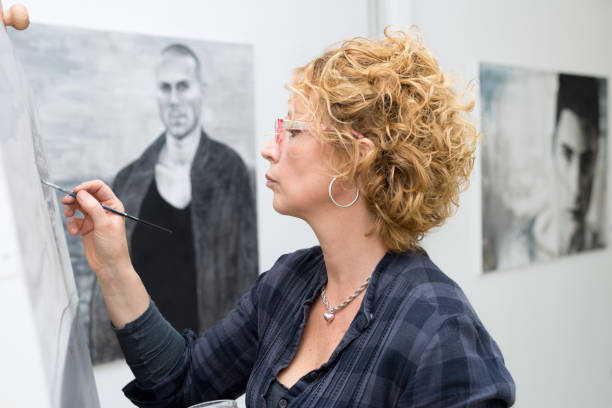
A Fine Artist is a creative professional who specializes in producing original works of art, such as paintings, sculptures, drawings, and mixed media, primarily for aesthetic and expressive purposes rather than commercial application. They work in diverse settings, including personal studios, galleries, and educational institutions, often collaborating with curators, art dealers, and other artists. Fine Artists play a crucial role in cultural expression and societal reflection by creating thought-provoking and visually captivating works in an era where art serves as a medium for personal identity, historical documentation, and emotional connection.
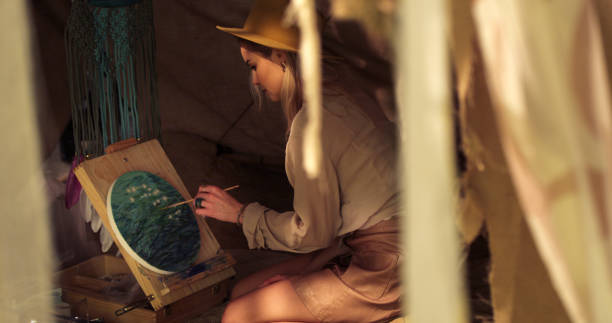
Fine Artists are visionary creators responsible for conceptualizing and producing artworks that convey personal, cultural, or social messages through various mediums. Their role includes experimenting with techniques, showcasing their work in exhibitions, and addressing challenges ranging from balancing personal expression with market demands to securing funding or recognition. They combine skills in creativity, technical mastery, and perseverance, working across various settings to produce impactful art. As key contributors to the cultural landscape, Fine Artists drive inspiration and dialogue in a world increasingly valuing individuality and artistic innovation.
| Route | Steps |
| Route 1 | 1. 10+2 in any stream (preferably with Art or Fine Arts subjects) 2. Bachelor’s degree in Fine Arts (BFA) or related field (3-4 years) 3. Internship or practical training (3-6 months) 4. Practice as Emerging Artist or Gallery Assistant |
| Route 2 | 1. 10+2 in any stream 2. Diploma or Certificate in Fine Arts (6 months-2 years) 3. Build hands-on experience through projects 4. Work as Freelance or Emerging Artist |
| Route 3 | 1. 10+2 in any stream 2. Bachelor’s degree in Fine Arts (BFA) (3-4 years) 3. Master’s degree in Fine Arts (MFA) (2 years) 4. Work as Established Artist or Art Instructor |
| Route 4 | 1. 10+2 in any stream 2. Advanced international training or certification in Fine Arts (1-2 years) 3. Master’s or specialized courses as per country requirements 4. Practice abroad or in India |
| Institute | Course/Program | Official Link |
| Sir J.J. School of Art, Mumbai | BFA/MFA in Fine Arts | https://www.sirjjschoolofart.in/ |
| Faculty of Fine Arts, Maharaja Sayajirao University, Baroda | BFA/MFA in Fine Arts | https://www.msubaroda.ac.in/ |
| College of Art, University of Delhi, New Delhi | BFA/MFA in Fine Arts | https://colart.delhigovt.nic.in/ |
| Visva-Bharati University, Santiniketan | BFA/MFA in Fine Arts | https://www.visvabharati.ac.in/ |
| Banaras Hindu University (BHU), Varanasi | BFA/MFA in Fine Arts | https://www.bhu.ac.in/ |
| Kala Bhavana, Santiniketan | BFA/MFA in Fine Arts | https://www.visvabharati.ac.in/ |
| Government College of Fine Arts, Chennai | BFA/MFA in Fine Arts | https://www.gcfachennai.com/ |
| Amity School of Fine Arts, Noida | BFA/MFA in Fine Arts | https://www.amity.edu/ |
| Srishti Manipal Institute of Art, Design and Technology, Bangalore | BFA in Fine Arts | https://srishti.ac.in/ |
| Jamia Millia Islamia, New Delhi | BFA/MFA in Fine Arts | https://www.jmi.ac.in/ |
| Institution | Course | Country | Official Link |
| Royal College of Art (RCA) | MA in Fine Arts | UK | https://www.rca.ac.uk/ |
| School of the Art Institute of Chicago (SAIC) | BFA/MFA in Fine Arts | USA | https://www.saic.edu/ |
| Rhode Island School of Design (RISD) | BFA/MFA in Fine Arts | USA | https://www.risd.edu/ |
| Slade School of Fine Art, UCL | BA/MA in Fine Arts | UK | https://www.ucl.ac.uk/slade/ |
| École des Beaux-Arts | Diploma in Fine Arts | France | https://www.beauxartsparis.fr/ |
| California Institute of the Arts (CalArts) | BFA/MFA in Fine Arts | USA | https://www.calarts.edu/ |
| Central Saint Martins, University of the Arts London | BA/MA in Fine Arts | UK | https://www.arts.ac.uk/colleges/central-saint-martins |
| Academy of Fine Arts Vienna | Diploma in Fine Arts | Austria | https://www.akbild.ac.at/ |
| Pratt Institute | BFA/MFA in Fine Arts | USA | https://www.pratt.edu/ |
| RMIT University | Bachelor of Arts (Fine Art) | Australia | https://www.rmit.edu.au/ |
India:
International:
Ideal Progressing Career Path Emerging Artist → Fine Artist → Established Artist → Lead Artist/Curator → Art Director → Gallery Owner → Art Consultant → Independent Art Entrepreneur
| India | International |
| National Gallery of Modern Art | The Metropolitan Museum of Art, USA |
| Jehangir Art Gallery | The Louvre, France |
| India Habitat Centre | Tate Modern, UK |
| Kiran Nadar Museum of Art | Museum of Modern Art (MoMA), USA |
| Delhi Art Gallery | Guggenheim Museum, USA |
| Chhatrapati Shivaji Maharaj Vastu Sangrahalaya | Centre Pompidou, France |
| Saffronart | Sotheby’s, UK/USA |
| Art India | Christie’s, UK/USA |
| Kalakriti Art Gallery | Gagosian Gallery, USA |
| Gallery Espace | Pace Gallery, USA |
| Pros | Cons |
| Opportunity to work on deeply personal and culturally significant projects | High uncertainty in income due to fluctuating art market and recognition |
| High potential for self-expression and societal impact through art | Long periods of solitude and self-motivation required for creation |
| Rewarding impact through unique works and cultural dialogue | Risk of creative burnout from constant need for originality and critique |
| Diverse career paths across galleries, education, and public art | Limited job security in freelance or independent roles |
| Strong potential for personal branding with signature artistic styles | Dependency on funding, grants, or sales for financial stability |
| Career Level | India (₹ per annum) | International (USD per annum) |
| Emerging Artist (Early Career) | 1,50,000 - 3,00,000 | 20,000 - 40,000 |
| Fine Artist (Mid-Career) | 3,00,000 - 8,00,000 | 40,000 - 70,000 |
| Established Artist/Lead Artist | 8,00,000 - 15,00,000 | 70,000 - 120,000 |
| Art Director/Gallery Owner | 15,00,000 - 25,00,000 | 120,000 - 200,000 |
| Art Consultant/Independent Entrepreneur | 25,00,000+ | 200,000+ |
| Note: Salaries vary based on location, experience, recognition, and sales. International figures are approximate and depend on the country and market. |
A career as a Fine Artist offers a unique opportunity to contribute to cultural expression, personal identity, and societal dialogue by crafting distinctive artworks for diverse audiences. From enhancing galleries and public spaces to revolutionizing contemporary thought through visual media, Fine Artists play a pivotal role in modern aesthetic and emotional landscapes. This field combines artistic expertise, technical skills, and a commitment to solving complex conceptual challenges, offering diverse paths in personal creation, curation, education, and beyond. For those passionate about creativity, adapting to evolving trends, and addressing cultural needs in an era of rapid artistic evolution, a career as a Fine Artist provides an intellectually stimulating and professionally rewarding journey with the potential to make significant contributions to society by advancing the art and application of fine art worldwide.

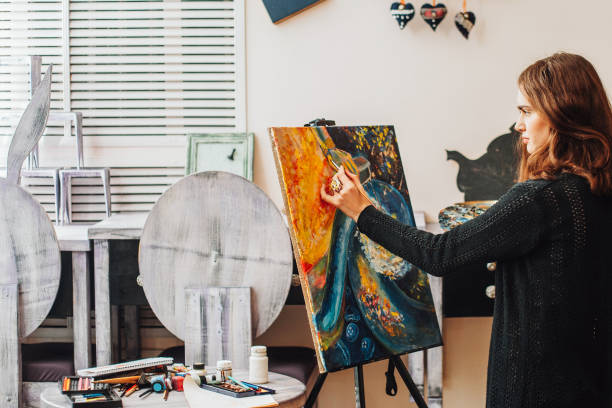
Experienced professionals manage comprehensive art projects with high creativity, using advanced skills. They offer expertise in specific styles....
0.0LPA
Senior professionals guide art collectives or curate exhibitions while ensuring thematic consistency. They provide leadership by establishing...
0.0LPA

Leaders focus on guiding creative departments in institutions or projects and shaping long-term artistic strategies. They provide strategic...
0.0LPA
Take the next step and explore more about Fine Artist.
Explore similar career paths that might interest you