Aerobiologist
Aerology Research Scholar (PhD)
Explore Career
A Flavourist is a specialized scientific professional who creates and develops Flavours for food, beverages, and other consumer products by combining expertise in chemistry, sensory science, and culinary arts to enhance taste and aroma profiles. They operate within the food and beverage, fragrance, and consumer goods industries, collaborating with food scientists, product developers, and marketing teams to craft unique sensory experiences. Flavourists play a crucial role in product innovation and consumer satisfaction in an era where global food trends, health consciousness, and sustainability drive the need for novel and appealing Flavour solutions.
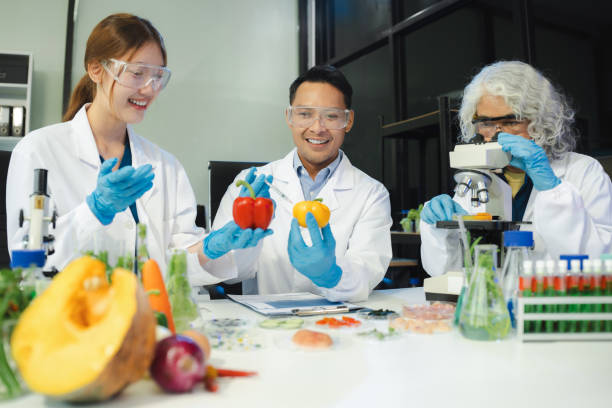
Flavourists are creatively and scientifically skilled individuals tasked with designing Flavour compounds that evoke specific tastes and smells, using natural and synthetic ingredients to meet consumer preferences and industry standards. Their role includes formulating Flavours, conducting sensory evaluations, and ensuring compliance with safety and regulatory guidelines. They combine expertise in organic chemistry, sensory analysis, and food technology, working in diverse settings such as laboratories, test kitchens, and manufacturing facilities. As key contributors to the food and consumer goods sectors, Flavourists drive innovation in a landscape increasingly focused on clean-label products, cultural diversity in Flavours, and personalized nutrition.
| Route | Steps |
| Route 1 | 1. 10+2 in Science stream (Physics, Chemistry, Biology/Mathematics preferred) |
| 2. Bachelor’s in Chemistry, Food Science, or related field (3-4 years) | |
| 3. Start as a Junior Flavour Technician in Flavour houses or food companies | |
| Route 2 | 1. 10+2 in Science stream (Physics, Chemistry, Biology/Mathematics preferred) |
| 2. Bachelor’s in Chemistry, Food Science, or related field (3-4 years) | |
| 3. Master’s in Flavour Chemistry, Food Technology, or related field (2 years) | |
| 4. Work as a Flavour Chemist in R&D or product development teams | |
| Route 3 | 1. 10+2 in Science stream (Physics, Chemistry, Biology/Mathematics preferred) |
| 2. Bachelor’s in Chemistry, Food Science, or related field (3-4 years) | |
| 3. Master’s in Flavour Chemistry, Food Technology, or related field (2 years) | |
| 4. Certification or Apprenticeship with Flavourist Societies (3-7 years) | |
| 5. Pursue Roles as a Certified Flavourist in leading Flavour houses | |
| Route 4 | 1. 10+2 in Science stream (Physics, Chemistry, Biology/Mathematics preferred) |
| 2. Bachelor’s in Chemistry, Food Science, or related field (3-4 years) | |
| 3. Master’s in Flavour Chemistry, Food Technology, or related field (2 years) | |
| 4. Ph.D. in Flavour Chemistry or Food Science (3-5 years) | |
| 5. Serve as a Senior Flavourist, R&D Director, or Industry Consultant |
| Institute | Course/Program | Official Link |
| Indian Institute of Technology (IIT), Kharagpur | B.Tech, M.Tech in Food Technology | https://www.iitkgp.ac.in/ |
| National Institute of Food Technology Entrepreneurship and Management (NIFTEM), Sonepat | B.Tech, M.Tech in Food Technology | https://www.niftem.ac.in/ |
| University of Mumbai, Mumbai | B.Sc., M.Sc. in Food Science and Technology | https://mu.ac.in/ |
| Anna University, Chennai | B.Tech, M.Tech in Food Technology | https://www.annauniv.edu/ |
| Punjab Agricultural University (PAU), Ludhiana | B.Sc., M.Sc. in Food Science and Technology | https://www.pau.edu/ |
| Tamil Nadu Agricultural University (TNAU), Coimbatore | B.Tech, M.Tech in Food Process Engineering | https://tnau.ac.in/ |
| University of Delhi, Delhi | B.Sc., M.Sc. in Chemistry/Food Science | https://www.du.ac.in/ |
| Banaras Hindu University (BHU), Varanasi | B.Sc., M.Sc. in Chemistry/Food Technology | https://www.bhu.ac.in/ |
| Jadavpur University, Kolkata | B.Tech, M.Tech in Food Technology | https://www.jaduniv.edu.in/ |
| Central Food Technological Research Institute (CFTRI), Mysore | M.Sc. in Food Technology | https://cftri.res.in/ |
| Institution | Course | Country | Official Link |
| University of California, Davis | B.S., M.S., Ph.D. in Food Science | USA | https://www.ucdavis.edu/ |
| Cornell University, Ithaca | B.S., M.S., Ph.D. in Food Science | USA | https://www.cornell.edu/ |
| Wageningen University & Research, Wageningen | B.Sc., M.Sc., Ph.D. in Food Technology | Netherlands | https://www.wur.nl/ |
| University of Reading, Reading | B.Sc., M.Sc., Ph.D. in Food Science | UK | https://www.reading.ac.uk/ |
| University of Massachusetts Amherst, Amherst | B.S., M.S., Ph.D. in Food Science | USA | https://www.umass.edu/ |
| ETH Zurich, Zurich | B.Sc., M.Sc., Ph.D. in Food Science | Switzerland | https://ethz.ch/en.html |
| University of Copenhagen, Copenhagen | B.Sc., M.Sc., Ph.D. in Food Science | Denmark | https://www.ku.dk/english/ |
| University of Queensland, Brisbane | B.Sc., M.Sc., Ph.D. in Food Science | Australia | https://www.uq.edu.au/ |
| National University of Singapore (NUS), Singapore | B.Sc., M.Sc., Ph.D. in Food Science | Singapore | https://www.nus.edu.sg/ |
| Monash University, Melbourne | B.Sc., M.Sc. in Food Science and Technology | Australia | https://www.monash.edu/ |
India:
International:
Aspiring Flavourist → Junior Flavour Technician → Flavour Chemist → Certified Flavourist → Senior Flavourist → Flavour Development Manager → R&D Director → Flavour Consultant → Flavour Entrepreneur → Global Flavour Innovator
| India | International |
| Symrise India | International Flavours & Fragrances (IFF), USA |
| Givaudan India | Givaudan, Switzerland |
| Firmenich India | Firmenich, Switzerland |
| Mane India | Mane, France |
| T. Hasegawa India | T. Hasegawa, Japan |
| Synthite Industries Ltd. | Symrise, Germany |
| Bush Boake Allen (India) Ltd. | Takasago International, Japan |
| International Flavours & Fragrances (IFF) India | Sensient Technologies, USA |
| V. Mane Fils India | Kerry Group, Ireland |
| Hindustan Unilever Limited (HUL) | McCormick & Company, USA |
| Pros | Cons |
| Opportunity to blend science and creativity in developing unique Flavours | Long training periods, often requiring 5-7 years of apprenticeship for certification |
| Potential for societal impact through enhancing food experiences and innovation | Highly competitive field with limited certified Flavourist positions globally |
| Rewarding impact through shaping consumer preferences and product success | Requires exceptional sensory skills (taste/smell) which may not be trainable for all |
| Diverse career paths across food, beverage, fragrance, and pharmaceutical sectors | Pressure to constantly innovate amid rapidly changing consumer trends and diets |
| Strong potential for influence with the rise of health-focused and sustainable Flavours | Dependency on regulatory approvals and safety compliance for Flavour commercialization |
| Career Level | India (₹ per annum) | International (USD per annum) |
| Junior Flavour Technician (Early Career) | 3,00,000 - 6,00,000 | 30,000 - 50,000 |
| Flavour Chemist (Mid-Career) | 6,00,000 - 12,00,000 | 50,000 - 80,000 |
| Certified Flavourist (Established) | 12,00,000 - 25,00,000 | 80,000 - 120,000 |
| Senior Flavourist/Development Manager | 25,00,000 - 40,00,000 | 120,000 - 180,000 |
| R&D Director/Global Innovator | 40,00,000+ | 180,000+ |
Note: Salaries vary widely based on location, experience, sector (Flavour house vs. food company), and certification status. International figures are approximate and depend on the country and market demand. High-profile roles in multinational Flavour houses often yield significantly higher earnings based on impact and innovation.
A career as a Flavourist offers a unique opportunity to contribute to sensory science, food innovation, and consumer satisfaction by navigating complex Flavour landscapes for diverse industry needs. From crafting delightful taste experiences to enhancing product appeal and driving culinary trends, Flavourists play a pivotal role in the food and beverage ecosystem. This field combines scientific talent, sensory skill, and a commitment to solving intricate Flavour challenges, offering diverse paths in Flavour houses, food manufacturing, fragrance, and beyond. For those passionate about blending chemistry with creativity, adapting to dynamic food trends, and addressing global consumer needs in an era of health consciousness and cultural diversity, a career as a Flavourist provides an intellectually stimulating and professionally rewarding journey with the potential to make significant contributions to society by advancing the science and art of Flavour creation worldwide.

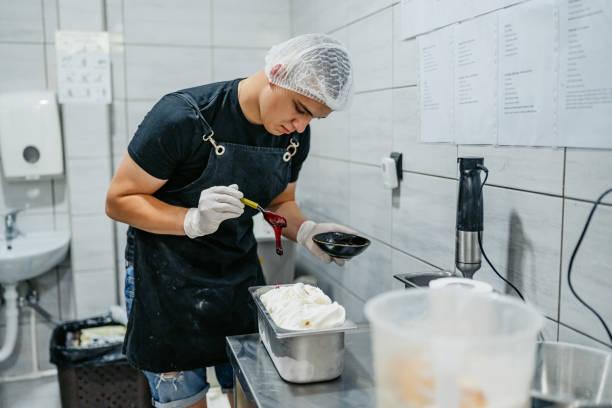
Professionals assist in Flavour creation under guidance with growing competence. They offer support in formulation and learn from seniors. Their...
0.0LPA

Specialists formulate Flavours independently or support larger projects with notable competence. They integrate sensory skills with chemistry for...
0.0LPA

Senior professionals create complex Flavours with certified expertise after rigorous training. They provide versatility by adapting to industry...
0.0LPA
Take the next step and explore more about Flavourist (flavour chemistry).
Explore similar career paths that might interest you