
Career

Professional Gamer or Esports Player

Professional Gamer or Esports Player

Professional Gamer or Esports Player


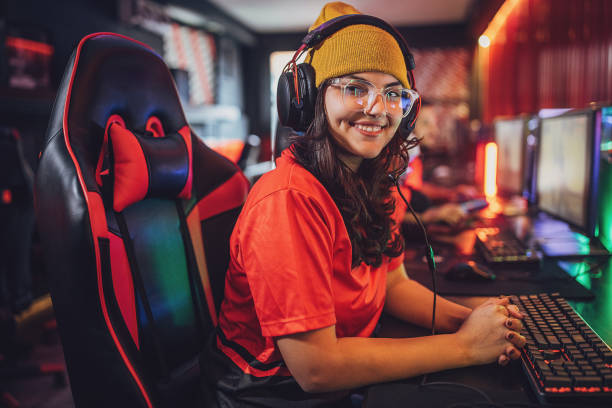
A Professional Gamer, also known as an Esports Player, is a competitive video game athlete who participates in organized tournaments, leagues, and events to earn prizes, sponsorships, and recognition. Specializing in specific games or genres, they showcase exceptional skill, strategy, and dedication in a rapidly growing industry that combines entertainment and technology. This career falls under the Entertainment and Technology career cluster, emphasizing digital competition, personal branding, and the evolving landscape of global gaming culture.
 

Career Description

Professional Gamers dedicate their time to mastering video games, often focusing on popular titles like League of Legends, Dota 2, or PUBG, competing against others in high-stakes environments broadcasted to millions worldwide. Their work involves rigorous practice, strategic planning, and participation in team-based or solo competitions while building a personal brand through streaming or content creation. They often collaborate with coaches, managers, and sponsors, working under esports organizations or as independent players. These gamers are key drivers in the booming esports industry, inspiring fans, shaping gaming trends, and turning a passion for play into a viable, competitive career


Roles and Responsibilities

  • Game Mastery and Competition:
    • Train extensively to achieve expert-level proficiency in specific games, mastering mechanics, strategies, and meta-trends.
    • Compete in local, national, and international tournaments to win prizes and rankings.
  • Team Collaboration:
    • Work with teammates in multiplayer games to develop coordinated strategies, communication, and synergy during matches.
    • Participate in team meetings or coaching sessions to analyze gameplay and improve performance.
  • Practice and Skill Development:
    • Dedicate hours daily to practice, refining reflexes, decision-making, and in-game adaptability through scrims and solo play.
    • Study opponents’ gameplay footage to identify weaknesses and prepare counter-strategies.
  • Personal Branding and Streaming:
    • Build a fanbase by streaming gameplay on platforms like Twitch or YouTube, engaging with viewers through commentary or interaction.
    • Create content such as tutorials, highlights, or vlogs to enhance visibility and attract sponsorships.
  • Physical and Mental Wellness:
    • Maintain physical health through exercise and ergonomics to endure long gaming sessions without injury.
    • Manage mental health to handle stress, burnout, and the pressure of high-stakes competitions.
  • Sponsorship and Business Engagement:
    • Collaborate with brands for endorsements, promoting gaming gear, energy drinks, or other products to fans.
    • Negotiate contracts with esports organizations for salaries, bonuses, or tournament winnings splits.
  • Community Interaction:
    • Engage with the gaming community through social media, fan events, or charity streams to build loyalty and influence.
    • Represent the esports industry positively by adhering to codes of conduct during public appearances or online interactions.
  • Game Analysis and Adaptation:
    • Stay updated on game patches, updates, and meta shifts to adjust playstyles and maintain competitive edge.
    • Analyze personal and team performance metrics to identify areas for improvement.
  • Event Participation and Travel:
    • Attend offline tournaments, boot camps, or promotional events, often requiring international travel and adaptation to different environments.
    • Represent teams or sponsors at gaming expos, press conferences, or media interviews.


Study Route & Eligibility Criteria

RouteSteps
Route 1 (Self-Taught/Gaming Focus)

1. Basic education (10+2 or equivalent) with a focus on gaming passion

2. Self-training through consistent gameplay and online tutorials (1-3 years)

3. Participation in local or online tournaments to gain experience (1-2 years)

4. Joining amateur teams or communities for skill development and visibility (1-2 years)

Route 2 (Technology and Media Path)

1. Bachelor’s degree in Computer Science, Game Design, or Media Studies (3-4 years)

2. Certificate or Short Course in Esports Management or Streaming (3-6 months)

3. Build gaming skills through consistent practice and online competition (1-3 years)

4. Gain exposure via content creation or internships with gaming firms (1-2 years)

Route 3 (Sports and Fitness Hybrid Path)

1. Bachelor’s degree in Sports Science, Psychology, or related field (3-4 years)

2. Short course in Competitive Gaming or Esports Coaching (3-6 months)

3. Develop gaming expertise through dedicated practice and local events (1-3 years)

4. Focus on physical/mental training to enhance performance (1-2 years)

Route 4 (Community and Networking Path)

1. Basic education (10+2 or equivalent) with early gaming exposure

2. Join online gaming communities, Discord servers, or forums for networking (1-2 years)

3. Compete in small-scale online tournaments to build a reputation (1-2 years)

4. Secure tryouts or contracts with esports teams through connections (1-2 years)

Route 5 (International Path)

1. Basic education (10+2 or equivalent) with strong gaming skills

2. Training through international gaming academies or boot camps (6-12 months)

3. Participate in global online qualifiers or tournaments for exposure (1-2 years)

4. Join international teams or secure sponsorships through performance (1-2 years)


Significant Observations

  • Non-Traditional Education: Formal degrees are not mandatory; skills and performance often outweigh academic credentials.
  • Skill-Driven Career: Relies heavily on self-taught expertise, dedication, and competitive results rather than structured training.
  • Variable Entry Timeline: Can range from a few years of self-training to structured programs with additional education (3-6 years).
  • Performance-Based Role: Success hinges on consistent wins, rankings, and visibility in the competitive gaming scene.
  • Global Opportunities: Offers access to international tournaments and teams, with a worldwide audience and market.
  • Interdisciplinary Elements: Combines gaming skills with branding, media, and sometimes fitness or psychology for holistic success.
  • High Risk, High Reward: Involves intense competition and short career spans but offers significant financial and fame potential.
  • Rapidly Evolving Industry: Driven by new games, platforms, and technologies requiring constant adaptation.
  • Community Impact: Influences gaming culture and inspires younger generations to pursue esports as a career.
  • Lifestyle Challenges: Demands discipline to balance long practice hours with health and personal life.


Internships & Practical Exposure

  • Participation in local gaming tournaments or LAN events to gain competitive experience.
  • Streaming gameplay on platforms like Twitch or YouTube to build a following and attract scouts.
  • Joining amateur esports teams for team-based practice and exposure to structured play.
  • Attendance at gaming conventions like DreamHack or E3 for networking with industry professionals.
  • Collaboration with content creators or streamers to learn branding and audience engagement.
  • Tryouts for professional teams or academies to showcase skills and secure contracts.
  • Engagement in online qualifiers for major tournaments to gain visibility on a global stage.
  • Participation in gaming boot camps or coaching programs for skill refinement.
  • Building personal highlight reels or portfolios of gameplay to pitch to sponsors or teams.
  • Involvement in esports community events or charity streams to enhance reputation and connections.


Courses & Specializations to Enter the Field

  • Certificate in Esports Management or Competitive Gaming
  • Short Course in Game Streaming and Content Creation
  • Training in Sports Psychology for Competitive Performance
  • Online Courses in Game Strategy and Meta Analysis
  • Certification in Personal Branding for Gamers
  • Workshop in Physical Fitness and Ergonomics for Gamers
  • Course in Digital Media and Marketing for Esports
  • Training in Team Dynamics and Communication for Multiplayer Games
  • Certificate in Esports Coaching and Analysis
  • Continuing Education in Emerging Games and Platforms


Top Institutes for Professional Gamer/Esports Player Education (India)

InstituteCourse/ProgramOfficial Link
National Institute of Esports and Gaming (NIEG), MumbaiEsports Management and TrainingUnder development (Check local updates)
Lovely Professional University (LPU), PunjabEsports and Gaming Programshttps://www.lpu.in/
Amity University, NoidaEsports and Game Designhttps://www.amity.edu/
SGT University, GurugramEsports and Gaming Managementhttps://sgtuniversity.ac.in/
Vellore Institute of Technology (VIT)Gaming Technology and Esportshttps://vit.ac.in/
Manipal Academy of Higher EducationDigital Media and Esportshttps://manipal.edu/
Symbiosis Institute of Media and Communication, PuneDigital Media and Gaminghttps://www.simc.edu/
IGNOU (Indira Gandhi National Open University)Certificate in Digital Mediahttp://www.ignou.ac.in/
Pearl Academy, DelhiGame Design and Esportshttps://pearlacademy.com/
Arena Animation, Multiple LocationsGame Design and Developmenthttps://www.arena-multimedia.com/


Top International Institutes

InstitutionCourseCountryOfficial Link
University of California, IrvineEsports Management and GamingUSAhttps://www.uci.edu/
Staffordshire UniversityEsports and Game DesignUKhttps://www.staffs.ac.uk/
University of RoehamptonEsports ManagementUKhttps://www.roehampton.ac.uk/
New York University (NYU)Game Design and Esports StudiesUSAhttps://www.nyu.edu/
University of TorontoDigital Media and GamingCanadahttps://www.utoronto.ca/
Queensland University of Technology (QUT)Esports and Interactive MediaAustraliahttps://www.qut.edu.au/
Aalto UniversityGame Design and EsportsFinlandhttps://www.aalto.fi/en
University of Southern California (USC)Interactive Media and EsportsUSAhttps://www.usc.edu/
Nanyang Technological University (NTU)Digital Entertainment and GamingSingaporehttps://www.ntu.edu.sg/
Becker College (now part of Clark University)Esports Management and GamingUSAhttps://www.clarku.edu/


Entrance Tests Required

India:

  • No specific entrance tests are typically required for esports or gaming programs; admission is often merit-based or skill-based (portfolio or gaming performance).
  • Institute-specific entrance exams or interviews for degree programs in game design or digital media (if applicable).
  • Competitive gaming tryouts or ranking assessments for team recruitment or scholarships.

International:

  • Graduate Record Examination (GRE) for Master’s programs in related fields like game design or digital media (if applicable).
  • International English Language Testing System (IELTS) with a minimum score of 6.0-6.5.
  • Test of English as a Foreign Language (TOEFL) with a minimum score of 80-90 for US/UK programs.
  • Specific university entrance assessments or gaming portfolios for esports or gaming-related programs.
  • SAT or ACT for undergraduate admissions in the USA (if pursuing related degrees).


Ideal Progressing Career Path

Professional Gamer/Esports Player → Veteran Esports Competitor → Esports Team Captain → Esports Coach/Strategist → Esports Organization Manager


Major Areas of Employment

  • Esports organizations for competitive team play and tournament participation.
  • Streaming platforms like Twitch or YouTube for content creation and monetization.
  • Gaming companies for brand endorsements or game testing roles.
  • Event organizers for participation in tournaments or promotional appearances.
  • Esports academies for training or coaching upcoming players.
  • Sponsorship agencies for representing brands in the gaming space.
  • Media and entertainment firms for commentary or casting at esports events.
  • Independent contracting for freelance streaming or tournament play.
  • Tech startups for beta testing or feedback on gaming hardware/software.
  • International esports leagues for global competition and exposure.


Prominent Employers

IndiaInternational
Global EsportsTeam Liquid, USA
Velocity GamingCloud9, USA
GodLike EsportsFnatic, UK
Team SoulG2 Esports, Spain
Orangutan GamingT1, South Korea
S8UL EsportsEvil Geniuses, USA
7Sea Esports100 Thieves, USA
Enigma GamingFaZe Clan, USA
Revenant EsportsOG, Denmark
Team Vitality IndiaTeam Secret, Europe


Pros and Cons of the Profession

ProsCons
Potential for high earnings through winnings and sponsorshipsShort career span due to physical and mental demands of gaming
Opportunity to turn a passion for gaming into a lucrative careerIntense competition with high risk of burnout or performance slumps
Global recognition and fanbase through streaming or tournamentsLong, irregular hours of practice can impact health and personal life
Flexible early entry without strict academic requirementsIncome instability, especially for less successful or new players
Growing industry with diverse roles beyond just playingPressure to maintain relevance in a fast-evolving gaming landscape


Industry Trends and Future Outlook

  • Increasing mainstream recognition of esports as a legitimate sport, with inclusion in events like the Asian Games.
  • Growth of mobile esports, especially in regions like India, with games like PUBG Mobile and Free Fire.
  • Rising investment from brands and venture capitalists in esports teams, events, and infrastructure.
  • Expansion of virtual reality (VR) and augmented reality (AR) gaming for immersive competitive experiences.
  • Greater focus on player wellness, with teams hiring psychologists and fitness coaches.
  • Surge in female participation and diversity initiatives to make esports more inclusive.
  • Development of esports education programs and academies for structured talent development.
  • Integration of blockchain and NFTs for in-game assets, player rewards, and fan engagement.
  • Emphasis on localized content and regional tournaments to grow grassroots esports ecosystems.
  • Global expansion of esports leagues with franchised models similar to traditional sports.


Salary Expectations 

(Figures are approximate and based on the latest available data and projections for 2026, subject to change. Indian figures reflect the growing esports market in urban areas and tournament earnings. International figures are based on US/UK/South Korean markets with adjustments for demand, sponsorships, and prize pools. Earnings can vary widely based on performance, sponsorships, and streaming revenue.)

Career LevelIndia (₹ per annum)International (US$ per annum)
Veteran Esports Competitor10,00,000 - 50,00,000$50,000 - $500,000
Esports Team Captain15,00,000 - 60,00,000$75,000 - $750,000
Esports Coach/Strategist8,00,000 - 30,00,000$40,000 - $200,000
Esports Organization Manager12,00,000 - 40,00,000$60,000 - $300,000
Esports Content Creator/Brand Ambassador5,00,000 - 1,00,00,000 (variable based on audience size)$30,000 - $1,000,000 (variable based on audience size)


Key Software Tools

  • Gaming platforms like Steam, Epic Games, or Battle.net for accessing and playing competitive titles.
  • Streaming software such as OBS Studio or Streamlabs for live broadcasting gameplay.
  • Communication tools like Discord or TeamSpeak for team coordination during matches.
  • Video editing software like Adobe Premiere or DaVinci Resolve for creating highlight reels.
  • Performance tracking tools like Aim Lab or in-game analytics for skill improvement.
  • Social media platforms like Twitter or Instagram for fan engagement and branding.
  • Content management tools like StreamElements for managing live stream overlays and chats.
  • Hardware optimization software for tweaking gaming setups (e.g., NVIDIA GeForce Experience).
  • Tournament platforms like FACEIT or ESL Play for joining competitive events.
  • Analytics tools like Twitch Tracker for monitoring streaming growth and audience metrics.


Professional Organizations and Networks

  • Esports India Federation (ESFI)
  • Indian Gaming League (IGL)
  • Electronic Sports League (ESL) India
  • World Esports Association (WESA)
  • International Esports Federation (IeSF)
  • Global Esports Federation (GEF)
  • Esports Integrity Commission (ESIC)
  • Asian Electronic Sports Federation (AESF)
  • European Esports Federation (EEF)
  • North American Scholastic Esports Federation (NASEF)


Notable Professional Gamer/Esports Player Leaders (Top 10)

  • Ankit "V3nom" Panth (India): A veteran in Indian esports, Panth has led Team Brutality since the 2010s. Based in Mumbai, his Counter-Strike success inspires many. His leadership shapes Indian gaming.
     
  • Tanmay "Sc0utOP" Singh (India): A PUBG Mobile star with Team Soul, Singh has shone since the late 2010s. Based in Mumbai, his fanbase and wins boost Indian esports. His influence grows mobile gaming.
     
  • Johan "N0tail" Sundstein (Denmark): A Dota 2 icon with OG, Sundstein has led since the 2010s. Based in Europe, his record-breaking TI winnings inspire players. His strategy wins titles.
     
  • Kyle "Bugha" Giersdorf (USA): A Fortnite prodigy, Giersdorf won the 2019 World Cup. Based in Pennsylvania, his $3 million prize at 16 stunned the world. His talent captivates fans.
     
  • Abhishek "Ghatak" Thakur (India): A PUBG Mobile leader with Team Soul, Thakur has excelled since the 2010s. Based in Mumbai, his mentorship builds talent. His impact strengthens Indian teams.
     
  • Sasha "Scarlett" Hostyn (Canada): A StarCraft II pioneer, Hostyn has broken barriers since the 2010s. Based in Canada, her success as a female player inspires diversity. Her skill challenges norms.
     
  • Oleksandr "s1mple" Kostyliev (Ukraine): A CS:GO superstar with Natus Vincere, Kostyliev has dominated since the 2010s. Based in Europe, his precision earns accolades. His play elevates competition.
     
  • Jonathan "Fatal1ty" Wendel (USA): An early esports icon, Wendel won across multiple FPS games in the 2000s. Based in the USA, his branding pioneered player fame. His legacy endures.
     
  • Morten "Morten" Mehmert (Denmark): A Clash Royale champion, Mehmert has led since the 2010s. Based in Europe, his mobile esports success expands the field. His wins redefine gaming.
     

Advice for Aspiring Professional Gamers/Esports Players

  • Dedicate time to mastering a specific game or genre to stand out in competitive play.
  • Participate in online and local tournaments early to gain experience and visibility.
  • Build a streaming presence to attract fans and potential sponsors or team scouts.
  • Focus on physical and mental health to sustain long hours and high-pressure situations.
  • Stay updated on game updates, meta shifts, and industry trends to remain competitive.
  • Network with gaming communities, teams, and content creators for opportunities.
  • Develop a personal brand through consistent content and positive community engagement.
  • Seek coaching or mentorship to refine skills and strategies for professional growth.
  • Consider diversifying into content creation or coaching as a long-term career backup.
  • Balance passion with discipline to avoid burnout and maintain consistent performance.


A career as a Professional Gamer/Esports Player offers an exhilarating opportunity to turn a love for gaming into a competitive, high-profile profession, blending skill, strategy, and personal branding in a fast-growing global industry. These players are at the forefront of digital entertainment, captivating audiences and shaping the future of sports through virtual arenas. With opportunities spanning competitive play, streaming, and team leadership, this field is ideal for those driven by passion, dedication, and a competitive spirit. For individuals ready to embrace the challenges and rewards of esports, this career presents a thrilling and dynamic path with the potential to achieve fame and impact on a worldwide stage.

Leading Professions
View All

Veteran

Esports Competitor : An experienced player with a proven track record of success in major tournaments, often serving as a role model or influencer in the gaming community while continuing to compete at a high level. They maintain elite performance. Their reputation attracts sponsorships.

Esports

Team Captain : Leads a professional team, making strategic decisions during matches, fostering team cohesion, and representing the squad in public or media events with authority and experience. They guide team success. Their leadership inspires wins.

CAREER VIDEOS

Interested? Take the next step for this career

Every Student, Career Ready!

This page includes information from O*NET Resource Center by the U.S. Department of Labor, Employment and Training Administration (USDOL/ETA). Used under the CC BY 4.0 license. O*NET® is a trademark of USDOL/ETA.


© 2025 TopTeen. All rights reserved.

Terms & ConditionsPrivacy Policy