Think about everything you threw into the trash can today. A plastic snack wrapper, a broken plastic pen, an old soda can, or maybe even a piece of clothing you just didn't want anymore.
For generations, the global economy has worked on a one-way street known as the Linear Model: Take Raw Materials leads to Make Product, which inevitably leads to Waste / Landfill. Companies take raw materials from the earth, make a product, and when consumers are done with it, it gets dumped directly into a landfill or an ocean.
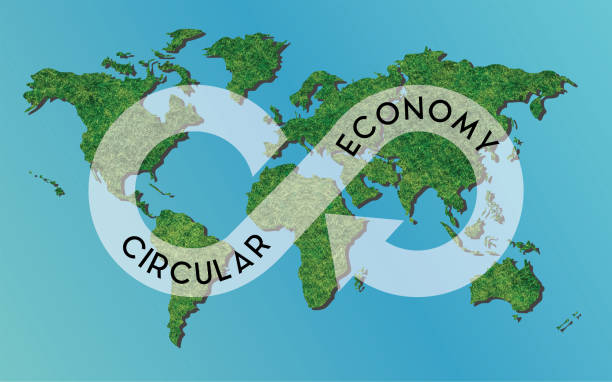
But a new generation of entrepreneurs is looking at that mountain of trash and seeing a literal goldmine. They are building Circular-Economy Start-Ups—businesses designed to eliminate waste entirely by looping resources back into production. Instead of a straight line, their process forms a continuous circle: Design / Make leads to Use / Repair, which leads to Recycle / Remanufacture, which loops right back into the start.
For high schoolers with an entrepreneurial mindset, the circular economy is one of the most exciting landscapes in business today. It proves that you don't have to choose between making a profit and protecting the planet.
The Three Core Strategies of Circular Design
Circular start-ups don't just figure out better ways to recycle things at the end of their life. True circular design completely rethinks how products are made from day one. Start-ups generally focus on three distinct strategies:
1. Designing Out Waste (Input Optimization)
These companies replace traditional plastics or toxic chemicals with biodegradable or endlessly recyclable alternatives.
- The Trend: Using agricultural waste (like potato peels, mushroom mycelium, or seaweed) to create plastic-free packaging that dissolves naturally in water or compost bins within weeks.
2. Products as a Service (PaaS)
Instead of buying a physical item that you eventually throw away, you pay to rent or lease it. The company retains ownership of the item, meaning they are highly incentivized to make it durable, repairable, and easy to disassemble.
- The Trend: Electronics companies that lease high-end laptops or headphones to students, swapping out modules when they break, repairing the old parts, and keeping materials out of the trash loop entirely.
3. Upcycling (Turning Waste into Premium Goods)
Traditional recycling downcycles materials (e.g., melting a plastic bottle into lower-quality plastic that eventually gets tossed). Upcycling takes a waste material and turns it into something of higher value than the original item.
- The Trend: Turning discarded fishing nets pulled from the ocean into premium, high-end sunglasses frames, or processing coffee grounds into durable winter jackets.
Career Spotlight: Roles in Green Business
The circular economy needs a completely different set of skills than a traditional corporate environment. Here are some of the coolest jobs taking over this sector:
| Circular Economy Role | What You Do | The Required Superpower |
|---|---|---|
| Sustainable Product Designer | Designing physical products so they can be easily taken apart with standard tools for repair or recycling. | Spatial reasoning, CAD modeling, and industrial design. |
| Supply Chain Strategist | Finding companies with "waste" products and connecting them to factories that can use that waste as raw material. | Logistics, problem-solving, and relationship building. |
| Lifecycle Assessment (LCA) Analyst | Using data science to calculate the total environmental footprint of a product from "cradle to grave." | Heavy data analytics, math, and environmental science. |
How to Think Like a Circular Entrepreneur Right Now
You do not need millions of dollars in venture capital funding to start practicing circular business logic. You can start building these instincts right in your community:
- Audit Your School’s Waste Streams: Look at your school cafeteria or clubs. What is the single biggest item going into the trash? Is it plastic utensils? Food waste? Excess paper? Brainstorm a pitch deck showing how the school could partner with local composting start-ups or switch to a reusable system to save money over time.
- Map a "Waste Match": Look at two local businesses near your home. What does Business A throw away that Business B might actually be able to use? For example, could a local coffee shop's used grounds be sold to a local gardening center or skincare maker? Finding those hidden connections is the exact foundation of a circular startup.
- Learn Life Cycle Thinking: Before you buy your next piece of tech or clothing, trace its lifecycle. Research where the raw materials came from, how long it’s designed to last, and what will happen to it when it breaks. Training your brain to see the entire loop is the first step toward inventing a better one.
In nature, waste does not exist. A dead tree feeds the soil, which grows new plants, which feeds animals. Circular start-ups are simply trying to make human business look a lot more like nature. By mastering circular design principles today, you are positioning yourself to lead the most important economic transition of our lifetime.