Imagine you are playing a hyper-realistic simulation game. You build a massive, complex city, and to see if your new bridge design can handle a category 5 hurricane, you just crank up the storm settings and watch what happens. If the bridge collapses, no one gets hurt, you don't lose millions of dollars, and you can just hit "undo," tweak the physics, and try again.
Now, what if we could do that with the actual real world?
That is not sci-fi; it is a technology called a Digital Twin. Right now, engineers, doctors, and scientists are building living, breathing virtual copies of everything from Formula 1 race cars to entire cities—and even the human body.
What Exactly Is a Digital Twin?
At first glance, a digital twin sounds like a standard 3D computer model or a video game map. But there is a massive difference: the umbilical cord of data.
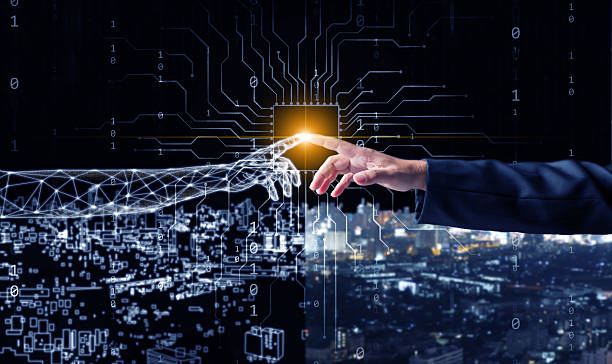
A standard 3D model is static; it is just a snapshot in time. A digital twin, however, is a living replica connected to its physical counterpart through thousands of tiny internet-connected sensors (called the Internet of Things, or IoT). These sensors constantly feed the virtual model real-time data about temperature, pressure, motion, and wear-and-tear.
If something happens to the physical object in the real world, its digital twin updates instantly to reflect that exact change. The core of digital twin technology lies in creating a closed-loop system where physical reality and digital simulation continuously inform one another. To visualize this interplay, consider the following real-time data loop:
| PHYSICAL SYSTEM | --(Sensor Data)--> | DIGITAL TWIN |
| (Real Wind Turbine| | (Virtual Model |
| facing a storm) | <-- (Commands) --- | running AI tests) |
This continuous, bidirectional relationship transforms how industrial assets are managed during high-stress scenarios. The interaction between the two environments happens in two distinct phases:
- The Inbound Thread (Sensor Data): The physical wind turbine is equipped with an array of IoT sensors measuring real-world stress metrics—such as wind velocity, blade tension, rotor temperature, and structural vibration. This telemetry is streamed instantly to the cloud, updating the virtual model so it mirrors the exact operational state and environmental conditions of the physical asset.
- The Outbound Thread (Commands): Instead of relying on static, pre-programmed safety thresholds, the digital twin runs predictive AI simulations in the background. It tests hundreds of "what-if" scenarios per second to see how the turbine will react if wind speeds increase. When the AI discovers an optimal configuration to prevent damage, it sends automated operational commands back to the real-world turbine—such as pitching the blades or braking the rotor—to mitigate risk before a failure can occur.
How It Works: The Three-Step Loop
Beyond specific industrial tasks like wind turbine tracking, creating any digital twin follows a standardized structural loop:
- Data Collection: The physical object (like an airplane engine) is fitted with smart sensors that capture how it is performing and what its environment is like.
- Virtual Modeling: A highly accurate digital replica is built using computer-aided design and physics engines. This twin is coded to react to gravity, heat, and friction exactly like real matter.
- Live Sync & Prediction: The live data stream feeds into the virtual model. Advanced artificial intelligence (AI) analyzes the data to run "what-if" scenarios, predicting when a part might break before it actually does.
Where Are Digital Twins Being Used Right Now?
Digital twin technology is exploding across almost every major industry. Here are a few places where virtual clones are changing the game:
1. High-Performance Motorsports (Formula 1)
F1 teams don’t just race on the track; they race in the cloud. Every car has hundreds of sensors streaming data back to the garage during a race. The team’s digital twin simulates thousands of lap permutations every second, telling the driver exactly when to pit, how their tires are wearing down, or how a change in wind speed will affect their aerodynamics.
2. Smart Cities and Infrastructure
Urban planners in places like Singapore and Shanghai use digital twins of entire cities. By hooking up traffic cameras, weather stations, and energy grids to a virtual map, they can simulate how a new skyscraper will block the wind, how a flood will impact evacuation routes, or how to re-route traffic in real-time to eliminate gridlock.
3. Healthcare and Medicine
This is arguably the most exciting frontier. Researchers are building digital twins of human organs, like the heart.
| Physical Organ | Digital Twin Capability |
|---|---|
| Patient's Heart | A custom virtual model coded with the patient's unique geometry, heart rate, and arterial pressure. |
| The Benefit | Surgeons can practice a complex surgery on the digital twin first, or test how a specific drug affects the virtual heart, eliminating the risk of trial-and-error on a real patient. |
Why Is This a Game Changer?
Before digital twins, if you wanted to know if a machine would fail, you had to perform preventive maintenance—which basically meant guessing and replacing parts based on a fixed schedule, even if they were perfectly fine.
Digital twins allow for predictive maintenance. Because the virtual clone is constantly crunching real-time stress data, it can ping an engineer and say, "Hey, based on the current vibration levels, the ball bearing in engine valve 4 will crack in about 12 hours. Replace it now." This saves billions of dollars, prevents catastrophic accidents, and drastically cuts down on material waste.
The Future Belongs to the Clones
As AI gets smarter and sensors get smaller, digital twins will become a standard part of daily life. In the future, you might have a digital twin of your own body tracking your health, or a digital twin of your school optimizing energy use and airflow.
If you are into coding, 3D design, data science, or engineering, this is one of the fastest-growing tech fields on the planet. The next time you play a simulation game, just remember: someone out there is doing the exact same thing, but they're using it to change the real world.