










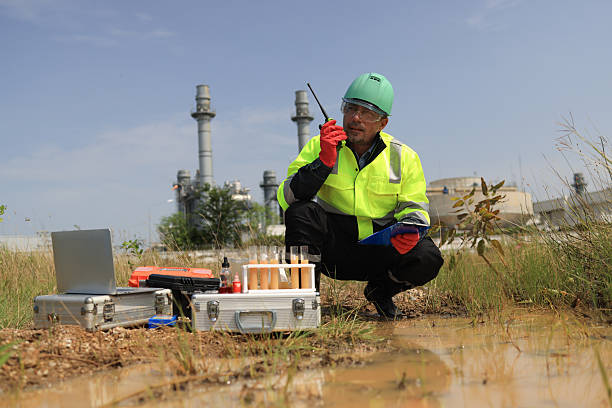
Environmental GIS Specialist
An Environmental GIS Specialist is a professional dedicated to using Geographic Information Systems (GIS) technology to analyze, map, and manage environmental data for conservation, resource management, and policy-making to support sustainable environmental practices. They work in government agencies, environmental consultancies, research institutions, non-profit organizations, and private sectors, collaborating with ecologists, urban planners, and policymakers. Environmental GIS Specialists play a critical role in addressing environmental challenges like habitat loss, climate change, and pollution through spatial data analysis in a world increasingly focused on data-driven environmental solutions, sustainability, and ecological resilience.
Career Description
Environmental GIS Specialists are experts in geospatial technologies and environmental science, responsible for collecting, analyzing, and visualizing spatial data to support environmental monitoring, planning, and decision-making. Their role involves creating detailed maps, modeling environmental trends, and assessing spatial impacts, often working in diverse settings such as offices with GIS software, field sites for data collection, or collaborative project environments. They combine expertise in GIS tools, remote sensing, and ecological knowledge to address issues like deforestation, urban sprawl, and natural disaster risks. As key contributors to environmental sustainability, they help inform strategies for ecosystem protection in an era prioritizing spatial analytics, climate adaptation, and global conservation efforts.
Roles and Responsibilities
- Spatial Data Collection and Management
- Gather environmental data through field surveys, remote sensing, and existing databases for GIS integration.
- Manage and maintain spatial databases to ensure data accuracy and accessibility for environmental projects.
- Environmental Mapping and Visualization
- Create detailed maps and visualizations of environmental features like land use, vegetation cover, and pollution zones.
- Use GIS software to produce thematic maps for stakeholder presentations and reports.
- Spatial Analysis and Modeling
- Analyze spatial data to identify environmental trends, such as habitat fragmentation or flood risk areas.
- Develop models to predict environmental changes, like urban expansion impacts on ecosystems.
- Impact Assessment Support
- Assist in environmental impact assessments by mapping project areas and analyzing potential ecological effects.
- Provide spatial insights for infrastructure projects to minimize environmental disruption.
- Conservation and Resource Planning
- Support conservation efforts by mapping biodiversity hotspots, protected areas, and wildlife corridors.
- Aid in natural resource management by analyzing spatial distribution of resources like water or forests.
- Policy and Decision Support
- Provide GIS-based reports and recommendations to policymakers for environmental planning and zoning.
- Collaborate with government bodies to develop spatial strategies for sustainable development.
- Disaster Risk Mapping
- Map areas prone to natural disasters like landslides or floods to support mitigation planning.
- Integrate real-time data for emergency response and environmental crisis management.
- Training and Collaboration
- Train colleagues or stakeholders in GIS tools and spatial data interpretation for environmental projects.
- Work with interdisciplinary teams to integrate GIS data into broader environmental research or initiatives.
Study Route & Eligibility Criteria
| Route | Steps |
| Route 1 | 1. 10+2 with Physics, Chemistry, Mathematics (PCM) or Biology (PCB). 2. Bachelor’s degree in Environmental Science, Geography, or Geoinformatics (3-4 years). 3. Gain practical experience through internships or training in GIS-focused environmental organizations (3-6 months). 4. Pursue entry-level roles like GIS Technician or Environmental Data Assistant (1-2 years). |
| Route 2 | 1. 10+2 with PCM or PCB. 2. Bachelor’s degree in Earth Sciences, Remote Sensing, or Computer Science (3-4 years). 3. Master’s degree in Geoinformatics, Environmental GIS, or Spatial Data Science (2 years, optional). 4. Work in GIS mapping or environmental data analysis roles to gain experience (1-2 years). 5. Transition to Environmental GIS Specialist roles with enhanced skills and knowledge. |
| Route 3 | 1. 10+2 with PCM or PCB. 2. Bachelor’s degree in Geography, Environmental Science, or related field (3-4 years). 3. Pursue professional certifications like Certified GIS Professional (GISP) or Environmental Spatial Analyst (1-2 years). 4. Gain hands-on experience through roles in environmental mapping or spatial analysis (1-2 years). 5. Establish a career as an Environmental GIS Specialist in government agencies or NGOs. |
| Route 4 | 1. 10+2 with PCM or PCB. 2. Bachelor’s degree from India in Geoinformatics, Environmental Science, or related field (3-4 years). 3. Pursue international GIS certifications or advanced degrees abroad (1-2 years). 4. Gain exposure through roles in global environmental GIS projects or international organizations (1-2 years). 5. Work as an Environmental GIS Specialist in international markets or global NGOs. |
Significant Observations (Academic Related Points)
- Scientific Foundation: Strong knowledge of environmental science, geography, and geospatial technologies is essential for GIS applications.
- Technical Skills: Practical training in GIS software and spatial data analysis builds core competencies in mapping.
- Specialized Certifications: Credentials in GIS or remote sensing enhance professional credibility in environmental contexts.
- Data Expertise: Proficiency in handling large spatial datasets is crucial for environmental trend analysis.
- Policy Knowledge: Familiarity with environmental regulations and land-use planning ensures relevant GIS outputs.
- Certification Relevance: Some positions may mandate specific GIS certifications from recognized bodies.
- Continuous Learning: Regular training is needed to keep up with evolving GIS technologies and environmental challenges.
- Global Awareness: Understanding international geospatial standards opens opportunities for cross-border projects.
- Precision Focus: Attention to detail is vital for accurate spatial data collection and map production.
- Entrance Exam Preparation: Admission to certain programs may require clearing competitive entrance tests.
- International Standards: For global roles, qualifications or certifications from international GIS organizations may be required.
Internships & Practical Exposure
- Mandatory field training during degree programs in environmental data collection for GIS applications.
- Rotations in GIS-focused environmental organizations for hands-on experience in spatial mapping and analysis.
- Internships under senior GIS specialists for exposure to real-time environmental mapping and modeling projects.
- Observerships in government environmental or urban planning departments for insights into GIS policy applications.
- Participation in GIS-based environmental surveys and mapping simulations for practical skill development.
- Training in spatial data collection techniques through real-world field engagements.
- Exposure to GIS tools like ArcGIS, QGIS, and remote sensing software during internships.
- Field projects on environmental impact mapping or resource distribution analysis during training.
- Community outreach programs to educate locals on GIS-based environmental monitoring and planning.
- International GIS project attachments for global exposure to diverse environmental spatial analysis challenges.
Courses & Specializations to Enter the Field
- Certificate in Geographic Information Systems (GIS) for Environmental Applications
- Bachelor’s in Geoinformatics, Environmental Science, or Geography
- Master’s in Geoinformatics, Environmental GIS, or Spatial Data Science
- Ph.D. in Environmental Spatial Analysis or Geospatial Technologies
- Specialization in Environmental Impact Mapping
- Certification in Remote Sensing for Environmental Monitoring
- Workshops on GIS Modeling for Climate Change Analysis
- Training in Spatial Data Management for Natural Resources
- Specialization in Urban Environmental GIS
- Certification in GIS for Biodiversity and Conservation Planning
Top Institutes for Environmental GIS Specialist Education (India)
| Institute | Course/Program | Official Link |
| Indian Institute of Remote Sensing (IIRS), Dehradun | M.Tech in Remote Sensing and GIS | https://www.iirs.gov.in/ |
| Jawaharlal Nehru University (JNU), New Delhi | M.Sc. in Environmental Sciences (GIS Focus) | https://www.jnu.ac.in/ |
| TERI School of Advanced Studies, New Delhi | M.Sc. in Geoinformatics | https://www.terisas.ac.in/ |
| University of Delhi, Delhi | M.Sc. in Environmental Studies (GIS Electives) | https://www.du.ac.in/ |
| Banaras Hindu University (BHU), Varanasi | M.Sc. in Environmental Science (GIS Focus) | https://www.bhu.ac.in/ |
| Indian Institute of Science (IISc), Bangalore | M.Sc. in Ecological Sciences (Spatial Analysis) | https://www.iisc.ac.in/ |
| Savitribai Phule Pune University, Pune | M.Sc. in Geoinformatics | https://www.unipune.ac.in/ |
| Amity University, Noida | B.Sc./M.Sc. in Geoinformatics | https://www.amity.edu/ |
| Anna University, Chennai | M.E. in Remote Sensing and Geomatics | https://www.annauniv.edu/ |
| Madras Institute of Technology (MIT), Chennai | M.Tech in Geoinformatics | https://www.mitindia.edu/ |
Top International Institutes
| Institution | Course | Country | Official Link |
| Stanford University | Environmental Science (GIS Focus) | USA | https://www.stanford.edu/ |
| University of California, Berkeley | Geospatial Information Science | USA | https://www.berkeley.edu/ |
| Wageningen University & Research | Geo-Information Science and Remote Sensing | Netherlands | https://www.wur.nl/ |
| University of Oxford | Environmental GIS and Spatial Analysis | UK | https://www.ox.ac.uk/ |
| Massachusetts Institute of Technology (MIT) | Urban Studies and GIS | USA | https://www.mit.edu/ |
| University of Melbourne | Geospatial Science and Environmental Management | Australia | https://www.unimelb.edu.au/ |
| University of British Columbia | GIS and Environmental Science | Canada | https://www.ubc.ca/ |
| ETH Zurich | Geomatic Engineering and Planning | Switzerland | https://www.ethz.ch/ |
| University of Copenhagen | Geoinformatics and Environmental Analysis | Denmark | https://www.ku.dk/ |
| National University of Singapore (NUS) | Geospatial and Environmental Studies | Singapore | https://www.nus.edu.sg/ |
Entrance Tests Required
India:
- IIRS Entrance Exam: For admission to M.Tech programs in Remote Sensing and GIS at Indian Institute of Remote Sensing.
- JNU CEEB (Combined Entrance Examination for Biotechnology): For admissions in environmental science programs at JNU.
- GATE (Graduate Aptitude Test in Engineering): For admission to M.Tech programs in geoinformatics or related fields at various institutes.
- State-Level Entrance Exams: Various states conduct exams for admission to GIS or environmental programs in state universities.
- NET (National Eligibility Test): For research fellowships or lectureship roles in environmental GIS.
International:
- TOEFL (Test of English as a Foreign Language): Minimum score of 80-100 required for non-native speakers applying to programs in English-speaking countries.
- IELTS (International English Language Testing System): Minimum score of 6.0-7.0 required for admission to universities in the UK, Australia, and other regions.
- PTE Academic (Pearson Test of English Academic): Accepted by many international institutes as an alternative to TOEFL or IELTS for English proficiency.
Ideal Progressing Career Path
GIS Technician → Environmental GIS Analyst → Senior Environmental GIS Specialist → GIS Project Manager → Environmental GIS Consultant → GIS Program Director → Academician/Researcher
Major Areas of Employment
- Government environmental departments for mapping and monitoring ecological health.
- Research institutions for studying spatial environmental trends and resource distribution.
- Non-profit organizations for advocating GIS-based conservation and sustainability.
- Environmental consultancies for conducting spatial impact assessments for projects.
- Academic institutions for teaching and researching GIS in environmental contexts.
- Urban planning bodies for integrating environmental GIS into city development plans.
- Forestry and wildlife departments for mapping habitats and biodiversity hotspots.
- International environmental agencies for global GIS-based ecological initiatives.
- Disaster management authorities for spatial risk assessment and mitigation planning.
- Corporate sustainability divisions for evaluating spatial environmental impacts of operations.
Prominent Employers
| India | International |
| Ministry of Environment, Forest and Climate Change (MoEFCC) | World Wildlife Fund (WWF), Global |
| Indian Institute of Remote Sensing (IIRS), Dehradun | International Union for Conservation of Nature (IUCN), Global |
| Forest Survey of India (FSI) | World Resources Institute (WRI), Global |
| National Remote Sensing Centre (NRSC), Hyderabad | The Nature Conservancy, USA |
| Survey of India | United Nations Environment Programme (UNEP), Global |
| WWF-India | Greenpeace International, Global |
| Centre for Science and Environment (CSE), New Delhi | Esri (Environmental Systems Research Institute), USA |
| TERI - The Energy and Resources Institute, New Delhi | European Environment Agency (EEA), Europe |
| State Environment and Urban Development Departments (e.g., Tamil Nadu, Maharashtra) | Global Land Analysis & Discovery (GLAD), USA |
| Wildlife Institute of India (WII), Dehradun | NASA Earth Science Division, USA |
Pros and Cons of the Profession
| Pros | Cons |
| Direct impact on environmental decision-making through spatial data insights | High dependency on technology, requiring constant software and hardware updates |
| Growing demand due to increasing need for data-driven environmental solutions | Can involve repetitive data processing tasks, leading to monotony |
| Opportunity to contribute to conservation, urban planning, and disaster mitigation | Limited field exposure in some roles, focusing heavily on desk-based analysis |
| Varied career paths in research, policy support, consultancy, and technology | Need for continuous learning to keep up with rapidly evolving GIS technologies |
| Potential for societal change through GIS-based sustainable environmental strategies | Challenges in data accuracy and availability, especially in remote Indian regions |
Industry Trends and Future Outlook
- Spatial Data Demand: Increasing reliance on GIS for environmental monitoring and planning, driving demand for specialists in India.
- Climate Change Mapping: Growing need for GIS to analyze climate impacts on ecosystems, such as sea-level rise in coastal areas like the Sundarbans.
- Technological Advancements: Adoption of AI, machine learning, and cloud-based GIS platforms for enhanced spatial analysis, creating new skill demands.
- Urban Environmental Planning: Rising focus on using GIS for sustainable urban development and green space mapping in Indian cities.
- Policy Integration: Stronger environmental policies leveraging GIS data, such as India’s National Action Plan on Climate Change, expanding specialist roles.
- Disaster Management: Increased use of GIS for real-time disaster risk mapping and response planning, especially for floods and landslides in India.
- Conservation Applications: Growth in GIS use for biodiversity hotspot mapping and wildlife corridor planning in regions like the Western Ghats.
- Global Collaborations: International partnerships under frameworks like the UN Sustainable Development Goals to address transboundary environmental issues with GIS.
- Open Data Initiatives: Rise in open-access environmental data platforms, necessitating GIS specialists for data integration and analysis.
- Skill Development Needs: Demand for training in advanced GIS tools, drone mapping, and interdisciplinary environmental applications.
Salary Expectations
| Career Level | India (₹ per annum) | International (USD per annum) |
| GIS Technician (Early Career) | 3,00,000 - 5,50,000 | 45,000 - 60,000 |
| Environmental GIS Analyst (Mid-Career) | 5,50,000 - 9,00,000 | 60,000 - 80,000 |
| Senior Environmental GIS Specialist | 9,00,000 - 13,00,000 | 80,000 - 100,000 |
| GIS Project Manager | 13,00,000 - 18,00,000 | 100,000 - 120,000 |
| Environmental GIS Consultant/GIS Program Director/Academician/Researcher | 18,00,000 - 25,00,000 | 120,000 - 140,000+ |
Note: Salaries may vary based on location, employer, experience, and specialization. Indian figures are updated estimates based on current industry trends, government pay scales, and private sector data as of 2025, reflecting inflation and demand growth in geospatial and environmental sectors. International figures are based on data from the U.S., Canada, and Europe as of 2025, adjusted for market trends in GIS and environmental roles, sourced from industry reports and salary surveys like Glassdoor and PayScale. Due to the speculative nature of future data, these are approximations and may differ based on real-time economic factors.
Key Software Tools
- Geographic Information Systems (GIS) Software (e.g., ArcGIS, QGIS) for environmental mapping and analysis.
- Remote Sensing Software (e.g., ENVI, ERDAS Imagine) for processing satellite imagery of environmental features.
- Data Visualization Tools (e.g., Tableau, Power BI) for presenting spatial environmental data.
- Spatial Database Management Tools (e.g., PostgreSQL with PostGIS) for storing and querying environmental GIS data.
- Programming Languages (e.g., Python, R) for automating GIS workflows and spatial analysis.
- Teleconferencing tools like Zoom for collaboration with global environmental and GIS teams.
- Cloud GIS Platforms (e.g., Google Earth Engine, ArcGIS Online) for scalable environmental data analysis.
- Microsoft Office Suite for documentation and GIS project presentations.
- Project Management Tools (e.g., Trello, Monday.com) for coordinating GIS-based environmental initiatives.
- Drone Mapping Software (e.g., Pix4D, DroneDeploy) for aerial environmental data collection and analysis.
Professional Organizations and Networks
- Indian Society of Remote Sensing (ISRS)
- National Remote Sensing Centre (NRSC), India
- International Society for Photogrammetry and Remote Sensing (ISPRS)
- GIS Certification Institute (GISCI)
- Urban and Regional Information Systems Association (URISA)
- Open Geospatial Consortium (OGC)
- American Association of Geographers (AAG)
- European Association of Remote Sensing Laboratories (EARSeL)
- Global Spatial Data Infrastructure Association (GSDI)
Notable Leaders in Environmental GIS (Top 10)
- Dr. K. Kasturirangan (Contemporary, India): Former ISRO Chairman, instrumental in advancing remote sensing and GIS for environmental monitoring in India. His leadership shaped satellite-based mapping. His policies influenced resource management. He chaired key environmental panels.
- Dr.ShaileshNayak (Contemporary, India): Former Director of Indian National Centre for Ocean Information Services (INCOIS), known for GIS applications in coastal and environmental management. His work aids disaster mapping. His leadership drives spatial policy. He authored key geospatial texts.
- Dr. R.R. Navalgund (Contemporary, India): Former Director of Space Applications Centre (ISRO), focusing on remote sensing and GIS for environmental and agricultural monitoring. His innovations support sustainability. His research shapes mapping tools. He mentored geospatial experts.
- Dr. A.S. Kiran Kumar (Contemporary, India): Former ISRO Chairman, known for advancing GIS and satellite technology for environmental applications. His contributions enhance disaster management. His leadership drives spatial data policy. He pioneered environmental mapping missions.
- Dr.Madhavan Nair Rajeevan (Contemporary, India): Former Secretary of Ministry of Earth Sciences, focusing on GIS for climate and environmental analysis. His work supports weather mapping. His policies influence spatial research. He authored key environmental studies.
- Dr. Jack Dangermond (Contemporary, USA): Founder of Esri, the leading GIS software company, revolutionizing environmental GIS applications globally. His tools shape spatial analysis. His leadership drives innovation. He pioneered digital mapping for conservation.
- Dr. Dawn Wright (Contemporary, USA): Chief Scientist at Esri, known for GIS applications in marine and environmental conservation. Her work maps ocean ecosystems. Her advocacy shapes geospatial policy. She authored key GIS texts.
- Dr. Michael F. Goodchild (Contemporary, USA/Canada): Geographer and GIS pioneer, known for advancing spatial data science for environmental analysis. His research defines GIS theory. His leadership influences standards. He authored foundational geospatial works.
- Dr. Roger Tomlinson (Historical, Canada): Known as the “Father of GIS,” who developed the first computerized GIS for environmental planning. His innovations shaped modern mapping. His work influenced conservation. He pioneered GIS until his passing in 2014.
- Dr. Cynthia Brewer (Contemporary, USA): Geographer at Penn State University, known for GIS visualization and environmental mapping techniques. Her research improves map design. Her tools aid conservation planning. She authored key cartography texts.
Advice for Aspiring Environmental GIS Specialists
- Build a strong foundation in environmental science, geography, and geospatial technologies to understand GIS applications.
- Seek early exposure to GIS software and environmental data projects through internships to confirm interest in the field.
- Prepare thoroughly for entrance exams or certification requirements specific to your chosen program or region.
- Pursue certifications in GIS, remote sensing, or spatial data analysis to gain expertise in environmental contexts.
- Stay updated on advancements in GIS tools and environmental mapping by attending industry conferences and workshops.
- Develop hands-on skills in spatial data collection, mapping, and analysis through practical training.
- Engage in GIS-based environmental research or mapping projects to build real-world experience.
- Join professional associations like the Indian Society of Remote Sensing (ISRS) for resources and networking.
- Work on precision and technical skills to ensure accurate spatial data and environmental map outputs.
- Explore international GIS projects for exposure to diverse environmental spatial challenges and global standards.
- Volunteer in community environmental mapping or awareness programs to understand local spatial data needs.
- Cultivate adaptability to handle technical and data-related challenges in diverse environmental settings.
- Attend continuing education programs to stay abreast of evolving GIS technologies and environmental issues.
- Build a network with GIS experts, environmental scientists, and policymakers for collaborative efforts.
- Develop resilience to manage the technical and logistical pressures of GIS-based environmental work.
- Balance technical GIS skills with environmental knowledge to adapt to rapid changes in spatial data priorities.
A career as an Environmental GIS Specialist offers a unique opportunity to contribute to environmental protection and global sustainability by leveraging geospatial technologies to analyze and manage ecological data across diverse landscapes. From mapping biodiversity hotspots to shaping data-driven environmental policies, Environmental GIS Specialists play a pivotal role in modern environmental stewardship and sustainable planning. This field combines technical expertise, spatial analysis, and a commitment to ecological and societal well-being, offering diverse paths in research, policy support, and technology-driven conservation. For those passionate about merging technology with nature, adapting to global environmental challenges, and addressing critical spatial data needs in an era of increasing environmental urgency, a career as an Environmental GIS Specialist provides an intellectually stimulating and professionally rewarding journey with the potential to make significant contributions to society by enhancing ecosystem health and sustainability worldwide.
Leading Professions
View All
GIS Technician
Entry-level professionals assist in spatial data collection, basic mapping, and database management under supervision in organizations like the Indian Institute of Remote Sensing (IIRS) or state environmental departments. They gain foundational experience in GIS tools for environmental applications across India.
Environmental GIS Analyst
Mid-level specialists analyze spatial data to map environmental trends, such as deforestation or pollution spread, working in entities like the Ministry of Environment, Forest and Climate Change (MoEFCC) or NGOs like WWF-India. They produce actionable GIS outputs for conservation.
Senior Environmental GIS Specialist
Experienced specialists lead complex GIS projects, oversee spatial analysis, and mentor junior staff in research bodies like the Forest Survey of India (FSI) or environmental consultancies. They focus on advanced mapping for critical areas like the Himalayan region.
GIS Project Manager
Professionals manage GIS-based environmental projects, such as land-use planning or disaster risk mapping, for organizations like the National Remote Sensing Centre (NRSC) or state urban planning departments. They coordinate teams and ensure project deliverables align with environmental goals.
Environmental GIS Consultant
Senior experts provide specialized GIS guidance to government bodies like the National Biodiversity Authority (NBA) or private firms on environmental impact assessments. They offer strategic spatial solutions for sustainable development projects across India.
GIS Program Director
High-level leaders oversee large-scale GIS programs for environmental monitoring and policy support in settings like the Survey of India or international environmental NGOs operating in India. They strategize long-term spatial data initiatives for ecological sustainability.
Academician/Researcher
Top-tier educators or researchers lead GIS studies for environmental applications at institutes like JNU or Anna University. They mentor future GIS specialists and publish impactful research on spatial environmental challenges, contributing to academic and practical advancements.

CAREER VIDEOS
Interested? Take the next step for this career
Skills Needed

Every Student, Career Ready!

This page includes information from O*NET Resource Center by the U.S. Department of Labor, Employment and Training Administration (USDOL/ETA). Used under the CC BY 4.0 license. O*NET® is a trademark of USDOL/ETA.
© 2025 TopTeen. All rights reserved.