Aerobiologist
Aerology Research Scholar (PhD)
Explore Career
A Serologist is a specialized scientist who studies blood serum and other bodily fluids to understand immune responses, diagnose diseases, and develop medical treatments, focusing on the analysis of antibodies, antigens, and serological reactions. They work in clinical laboratories, hospitals, research institutions, forensic labs, and public health organizations. Serologists apply biochemical, immunological, and molecular techniques to identify pathogens, assess immune status, and support criminal investigations, contributing to healthcare, disease prevention, and legal justice. Combining expertise in biology, chemistry, and pathology, they play a crucial role in advancing fields like medicine, epidemiology, and forensic science in a world where serological insights are vital for managing pandemics, ensuring blood safety, and solving crimes.
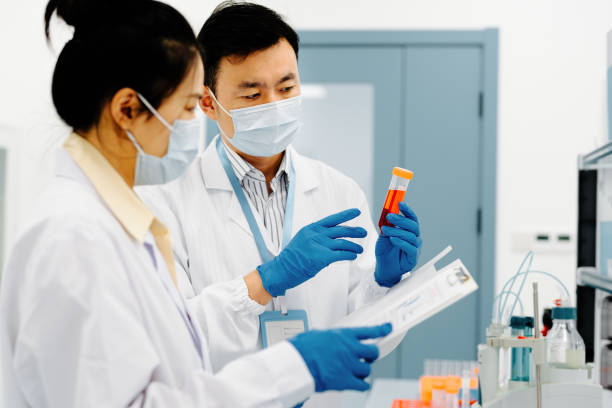
Serologists are experts who focus on the study of blood serum and immune responses, exploring mechanisms like antibody-antigen interactions, disease markers, and blood typing, and applying their findings to solve problems related to medical diagnostics, infectious disease control, and forensic evidence analysis. Their work involves conducting tests in laboratories, interpreting serological data, and translating research into practical applications for industries like healthcare, public safety, and legal systems. They often operate in clinical, governmental, or academic settings, balancing technical research with real-world impact and interdisciplinary collaboration. Serologists are essential to fields like immunology, transfusion medicine, and criminal justice, serving as experts in serological science, contributing to solutions for global challenges, advancing technological innovations, and ensuring scientific integrity. They address critical issues through rigorous research and improve outcomes through evidence-based strategies in a scientific landscape where serology's relevance continues to grow due to emerging infectious diseases and forensic advancements.
| Route | Steps |
| Route 1 | 1. 10+2 with Physics, Chemistry, and Biology (PCB). 2. Bachelor's degree in Biology, Microbiology, or Life Sciences (3-4 years). 3. Master's degree in Serology, Immunology, or Pathology (2 years). 4. PhD in Serology or related field (3-5 years, optional). 5. Postdoctoral research or lab experience in serological studies (optional). |
| Route 2 | 1. 10+2 with Physics, Chemistry, and Biology (PCB). 2. Bachelor's degree in Biochemistry or Biotechnology (3-4 years). 3. Master's degree in Immunology or Serology with specialization in blood analysis (2 years). 4. Specialized training in serological techniques (6 months-1 year). 5. Practical experience in serology labs or clinical settings. |
| Route 3 | 1. 10+2 with Physics, Chemistry, and Biology (PCB). 2. Bachelor's degree in Medical Laboratory Technology or Forensic Science (3-4 years). 3. Master's degree in Serology or Clinical Pathology (2 years). 4. Internship or fellowship in serology research labs (1-2 years). 5. Certification in advanced serological testing techniques (optional). |
| Route 4 | 1. 10+2 with Physics, Chemistry, and Biology (PCB). 2. Bachelor's degree from India in relevant field (3-4 years). 3. Master's or PhD in Serology or Immunology abroad (2-5 years). 4. Training or postdoctoral research in international serology programs (1-3 years). 5. Certification or licensure for international practice (if applicable). |
| Institute | Course/Program | Official Link |
| All India Institute of Medical Sciences (AIIMS), New Delhi | MSc/PhD in Pathology | https://www.aiims.edu/ |
| Jawaharlal Nehru University (JNU), New Delhi | MSc/PhD in Life Sciences | https://www.jnu.ac.in/ |
| University of Delhi, Delhi | MSc/PhD in Microbiology | https://www.du.ac.in/ |
| Banaras Hindu University (BHU), Varanasi | MSc/PhD in Biochemistry | https://www.bhu.ac.in/ |
| University of Hyderabad, Hyderabad | MSc/PhD in Biotechnology | https://www.uohyd.ac.in/ |
| Savitribai Phule Pune University, Pune | MSc/PhD in Microbiology | https://www.unipune.ac.in/ |
| Indian Institute of Technology (IIT), Bombay | MSc/PhD in Biosciences | https://www.iitb.ac.in/ |
| National Institute of Immunology (NII), New Delhi | Research in Immunology | https://www.nii.res.in/ |
| Postgraduate Institute of Medical Education and Research (PGIMER), Chandigarh | MSc/PhD in Pathology | https://pgimer.edu.in/ |
| Christian Medical College (CMC), Vellore | MSc/PhD in Clinical Pathology | https://www.cmch-vellore.edu/ |
| Institution | Course | Country | Official Link |
| Harvard University | MSc/PhD in Immunology | USA | https://www.harvard.edu/ |
| University of Oxford | DPhil in Clinical Medicine | UK | https://www.ox.ac.uk/ |
| Johns Hopkins University | MSc/PhD in Pathology | USA | https://www.jhu.edu/ |
| University of Melbourne | MSc/PhD in Immunology | Australia | https://www.unimelb.edu.au/ |
| University of California, San Francisco | MSc/PhD in Biomedical Sciences | USA | https://www.ucsf.edu/ |
| Imperial College London | MSc/PhD in Immunology | UK | https://www.imperial.ac.uk/ |
| University of Toronto | MSc/PhD in Laboratory Medicine | Canada | https://www.utoronto.ca/ |
| Karolinska Institutet | MSc/PhD in Medical Science | Sweden | https://www.ki.se/en |
| University of Copenhagen | MSc/PhD in Immunology | Denmark | https://www.ku.dk/english/ |
| National University of Singapore (NUS) | MSc/PhD in Life Sciences | Singapore | https://www.nus.edu.sg/ |
India:
International:
Undergraduate Student → Graduate Trainee (Master's) → Junior Serologist → Established Serologist → Senior Serologist/Research Lead → Program Director/Professor
| India | International |
| All India Institute of Medical Sciences (AIIMS) | Centers for Disease Control and Prevention (CDC), USA |
| Indian Council of Medical Research (ICMR) | World Health Organization (WHO) |
| National Institute of Immunology (NII) | National Institutes of Health (NIH), USA |
| Department of Biotechnology (DBT), Government of India | European Centre for Disease Prevention and Control (ECDC) |
| National Blood Transfusion Council (NBTC) | Public Health England (PHE), UK |
| Christian Medical College (CMC), Vellore | Mayo Clinic, USA |
| Postgraduate Institute of Medical Education and Research (PGIMER) | Quest Diagnostics, USA |
| National Centre for Disease Control (NCDC) | Interpol (Forensic Services), Global |
| Serum Institute of India | Johnson & Johnson (Biotech Division), Global |
| Apollo Hospitals (Diagnostic Labs) | Roche Diagnostics, Switzerland |
| Pros | Cons |
| Significant contribution to healthcare through disease diagnosis and blood safety. | Requires continuous learning to keep up with rapidly evolving diagnostic techniques. |
| Intellectually stimulating work combining biology, chemistry, and pathology in serological analysis. | Competitive field for research positions, often requiring extensive lab experience and publications. |
| High impact on public health by contributing to outbreak control and vaccine development. | Lab-intensive role with potential exposure to biohazards during testing. |
| Opportunities for innovation in diagnostics, forensics, and immunological therapies. | Limited public awareness of serology as a career, leading to fewer mainstream opportunities in some regions. |
| Growing relevance due to increasing concerns over pandemics and blood safety. | Funding constraints for research projects can limit scope and career progression in academia or public health. |
| Career Level | India (₹ per annum) | International (US$ per annum) |
| Trainee/Graduate Student | 2,00,000 - 4,00,000 | $20,000 - $30,000 |
| Junior Serologist | 4,00,000 - 7,00,000 | $35,000 - $50,000 |
| Established Serologist | 7,00,000 - 12,00,000 | $50,000 - $70,000 |
| Senior Serologist/Research Lead | 12,00,000 - 20,00,000 | $70,000 - $90,000 |
| Program Director/Professor | 20,00,000 - 35,00,000 | $90,000 - $130,000 |
A career as a Serologist offers a unique opportunity to impact healthcare, public safety, and scientific discovery by studying the intricate details of blood serum and immune responses. From conducting detailed laboratory research to developing solutions for disease diagnosis, blood safety, and criminal justice, Serologists play a pivotal role in addressing some of the world's most pressing challenges related to infectious diseases, medical emergencies, and legal investigations. This field combines rigorous scientific inquiry, interdisciplinary collaboration, and technological innovation, offering diverse paths in clinical practice, research, and applied forensics. For those passionate about biological sciences, disease prevention, and scientific exploration, a career as a Serologist provides a deeply rewarding journey with significant potential for making meaningful contributions to society in an era where serological research continues to shape medical diagnostics, public health strategies, and justice systems.

Early-career serologists establish roles in clinical labs, forensic units, or research facilities while developing their expertise and project...
0.0LPA
Experienced serologists often take leadership roles, overseeing lab teams or serological programs while mentoring junior staff and shaping...
0.0LPA
Specialists focus exclusively on medical diagnostics, developing expertise in disease detection and blood safety strategies. They focus on...
0.0LPA
Take the next step and explore more about Serologist.
Explore similar career paths that might interest you