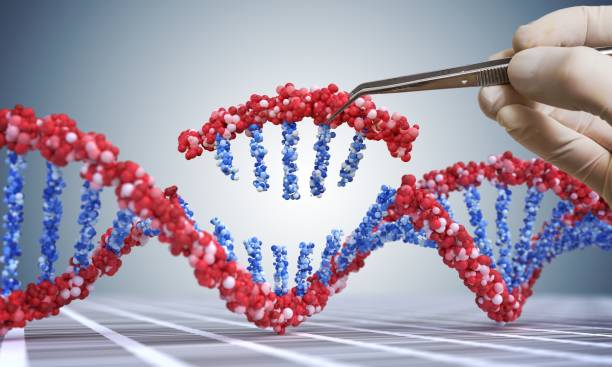
Imagine you could open up a laptop, find a document containing the code for a living organism, hit Ctrl + F to find a typo, fix it, and press save.
It sounds like pure sci-fi, but this is exactly what is happening in biotechnology labs right now. The field of biotechnology is undergoing a massive revolution. We are moving past the era of simply treating diseases with pills and entering the era of programming biology like software.
If you are trying to figure out what to major in or looking for a future-proof career that can genuinely change the world, the biotech landscape has never been more exciting. Let’s dive into the biggest breakthroughs happening right now and the mind-blowing career paths opening up for the next generation.
The Breakthroughs Transforming Our World
While you might have heard of CRISPR-Cas9 (the microscopic "molecular scissors" that can cut and paste DNA), the technology has evolved rapidly.
[Original DNA Sequence] ---> [CRISPR locates typo] ---> [DNA Code is corrected]
Scientists have managed to shrink CRISPR systems down so small that they can be packed into tiny delivery vehicles and sent directly into the human body to fix mutations in real-time. Clinical trials are successfully tackling conditions like sickle cell anemia, genetic blindness, and even tweaking liver cells to permanently slash bad cholesterol levels.
But biotech is going way beyond just medicine:
- Synthetic Biology: Scientists are designing entirely custom bacteria from scratch to eat plastic pollution, create eco-friendly biofuels, and grow lab-born meat to combat food shortages.
- Climate-Resistant Crops: Using gene editing to engineer crops that can thrive during severe droughts or resist devastating pests without relying on heavy chemicals.
The Coolest Careers You've Never Heard Of
Because biotech is changing so fast, the traditional jobs of "working at a lab bench with a pipette" are expanding into completely new territories. The industry is desperately looking for people who can bridge the gap between biology, computer science, and engineering.
Here are the emerging roles that will dominate the next decade:
1. The Bio-AI Specialist & Computational Biologist
Gone are the days of staring through microscopes for months to find a genetic pattern. Today, artificial intelligence is shortening drug-discovery timelines from years to mere months.
- The Job: You’ll write code (think Python and machine learning algorithms) to model how proteins fold, predict how a gene edit will behave, or analyze massive amounts of genomic data.
- The Vibe: Perfect for anyone who loves coding but wants their programs to save lives instead of just building apps.
2. The Bioprocess Engineer
Discovering a cure in a tiny laboratory flask is amazing, but how do you manufacture enough of it to treat millions of people worldwide?
- The Job: These professionals are the architects who figure out how to scale up biological reactions. You will design and operate massive 10,000-liter bioreactors, ensuring that delicate, engineered living cells survive and produce the medicine or sustainable materials correctly.
- The Vibe: If you love engineering, physics, and solving complex mechanical puzzles, this is your sweet spot.
3. The Synthetic Biologist / Strain Engineer
Instead of just fixing broken genes, synthetic biologists treat DNA like LEGO bricks to build entirely new biological functions.
- The Job: You will engineer microbes, yeast, or algae to manufacture sustainable materials—like clothing dye made without toxic chemicals, or bacteria that secrete real milk proteins without needing a cow.
- The Vibe: Ideal for creative minds who view biology as the ultimate design canvas.
Quick Reality Check
By 2030, nearly 40% of new biotech roles are expected to require strong hybrid skills—combining core biology with data science, coding, or engineering. The future belongs to the multi-talented!
How to Start Prepping in High School
You don’t need a PhD to start exploring this path right now. If this world sounds exciting to you, here is a roadmap to get a massive head start:
- Learn to Code: Pick up Python or R. Knowing how to handle data is just as critical to modern biology as understanding the parts of a cell.
- Look for Summer Training: Many universities and biotech institutes offer summer programs for high schoolers where you can get hands-on experience with molecular biology tools like PCR (copying DNA strands) and basic bioinformatics.
- Follow Industry News: Stay up to date by tracking active clinical trials, research updates from genomic institutes, and breakthrough announcements from prominent biotech labs online.
Biotech isn't just about memorizing textbooks anymore—it's about actively building a cleaner, healthier, and more sustainable future.