Forensic-Science Technologist

A Forensic Science Technologist, also known as a Forensic Technician or Crime Scene Technician, is a specialized professional trained to collect, analyze, and preserve evidence from crime scenes to assist in criminal investigations. They work in forensic laboratories, law enforcement agencies, government institutions, and private firms, collaborating with forensic scientists, detectives, and legal professionals. Forensic Science Technologists play a crucial role in modern criminal justice by providing scientific data for solving crimes, in an era where advanced technology and increasing crime complexity demand precise and reliable forensic analysis to ensure justice and public safety.
Share :
Career tree mind map (horizontal) — Forensic-Science Technologist
Colored branches, hub circles, and underlined topics — same style as counselor course classic (types 18–19 in admin).
Loading mind map…

Overview

A Forensic Science Technologist, also known as a Forensic Technician or Crime Scene Technician, is a specialized professional trained to collect, analyze, and preserve evidence from crime scenes to assist in criminal investigations. They work in forensic laboratories, law enforcement agencies, government institutions, and private firms, collaborating with forensic scientists, detectives, and legal professionals. Forensic Science Technologists play a crucial role in modern criminal justice by providing scientific data for solving crimes, in an era where advanced technology and increasing crime complexity demand precise and reliable forensic analysis to ensure justice and public safety.

Forensic Science Technologists are skilled professionals responsible for gathering physical evidence from crime scenes, conducting laboratory analyses, and preparing detailed reports to support criminal investigations. Their role includes processing fingerprints, DNA samples, trace evidence, and toxicology reports, as well as using specialized equipment to uncover critical clues. They combine scientific expertise with meticulous attention to detail, often working in high-pressure environments to ensure evidence integrity and accuracy. As key contributors to the justice system, they enable convictions, exonerations, and case resolutions in a landscape increasingly reliant on scientific methods to combat crime and uphold the rule of law.

Roles and Responsibilities

💼
Forensic-Science Technologist
Roles and Responsibilities
Crime Scene Investigation
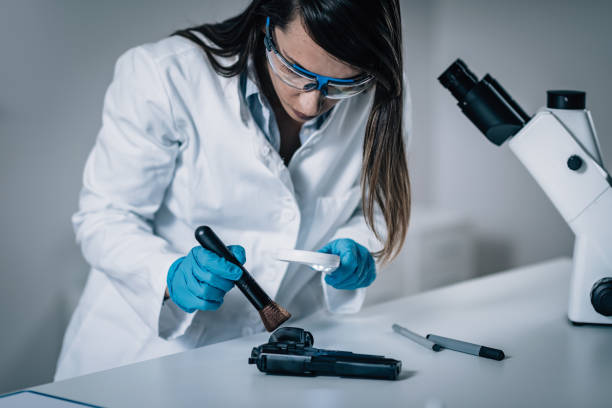
Respond to crime scenes to collect physical evidence such as fingerprints, blood, hair, and other materials.
Photograph and document crime scenes to preserve the context and location of evidence.
Evidence Processing
Analyze evidence in laboratories using techniques like DNA profiling, toxicology screening, and ballistic testing.
Identify and compare trace evidence (e.g., fibers, soil, or glass) to link suspects or victims to crime scenes.
Perform chemical tests to detect substances like drugs or poisons in biological samples.
Equipment Operation
Operate and maintain forensic tools such as microscopes, spectrometers, and fingerprint databases for accurate analysis.
Calibrate equipment to ensure precision in test results and data collection.
Data Analysis Support
Compile and interpret scientific data to draw conclusions about evidence.
Prepare detailed reports summarizing findings for use by investigators and in court proceedings.
Evidence Preservation
Store and catalog evidence following strict chain-of-custody protocols to prevent contamination or tampering.
Ensure proper packaging and labeling of evidence for long-term storage or legal proceedings.
Courtroom Support
Provide expert testimony in court to explain forensic findings and methodologies to judges and juries.
Assist legal teams by preparing visual aids or exhibits based on forensic evidence.
Safety and Compliance
Follow safety protocols when handling hazardous materials like biological fluids or chemicals.
Adhere to legal and ethical standards to maintain the integrity of investigations.
Collaboration and Reporting
Work closely with law enforcement, forensic scientists, and legal professionals to share findings.
Update case files and databases with forensic results for ongoing investigations.

Roles and Responsibilities

  • Crime Scene Investigation
    • Respond to crime scenes to collect physical evidence such as fingerprints, blood, hair, and other materials.
    • Photograph and document crime scenes to preserve the context and location of evidence.
  • Evidence Processing
    • Analyze evidence in laboratories using techniques like DNA profiling, toxicology screening, and ballistic testing.
    • Identify and compare trace evidence (e.g., fibers, soil, or glass) to link suspects or victims to crime scenes.
    • Perform chemical tests to detect substances like drugs or poisons in biological samples.
  • Equipment Operation
    • Operate and maintain forensic tools such as microscopes, spectrometers, and fingerprint databases for accurate analysis.
    • Calibrate equipment to ensure precision in test results and data collection.
  • Data Analysis Support
    • Compile and interpret scientific data to draw conclusions about evidence.
    • Prepare detailed reports summarizing findings for use by investigators and in court proceedings.
  • Evidence Preservation
    • Store and catalog evidence following strict chain-of-custody protocols to prevent contamination or tampering.
    • Ensure proper packaging and labeling of evidence for long-term storage or legal proceedings.
  • Courtroom Support
    • Provide expert testimony in court to explain forensic findings and methodologies to judges and juries.
    • Assist legal teams by preparing visual aids or exhibits based on forensic evidence.
  • Safety and Compliance
    • Follow safety protocols when handling hazardous materials like biological fluids or chemicals.
    • Adhere to legal and ethical standards to maintain the integrity of investigations.
  • Collaboration and Reporting
    • Work closely with law enforcement, forensic scientists, and legal professionals to share findings.
    • Update case files and databases with forensic results for ongoing investigations.

Study Route & Eligibility Criteria

Study Route & Eligibility Criteria
Forensic-Science Technologist
Route 1
🎓
1
10+2 with Physics, Chemistry, Biology or equivalent
📚
2
Certificate in Forensic Science
💼
3
Internship or practical training
3-6 months
💼
4
Practice as Forensic Technician
Route 2
🎓
1
10+2 with PCB
🎓
2
Diploma in Forensic Science or Criminology
1-2 years
💼
3
Hands-on training or internship in forensic labs
💼
4
Work as Forensic Science Technologist
Route 3
🎓
1
10+2 with PCB
🏛️
2
Bachelor’s degree in Forensic Science
3-4 years
📚
3
Training in forensic techniques
💼
4
Practice as Forensic Science Technologist
Route 4
🎓
1
10+2 with PCB
🏛️
2
Master’s degree or international certification in Forensic Science
2-3 years
📚
3
Licensure as per country regulations
💼
4
Practice abroad or in India
🎯 Forensic-Science Technologist - Professional

Significant Observations (Academic Related Points)

💡
Forensic-Science Technologist
Academic Related Points
1
Scientific Foundation:
Strong knowledge of biology, chemistry, and physics is essential for understanding forensic analysis techniques.
2
Technical Skills:
Practical training in evidence collection and laboratory analysis develops core competencies in forensic investigations.
3
Specialized Training:
Certifications in areas like DNA analysis, toxicology, or digital forensics offer niche expertise.
4
Equipment Proficiency:
Mastery of forensic tools and software is vital for accurate results.
5
Interdisciplinary Knowledge:
Understanding criminal law and investigative protocols improves case outcomes.
6
Certification Importance:
Registration with forensic councils or professional bodies may be required for practice.
7
Continuing Education:
Regular workshops are necessary to stay updated on forensic technologies and techniques.
8
Global Standards:
Compliance with international forensic guidelines enhances opportunities for global roles.
9
Attention to Detail:
Precision in evidence handling and documentation is critical for legal accuracy.
10
Entrance Examination Success:
Certain programs may require entrance tests or specific qualifications for admission.
11
International Testing Requirements:
For global practice, certifications like those from the International Association for Identification (IAI) may be needed.

Internships & Practical Exposure

💼
Forensic-Science Technologist
Internships & Practical Experience
1
Mandatory practical training during certificate or degree programs in forensic labs or crime scene units.
2
Rotations in government or private forensic laboratories for hands-on experience with evidence analysis.
3
Internships under senior forensic scientists or law enforcement for exposure to real-time investigations.
4
Observerships in crime scene investigation units for experience in diverse evidence collection techniques.
5
Participation in forensic simulations for practical skill development.
6
Training in chain-of-custody and legal protocols through real-world case studies and mock scenarios.
7
Exposure to high-stakes scenarios during internships in police departments or forensic facilities.
8
Clinical projects on improving evidence analysis accuracy or contamination prevention during training.
9
Public safety initiatives for assisting in forensic awareness or crime prevention programs.
10
International forensic lab attachments for global exposure to forensic practices.

Courses & Specializations to Enter the Field

📚
Forensic-Science Technologist
Courses & Specializations
📖
Certificate in Forensic Science
📖
Diploma in Forensic Science or Criminology
📖
Bachelor’s in Forensic Science (B.Sc. FS)
📖
Training in Crime Scene Investigation
📖
Specialization in DNA Analysis and Serology
📖
Certification in Forensic Toxicology
📖
Workshops on Fingerprint Analysis and Ballistics
📖
Training in Digital Forensics and Cybercrime
📖
Specialization in Forensic Anthropology
📖
Certification in Basic Life Support (BLS) for emergency response

Prominent Employers

🏢
Forensic-Science Technologist
🌟 Top Companies & Organizations
🇮🇳 India
🏛️
Central Forensic Science Laboratory (CFSL)
🏛️
State Forensic Science Laboratories (SFSL)
🏛️
National Investigation Agency (NIA)
🏛️
Central Bureau of Investigation (CBI)
🏛️
Gujarat Forensic Sciences University
🏛️
NICFS, New Delhi
🏛️
Institute of Forensic Science, Mumbai
🏛️
Amity Institute of Forensic Sciences
🏛️
Osmania University Forensic Department
🏛️
Directorate of Forensic Science Services (DFSS)
🌍 International
🌐
Federal Bureau of Investigation (FBI), USA
🌐
Scotland Yard, UK
🌐
Royal Canadian Mounted Police (RCMP), Canada
🌐
Australian Federal Police (AFP)
🌐
Interpol, France
🌐
Los Angeles Police Department (LAPD), USA
🌐
New York Police Department (NYPD), USA
🌐
Metropolitan Police Service, UK
🌐
California Department of Justice, USA
🌐
National Crime Agency (NCA), UK

Advice for Aspiring Forensic-Science Technologists

💡
Forensic-Science Technologist
🌟 Tips for Students & Parents
1
Build a strong foundation in biology, chemistry, and physics to understand forensic analysis techniques.
2
Seek early exposure to forensic labs or law enforcement units through volunteer programs to confirm interest in the field.
3
Prepare thoroughly for entrance exams or certification requirements specific to your chosen program or region.
4
Pursue advanced certifications in specialized areas like DNA profiling, toxicology, or digital forensics to gain expertise.
5
Stay updated on advancements in forensic technology by attending workshops and seminars.
6
Develop hands-on skills in evidence collection and analysis through practical training.
7
Engage in forensic or criminal justice projects to build real-world experience.
8
Join professional associations like the Indian Forensic Science Association (IFSA) for networking and resources.
9
Work on precision and attention to detail to ensure accurate evidence handling and legal compliance.
10
Explore international training programs for exposure to diverse forensic practices and standards.
11
Volunteer in forensic units or crime scene teams to understand investigative needs and build experience.
12
Cultivate patience and objectivity to handle complex cases and maintain impartiality.
13
Attend continuing education programs to stay abreast of evolving forensic methods and technologies.
14
Build a network with forensic scientists, law enforcement, and legal professionals for collaborative investigative efforts.
15
Develop resilience to handle emotionally challenging crime scenes and high-stakes scenarios.
16
Balance lab work with continuous learning to adapt to rapid advancements in forensic systems.
🎓 Final Message
A career as a Forensic Science Technologist offers a unique opportunity to contribute to justice and public safety by supporting the resolution of criminal cases through scientific evidence analysis. From collecting critical evidence at crime scenes to conducting precise laboratory tests like DNA profiling and toxicology screening for law enforcement and legal teams in dynamic environments, Forensic Science Technologists play a pivotal role in modern criminal justice systems. This field combines scientific expertise, attention to detail, and a commitment to truth, offering diverse paths in forensic labs, law enforcement agencies, and legal consultancies. For those passionate about advancing criminal investigations, supporting evidence-based justice, and addressing the growing complexity of crime in an era of advanced technology and societal challenges, a career as a Forensic Science Technologist provides an intellectually stimulating and professionally rewarding journey with the potential to make significant contributions to society by enhancing the accuracy of forensic services and case outcomes worldwide.
Knowledge & Skills You Will Learn
1
Technical expertise in operating forensic equipment with precision
2
Observational accuracy in identifying and analyzing trace evidence
3
In-depth knowledge of biology, chemistry, and forensic methodologies
4
Critical thinking to interpret complex data and solve investigative puzzles
5
Attention to detail to ensure compliance with legal and scientific standards
6
Time management to handle multiple cases and prioritize urgent analyses
7
Adaptability to learn and implement new forensic technologies and protocols
8
Interpersonal skills for effective collaboration with investigative and legal teams
9
Problem-solving ability to address analytical challenges or evidence discrepancies
10
Emotional resilience to manage high-stakes and often distressing scenarios in forensics
Certified Forensic Technician

Certified Forensic Technician

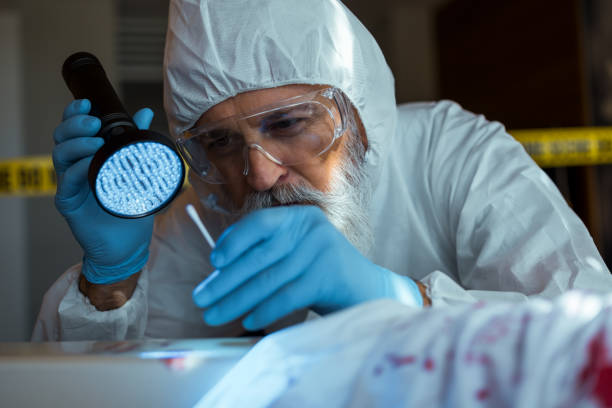
Early-career professionals assist in basic forensic tasks with increasing autonomy. They hone technical skills in evidence analysis and...

0.0LPA
Senior Forensic Technologist

Senior Forensic Technologist

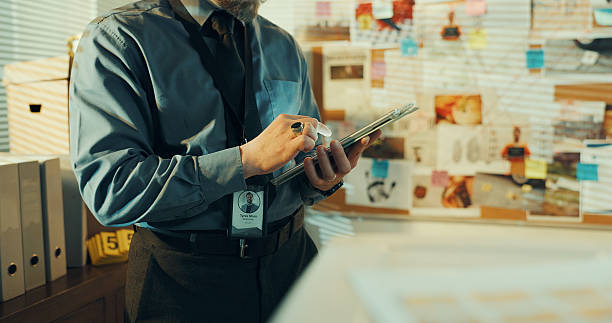
Experienced professionals manage complex forensic analyses with high accuracy during diverse cases. They offer technical expertise in optimizing...

0.0LPA
Lead Forensic Specialist

Lead Forensic Specialist

Specialists oversee advanced forensic support in high-demand scenarios with exceptional competence. They integrate deep scientific knowledge with...

0.0LPA

Interested in this career?

Take the next step and explore more about Forensic-Science Technologist.