
Aerobiologist
Aerology Research Scholar (PhD)
Explore Career
A Molecular Biologist is a specialized scientific professional who investigates the molecular and cellular mechanisms of life, focusing on the structure, function, and interactions of biomolecules like DNA, RNA, and proteins to understand biological processes and address challenges in health, genetics, and biotechnology. They work in research institutions, pharmaceutical companies, academic settings, and biotech industries, collaborating with scientists, medical professionals, and engineers to drive innovations in medicine, agriculture, and disease prevention. Molecular Biologists are pivotal in advancing scientific knowledge and developing solutions in an era where genetic engineering, personalized medicine, and global health crises demand cutting-edge research.
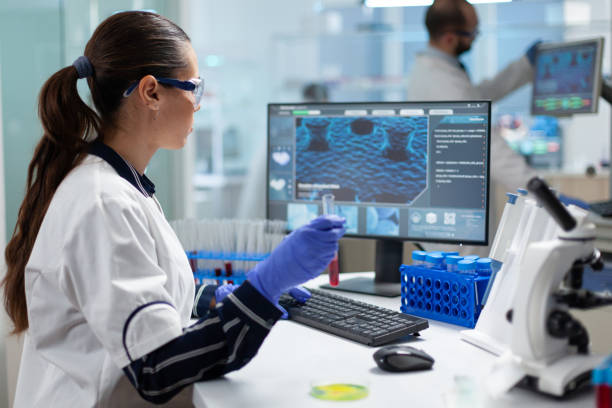
Molecular Biologists are highly skilled researchers dedicated to exploring the fundamental building blocks of life at a molecular level, employing advanced techniques like gene editing, sequencing, and protein analysis to uncover insights into cellular functions, heredity, and disease mechanisms. Their work involves designing experiments, interpreting complex data, and translating findings into practical applications such as new therapies, diagnostic tools, or genetically modified organisms. Operating in laboratories, they combine precision, analytical prowess, and specialized expertise to contribute to breakthroughs in areas like cancer research, genetic disorders, and infectious diseases. As key players in the scientific community, Molecular Biologists shape progress in a landscape increasingly driven by biotechnology, genomic medicine, and public health needs.
| Route | Steps |
| Route 1 | 1. 10+2 in Science stream (Physics, Chemistry, Biology mandatory) |
| 2. Bachelor’s in Molecular Biology, Biotechnology, or Life Sciences (3-4 years) | |
| 3. Start as a Junior Lab Technician or Research Assistant in molecular labs | |
| Route 2 | 1. 10+2 in Science stream (Physics, Chemistry, Biology mandatory) |
| 2. Bachelor’s in Molecular Biology, Biotechnology, or Life Sciences (3-4 years) | |
| 3. Master’s in Molecular Biology or related field (2 years) | |
| 4. Work as a Research Associate in academic or industry settings | |
| Route 3 | 1. 10+2 in Science stream (Physics, Chemistry, Biology mandatory) |
| 2. Bachelor’s in Molecular Biology, Biotechnology, or Life Sciences (3-4 years) | |
| 3. Master’s in Molecular Biology or specialized field (2 years) | |
| 4. Ph.D. in Molecular Biology or related discipline (3-5 years) | |
| 5. Pursue roles as a Senior Molecular Biologist or Principal Investigator | |
| Route 4 | 1. 10+2 in Science stream (Physics, Chemistry, Biology mandatory) |
| 2. Bachelor’s in Molecular Biology, Biotechnology, or Life Sciences (3-4 years) | |
| 3. Master’s in Molecular Biology or specialized field (2 years) | |
| 4. Ph.D. in Molecular Biology or related discipline (3-5 years) | |
| 5. Postdoctoral Research (1-3 years) | |
| 6. Serve as a Lead Researcher, Professor, or Biotech Consultant |
| Institute | Course/Program | Official Link |
| Indian Institute of Science (IISc), Bangalore | B.Sc., M.Sc., Ph.D. in Biological Sciences | https://iisc.ac.in/ |
| Jawaharlal Nehru University (JNU), Delhi | M.Sc., Ph.D. in Molecular Biology | https://www.jnu.ac.in/ |
| Tata Institute of Fundamental Research (TIFR), Mumbai | Ph.D. in Molecular Biology | https://www.tifr.res.in/ |
| National Centre for Biological Sciences (NCBS), Bangalore | M.Sc., Ph.D. in Molecular Biology | https://www.ncbs.res.in/ |
| University of Hyderabad, Hyderabad | M.Sc., Ph.D. in Molecular Biology | https://uohyd.ac.in/ |
| Banaras Hindu University (BHU), Varanasi | B.Sc., M.Sc., Ph.D. in Molecular Biology | https://www.bhu.ac.in/ |
| Indian Institute of Technology (IIT), Bombay | B.Tech, M.Tech, Ph.D. in Biotechnology | https://www.iitb.ac.in/ |
| University of Delhi, Delhi | B.Sc., M.Sc., Ph.D. in Life Sciences | https://www.du.ac.in/ |
| National Institute of Immunology (NII), New Delhi | Ph.D. in Molecular Immunology | https://nii.res.in/ |
| Centre for Cellular and Molecular Biology (CCMB), Hyderabad | Ph.D. in Molecular Biology | https://www.ccmb.res.in/ |
| Institution | Course | Country | Official Link |
| Harvard University, Cambridge | B.A., M.A., Ph.D. in Molecular Biology | USA | https://www.harvard.edu/ |
| Stanford University, Stanford | B.S., M.S., Ph.D. in Molecular Biology | USA | https://www.stanford.edu/ |
| University of Cambridge, Cambridge | B.A., M.Phil., Ph.D. in Molecular Biology | UK | https://www.cam.ac.uk/ |
| Massachusetts Institute of Technology (MIT), Cambridge | B.S., Ph.D. in Molecular Biology | USA | https://www.mit.edu/ |
| University of Oxford, Oxford | B.A., D.Phil. in Molecular Biochemistry | UK | https://www.ox.ac.uk/ |
| University of California, San Francisco (UCSF) | Ph.D. in Molecular Biology | USA | https://www.ucsf.edu/ |
| ETH Zurich, Zurich | B.Sc., M.Sc., Ph.D. in Molecular Biology | Switzerland | https://ethz.ch/en.html |
| University of Toronto, Toronto | B.Sc., M.Sc., Ph.D. in Molecular Genetics | Canada | https://www.utoronto.ca/ |
| Australian National University, Canberra | B.Sc., M.Sc., Ph.D. in Molecular Biology | Australia | https://www.anu.edu.au/ |
| University of Tokyo, Tokyo | B.Sc., M.Sc., Ph.D. in Molecular Life Sciences | Japan | https://www.u-tokyo.ac.jp/en/ |
India:
International:
Aspiring Molecular Biologist → Junior Lab Technician → Research Associate → Molecular Biologist → Senior Molecular Biologist → Principal Investigator → Research Director → Professor → Biotech Consultant → Biotech Entrepreneur
| India | International |
| Indian Council of Medical Research (ICMR) | National Institutes of Health (NIH), USA |
| Council of Scientific and Industrial Research (CSIR) | World Health Organization (WHO), Global |
| Department of Biotechnology (DBT) | Centers for Disease Control and Prevention (CDC), USA |
| National Institute of Immunology (NII) | European Molecular Biology Laboratory (EMBL), Europe |
| Biocon | Pfizer, USA |
| Serum Institute of India | Novartis, Switzerland |
| Dr. Reddy’s Laboratories | Roche, Switzerland |
| Centre for Cellular and Molecular Biology (CCMB) | GlaxoSmithKline (GSK), UK |
| National Centre for Cell Science (NCCS) | Bayer, Germany |
| Tata Institute of Fundamental Research (TIFR) | Amgen, USA |
| Pros | Cons |
| Opportunity to contribute to life-changing discoveries in medicine and genetics | Long and demanding educational journey requiring advanced degrees for top roles |
| Potential for societal impact through solutions for diseases and biotech innovations | Highly competitive field with limited funding or positions for cutting-edge research |
| Rewarding career with the chance to advance scientific understanding of life | Often involves long hours in labs with repetitive or high-pressure experimental work |
| Diverse career paths across academia, industry, healthcare, and technology | Slow career progression dependent on publications, grants, or research breakthroughs |
| Strong potential for innovation with the rise of gene editing and personalized medicine | High stress to produce consistent results or secure funding in research-intensive roles |
(Figures are approximate and based on latest available data as of 2026, subject to change. Salaries vary based on location, experience, sector (academic vs. industry), and specialization.)
| Career Level | India (₹ per annum) | International (USD per annum) |
| Junior Lab Technician (Early Career) | 3,00,000 - 6,00,000 | 30,000 - 50,000 |
| Research Associate (Mid-Career) | 6,00,000 - 12,00,000 | 50,000 - 80,000 |
| Molecular Biologist (Established) | 12,00,000 - 20,00,000 | 80,000 - 120,000 |
| Senior Molecular Biologist/Principal Investigator | 20,00,000 - 40,00,000 | 120,000 - 180,000 |
| Research Director/Professor | 40,00,000+ | 180,000+ |
A career as a Molecular Biologist unveils a remarkable chance to delve into the intricate machinery of life, pioneering solutions that transform medicine, biotechnology, and human health at the molecular level. From unraveling genetic mysteries to developing groundbreaking therapies, Molecular Biologists stand at the forefront of scientific innovation. This field merges analytical precision, cutting-edge research, and a dedication to solving complex biological puzzles, offering diverse pathways in academia, industry, healthcare, and beyond. For those driven by a curiosity to decode life’s smallest components, eager to adapt to fast-evolving scientific landscapes, and committed to addressing pressing global challenges, a career as a Molecular Biologist promises an intellectually exhilarating and profoundly impactful professional odyssey with the power to shape the future of science and society.


Professionals support experiments under supervision, handling tasks like sample preparation or data collection. They develop technical proficiency...
0.0LPA

Specialists conduct independent or collaborative studies, focusing on molecular mechanisms or genetic analysis. They apply expertise to contribute...
0.0LPA

Experienced professionals lead research in areas like gene function or protein interactions. They design experiments and interpret results for...
0.0LPA
Take the next step and explore more about Molecular Biologist.
Explore similar career paths that might interest you